
Hello! This is Yazawa from ANTELOPE!
In this installment, I'll be explaining how to make craft mead! I'm going to introduce the diverse world packed into "honey-fermented alcohol." I'd like to lay bare the philosophy infused into every single bottle of craft mead, so I hope you enjoy reading it! I'll be delving quite deep into the subject, but I think it's best to read through the parts that interest you at your own pace!
The Craft Mead Making Process
I will explain the process of making craft mead in five chapters.
-
Writing the Recipe
-
Making the Must
-
Utilizing Microbes (Yeast, Bacteria, Fungi)
-
SNA
-
Aging
It’s going to be a long read from here, but I hope you’ll stay with me until the end!
1. Writing the Recipe

Recipes are incredibly important for making any type of alcohol, not just craft mead. They serve as the skeletal framework for what the mead will become. This is what the recipe sheet I actually use looks like.
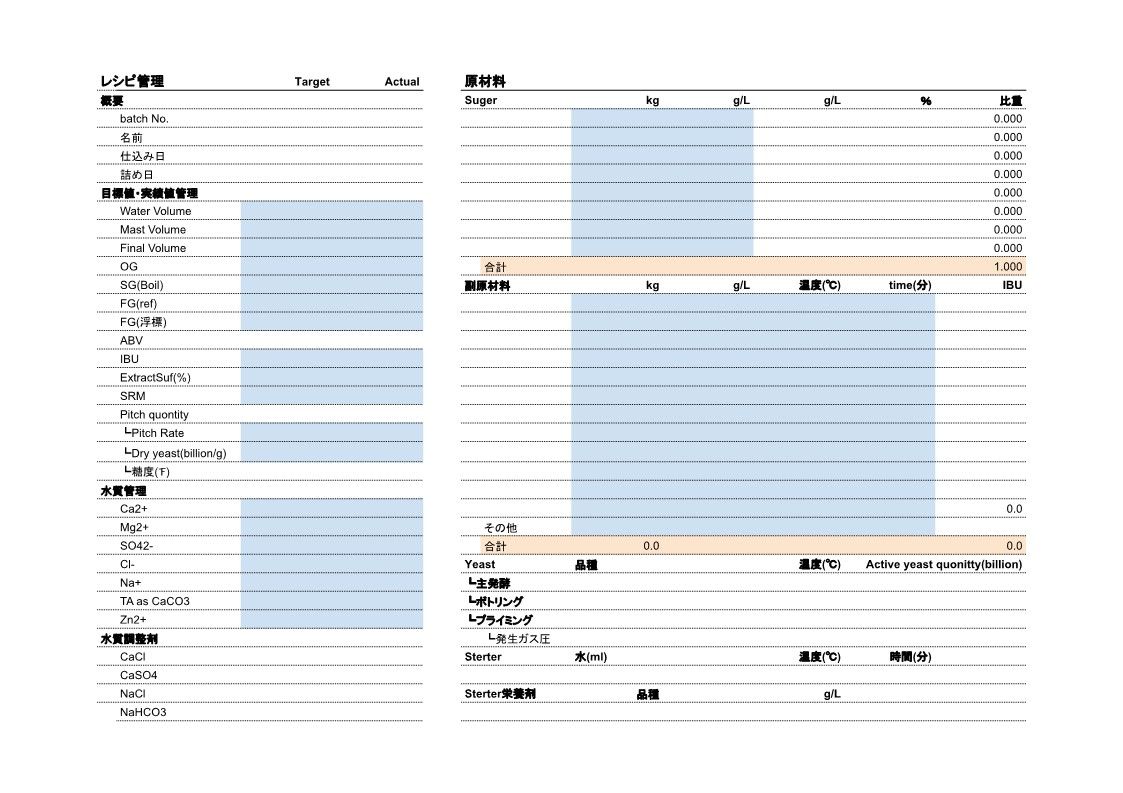
While this is only part of the recipe, there are many places to enter numbers. These are filled out to predetermine the ideal state of the finished craft mead and to proceed with production based on those goals. Let me explain the key parts of creating a recipe!
-
Combination of raw materials, quantities, and timing
-
Alcohol content and final sweetness
-
Water quality
-
Selection of microbes (yeast, bacteria, fungi)
-
Fermentation temperature
Let's look at each one!
Combination of raw materials, quantities, and timing
Craft mead uses a variety of secondary ingredients in addition to honey. Examples include fruits like apples and grapes, spices like cinnamon and vanilla, and other items like herbs or wood chips. You can basically consider anything that is non-toxic to the human body as fair game! This kind of freedom is the greatest appeal of craft mead.
To figure out how you want the finished product to taste when using these, the combination, amount, and timing of use are critical. While combinations are often decided through actual experimentation, there are key points regarding quantity and timing that I'd like to explain in detail!
On Quantity
Many people might think that using more raw materials will simply make their flavor more pronounced. Basically, that is correct. However, when using ingredients that contain sugar, you must calculate the sugar content. Alcoholic fermentation is the process of converting sugar into alcohol, so if there is sugar from sources other than honey, that will also be converted into alcohol. Alcohol content is a huge part of the flavor profile, so it is important to set the amount of sugar present from the start.
To give an example: suppose you have a recipe for 100kg of honey to make a craft mead with 10% alcohol, and you add 50kg of grapes. Because the grapes also release sugar, your actual alcohol content could end up being 12%. Therefore, when using ingredients containing sugar, such as fruit, you need to adjust the sugar content against your target alcohol percentage.
And a special case you have to be careful about is sour fruit. For instance, if you want to make a craft mead using a large amount of lemon or lime, the pH of the liquid before adding the microbes might drop below 3.0. In such highly acidic conditions, the types of microbes capable of fermentation are very limited. Even if it does ferment, the microbes will be under significant stress, which can lead to unexpected aromas. I have to be very careful when making sour mead, but the joy when it turns out well is second to none.
After accounting for sugar levels, it's about how much of an impact you want to make. The amount for fruit naturally depends on the type, but it is generally said that using 200g of fruit per 1L of mead will produce a very distinct character. For spices, I make it a rule to start with an extremely small amount while I am still gaining experience. If I’m unsure, I'll use a ratio of 0.1g/L and if it’s too little, I can always add more; that's the process of finding the right balance.
On Timing
Once you've decided on the amount of raw materials, the next consideration is when to use them. The point to consider here is whether to use them before or after fermentation.
Before Fermentation
The biggest advantage of using ingredients before fermentation is "being able to benefit from aroma changes caused by yeast." There are other benefits, such as no sugar content changes after fermentation and saving the trouble of heat treatment, but the transformation of aromas by yeast is the fascinating part of fermentation and a crucial element in creating complexity. This change in aromatic compounds by yeast is called biotransformation, and it is known as a key process in beer for modifying hop aromatic compounds. Naturally, this applies not just to hops, but to aromatic compounds in fruits and spices as well. When I'm looking for complex aromas that can only be expressed through fermentation, I make sure to add them beforehand.
After Fermentation
The biggest advantage of using ingredients after fermentation is "the ability to bring out fresh aromas." Unlike the previous case, after fermentation, it is harder for aromatic compounds to be modified by yeast. Therefore, you can transfer the fresh scent of the secondary ingredients directly into the alcohol. However, this means that unpleasant aromatic compounds can also remain. For instance, with fruit, sulfur-based compounds or "green," vegetal smells can be notorious. Even if you don't notice these in the fruit itself, they can become bothersome as soon as they are infused into the alcohol. So, when we are concerned about this, we blanch the fruit in hot water before adding it to the fermentation. I learned this French cooking technique called "blanching" from a French culinary professional and have adopted it as a reference!
It's not that one is better than the other; I use them selectively or in combination depending on how I want the final product to turn out!
Alcohol content and final sweetness
Once the raw materials are decided, the next step is to determine the desired alcohol content and the amount of residual sweetness. What this effectively means is deciding the initial sugar content and the final sugar content of the product. This is because the alcohol volume of a fermented beverage can be predicted by measuring how much sugar has been converted into alcohol through fermentation.
For example, let's ferment a juice with 10% sugar (juice with 100g of sugar dissolved in 1L). If all this sugar is fermented, the alcohol content will be approximately 5%. Alcohol with zero sugar is very dry, so if you stop the fermentation with 2% sugar left to retain some sweetness, the alcohol content would be about 4%.
Once the alcohol percentage and final sugar level are determined, the amount of honey is finalized. In our example, when designing a mead with 8% alcohol and 5% residual sugar, we would write a recipe using about 100kg of honey for a 300L batch. Once you reach this point, the basic skeleton of the mead is complete.
Water quality
Water is very important in alcohol production. It's often said that "good water makes good sake," but we approach it from a slightly different angle. Specifically, we adjust the chemical composition of the water used for each recipe.
This is something I learned from brewing beer: traditional beer styles made around the world vary greatly due to local conditions. This may be obvious given the different climates, but it's interesting when you break it down. For instance, the water in England, the birthplace of IPA, has a high hydrogen sulfide content, while the Pilsner style—which comes to mind when you order a "draft beer"—originated in Pilsen, Czech Republic, which is characterized by very soft water. Beer starts by mixing grain and water, so if the water differs, the character of the finished beer will also differ. A beer made with high-hydrogen-sulfide water will have a sharper bitterness, while high chlorine levels provide a rounded impression. Calcium and magnesium are also super important in beer making, but I'll skip them here since craft mead is the theme.
In this way, we also fine-tune the ion content of the water used based on the flavor profile we want for our mead. If I had to choose between hard or soft water, I currently prefer a water quality that leans slightly toward soft water!
Selection of microbes (yeast, bacteria, fungi)
Microbe selection is critical in defining the skeletal structure of the alcohol. Microbes aren't just limited to yeast; in some cases, lactic acid bacteria or koji mold are also options. For example, in our sour mead, we use a method where we ferment with lactic acid bacteria first before adding yeast.
There are actually many types of yeast, each with different characteristics. The amount of aromatic compounds produced by the yeast itself, the differences in active enzymes, and alcohol tolerance vary by strain. However, in the case of a style called "braggot," which uses plenty of malt, the point of how much sugar the yeast can consume also becomes important. If you are curious about what kind of yeast is actually used in mead making, please take a look at my blog◎
Fermentation temperature
Recipe creation is in the final stages. Once everything you're using is decided, all that's left is to think about what happens after adding the yeast. Typical fermentation tanks are designed to control the internal temperature, so they generally maintain the temperature exactly as managed. However, even if you can control it, technically you can only cool the inside of the tank. If you want to increase the temperature, the heat generated by the yeast's fermentation will naturally raise it, so you can leave it be. But if the outside temperature is too cold, you'll need another way to warm the outside of the tank. We at ANTELOPE are finally facing our first winter, so I'm nervous now wondering what kind of cold-weather precautions we need to take.
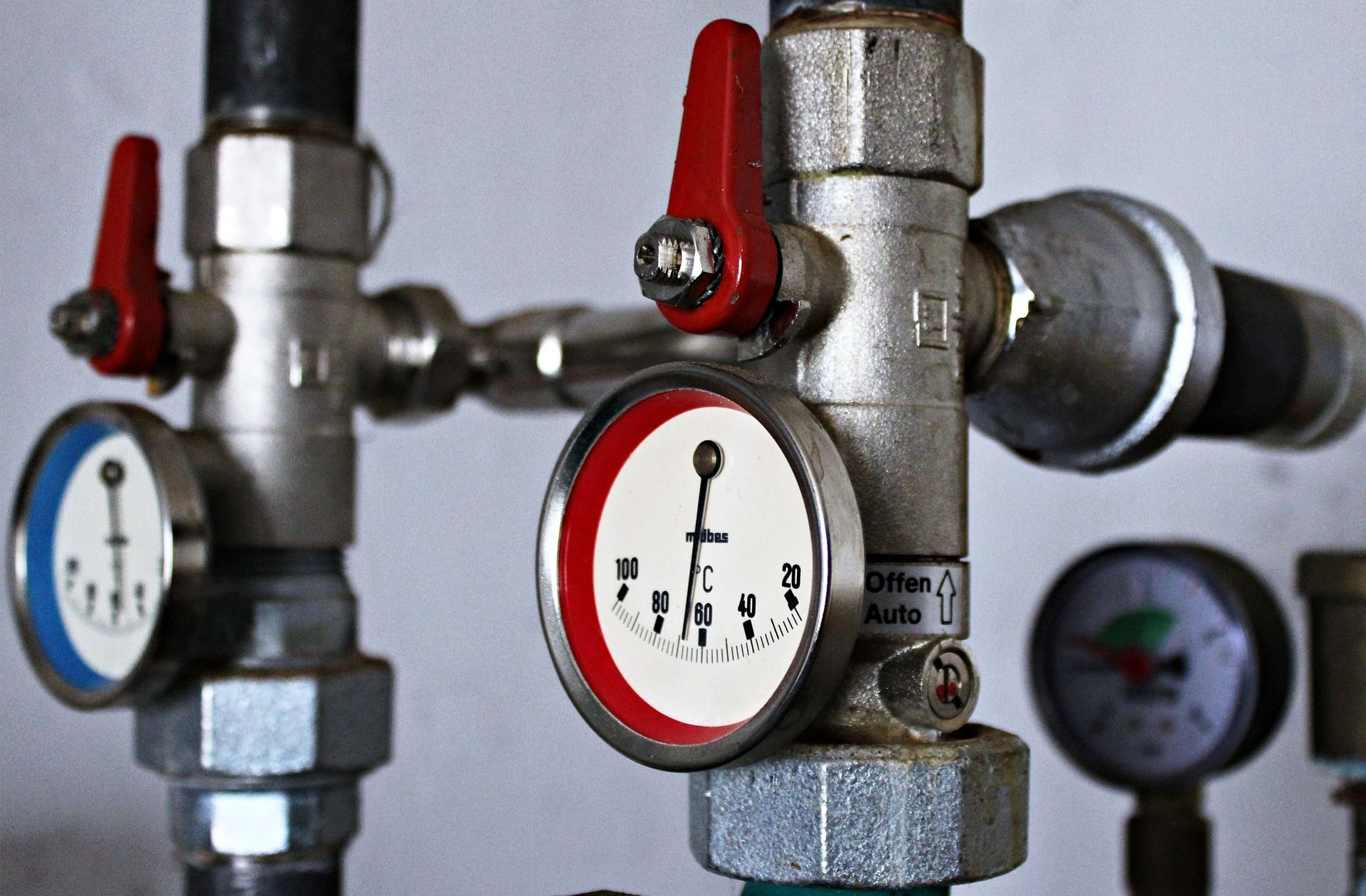
There are many factors involved in deciding fermentation temperature, but ultimately, it comes down to "how much of the yeast's characteristics you want to express." Higher temperatures tend to highlight yeast characteristics, while lower temperatures result in a "clean" fermentation in a good way. It's not a matter of one being better than the other; you choose based on what kind of finish you want. We often ferment our mead at slightly lower temperatures. For example, for "This is it," we introduce the yeast at a slightly lower temperature, let it naturally rise to 17°C, and keep it there. When we want to strongly bring out yeast characteristics like in Belgian beer, we similarly start low and let it naturally rise to 19°C for fermentation. Because craft mead differs based on the type of yeast and how it's used, we intend to try out various yeast usage methods, so please look forward to it!
2. Making the Must
Once the recipe is written, the brewing process finally begins. In craft mead, you first create a sweet liquid called "must" by mixing honey and water, or juice. In beer, this is called "wort." While technically different, it is analogous to "moromi" in Japanese sake or "wash" in whisky.
In alcohol production, it is very important to create a sugar-containing liquid. The reason why a sugar-containing liquid is necessary is that the yeast, which appears in the next step, converts sugar into alcohol and carbon dioxide (this is called alcoholic fermentation). However, sugar is not only needed for simple alcoholic fermentation; it is also required for techniques like lactic acid fermentation, which adds acidity.
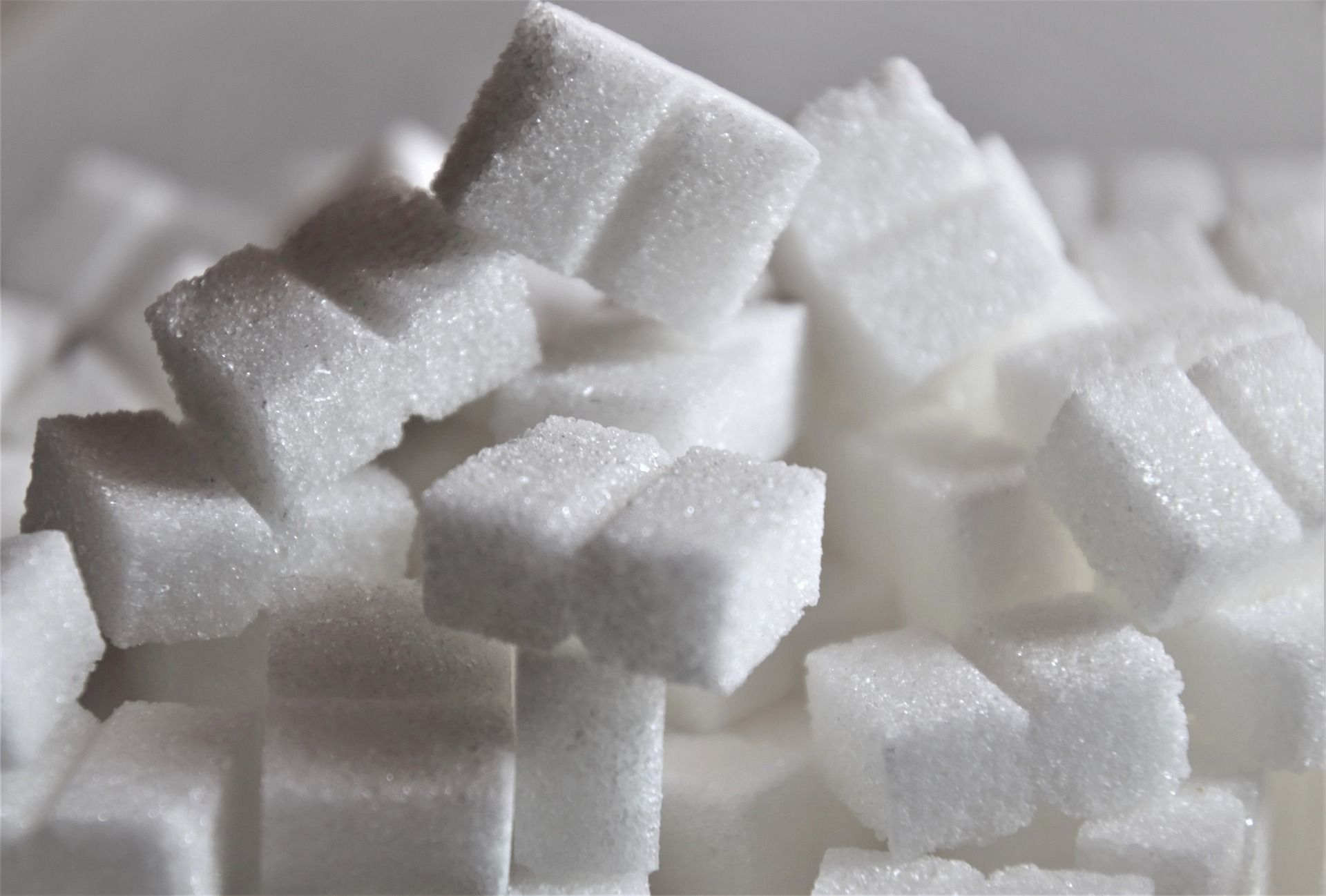
Strictly speaking, there are various types of sugars. This is not a discussion about cane sugar or brown sugar, but about their chemical composition. Examples include glucose, fructose (often found in fruits), and sucrose (what we call table sugar), etc. These are all sugars that any yeast can convert through alcoholic fermentation.
However, there are some complex sugars, such as lactose and maltotriose (three glucose molecules in a chain), that some yeasts can ferment while others cannot. The important thing is that just because it is sweet doesn't mean it will ferment; it is crucial to create a liquid that contains sugar that can be used by the specific microorganisms involved in fermentation. In the case of honey, the sugars contained are half glucose, half fructose (often found in fruits), and a small amount of dextrin. The flower nectar that serves as the base for honey is made of sucrose, but that sucrose is broken down into glucose and fructose by enzymes in the honeybees' saliva. As a result, honey has this particular sugar composition.
Mixing Honey and Water
We mix the amount of honey specified by the recipe with water. In our case, since we perform water quality adjustment, we use water that has been pre-treated. We stir the honey and water thoroughly to create the must. At this stage, we sometimes add fruits or spices. Additionally, when making craft mead within the scope of our low-malt beer (happoshu) license, we are required to use malt, so we add it at this stage as well. There are reasons for this beyond just meeting the licensing requirements, but I will explain those in the latter half!
To Heat or Not to Heat
In craft mead production, it is important to decide whether to heat and sterilize the must. In alcohol production, the entry of organisms other than those intended is basically undesirable; this is a phenomenon known as contamination. For this reason, the liquid is sometimes heat-sterilized before adding yeast or other microorganisms. Since honey is primarily sugar with low moisture, most microorganisms cannot thrive in it. The disadvantage of heat treatment is that it can blow off volatile aromatic compounds. Of course, it also removes unpleasant odors, so it is not entirely bad, but many mead producers avoid heat treatment to leverage honey's natural antibacterial properties and delicate aroma.
The craft mead we produce under our low-malt beer license uses malt in addition to honey, so we heat-treat the entire must once to sterilize the malt (and deactivate its enzymes). We process it at the lowest possible temperature and for the shortest time required to sterilize it, so that the honey's aroma compounds are not lost. By doing this, we can preserve the honey's delicate aroma while eliminating other bacteria, which helps minimize inconsistencies in flavor.
Checking the Sugar Content
Once the honey and water are mixed and the must is ready, we measure the sugar content. If it is too high or too low, we adjust it by adding more honey or water. If this adjustment takes too long, it risks quality degradation regardless of whether it is heat-treated, so we repeat trial and error every day to ensure we can make adjustments in as short a time as possible.
Transferring to the Fermentation Tank
Once we have achieved the target sugar content, we send the must to the fermentation tank. For heat-treated must, we use a machine called a heat exchanger to bring it to the desired temperature. Additionally, we dissolve oxygen into the must when transferring it to the fermentation tank. This is done to strengthen the cell walls of the yeast at the beginning of fermentation and promote healthy fermentation. However, with the advancements made by yeast companies today, many yeasts are quite robust from the start. Therefore, debates are emerging as to whether this might lead to excess oxygen, potentially causing quality degradation in the final product. There is a lot that relies on experience in this area, so we are taking on challenges without being bound by conventional wisdom!
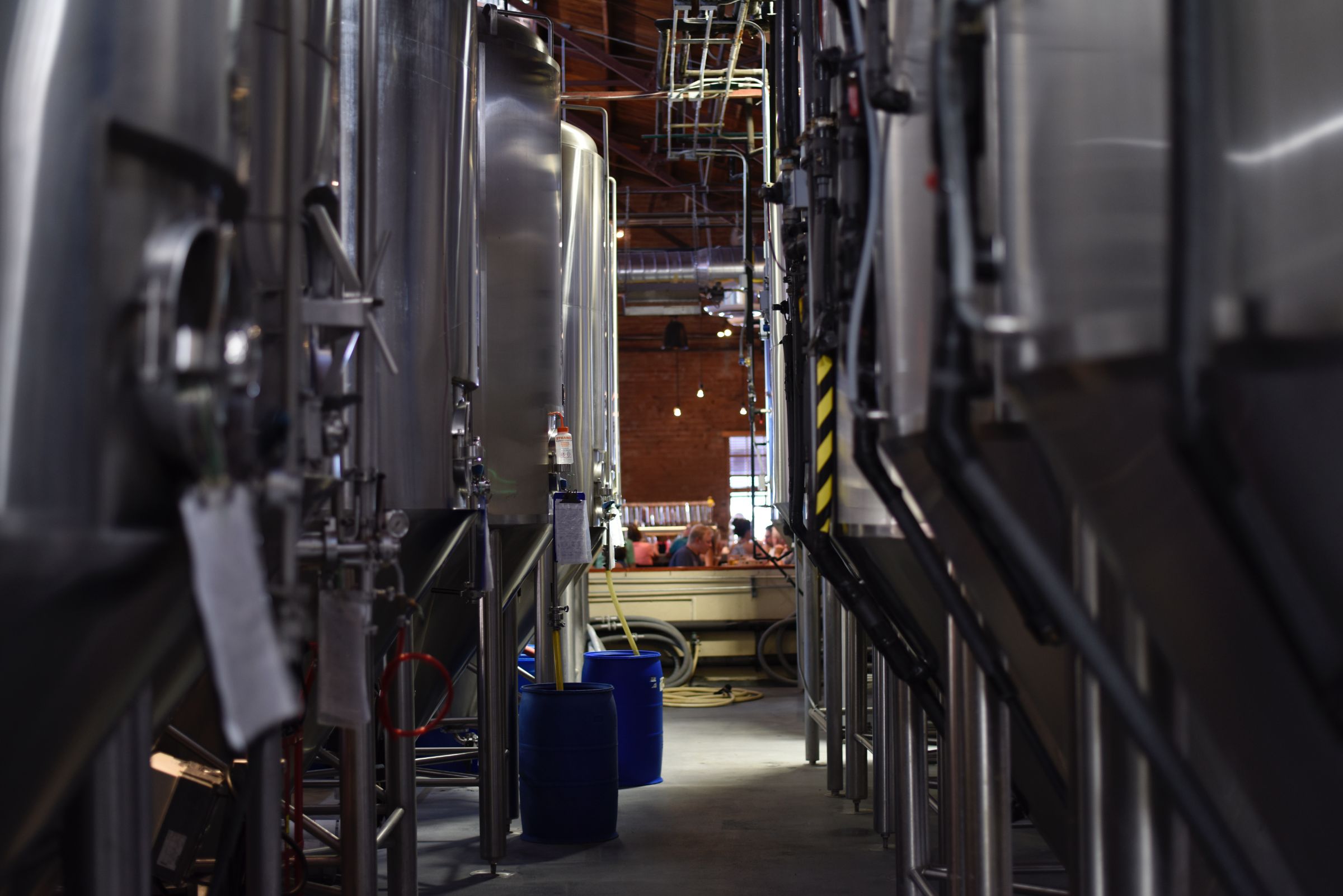
3. Inoculating Microorganisms (Yeast, Bacteria, Fungi)
Once the must has cooled, we inoculate it with microorganisms. There are many types, including yeast, fungi, and lactic acid bacteria. I will explain each of them! However, in over 90% of recipes, what is added at this stage is yeast.
Yeast
When adding yeast, the point to be careful about is the yeast count. When using products purchased from a yeast company, the number of yeast cells per gram is indicated. The reason we pay so much attention to the amount of yeast is because the finished alcohol profile differs depending on the amount of inoculum.
A higher yeast count tends to express the yeast's characteristics more clearly, while a lower count leads to a cleaner profile. The relationship is similar to that of fermentation temperature. By the way, yeast characteristics refer to aroma compounds such as esters, sulfur compounds, and alcohol compounds produced by the yeast. Let me briefly explain the relationship between yeast-derived aroma and the number of cells. The yeast's aroma compounds are essentially proof that the yeast was active; think of them as the yeast's "sweat." If yeast cells move a lot, they sweat more, and if there are many active individuals, the total amount of "sweat" increases. If there are many yeast cells, the amount of "food" per cell decreases, which means each individual yeast is less active. Conversely, when the number of yeast cells is low, each cell has more than enough food, so they move more and divide to increase their numbers. You could think of it as a scene where even with the same task, if there are fewer people, everyone ends up sweating profusely (maybe?).
Lactic Acid Bacteria
Lactic acid bacteria are used to make yogurt and kimchi.
This is often used in techniques like malolactic fermentation in wine and souring in beer. Sometimes we use lactic acid bacteria present in the atmosphere, and other times we use cultured strains. We also occasionally use lactic acid bacteria when we want to make a craft mead with a tart profile. This is done by letting the must undergo lactic acid fermentation using a method called "kettle souring" (common in craft beer), and then inoculating it with yeast to perform alcoholic fermentation. The method of kettle souring is quite profound, so I will introduce it on another occasion! It's very interesting because there are many aspects that influence the flavor, such as why it becomes sour and what kind of characteristics it develops, so definitely look forward to it!
Fungi
When you think of fungi, you might think of cheese, but in alcohol production, Koji-kin (Aspergillus oryzae) might be more mainstream. Koji-kin has the role of converting starch in rice—the raw material for sake—into glucose. I don't think Koji has ever been used in craft mead production, but the reason is that honey contains almost no starch, so there is no need to use Koji.
Once you have inoculated the respective microorganisms, all that is left is to wait for them to work within the target temperature range. After that, we perform rigorous progress checks. If alcoholic fermentation is progressing, the sugar in the must will decrease and turn into alcohol. Therefore, it is important to measure the sugar content consistently every day.
4. SNA
This is an acronym for "Staggered Nutrient Addition." In short, it is a technique of adding yeast nutrients to the must during fermentation.
For yeast to perform fermentation, it's not enough to just have sugar. While sugar is all that is required by the chemical equation, in reality, nitrogen sources like amino acids are necessary for the yeast's life cycle. Just like we humans need energy (calories) to live, which we can get from breathing—energy is released in the process of converting oxygen to carbon dioxide—but it doesn't mean we can live healthy lives just by breathing oxygen. We need to obtain nutrients from various foods. Yeast is the same. They can extract energy by converting sugar into alcohol and carbon dioxide, but they cannot live on sugar alone.
Many alcoholic beverages are made using grains and fruits. This is not only because they are high in sugar, but because the proteins in grains and the polyphenols and amino acids in fruits serve as yeast nutrients. Honey, however, is mostly sugar, so it lacks the nutrients necessary for yeast to live. As a result, if you don't add nutrients during fermentation, it might not progress well. To prevent this, nutrients are added to the fermentation tank using the Staggered Nutrient Addition (SNA) technique. You might be able to understand what is being "staggered" by looking at the example schedule below.
SNA Example
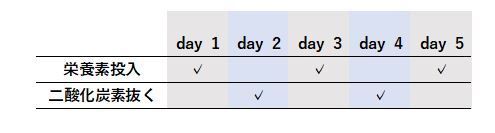
This is an example where nutrient additions are performed every other day after fermentation begins. As shown, nutrients are continuously added at intervals once fermentation starts. Instead of adding them all at once, they are added in small increments at intervals. Originally, each time nutrients were added, there was a step to vent carbon dioxide from the tank, so nutrient addition and gas venting were performed alternately. Depending on the design of the tanks used, there might be variations, but we constantly release carbon dioxide from our tanks, so we do not go through a separate gas venting step.
Adding nutrients to the must in this way is important in mead production, and we extract these nutrients from malt. We use malt not because we are under a low-malt beer license, but with the purpose of deriving yeast nutrients from malt in craft mead production. If you soak the malt in hot water at a low temperature to avoid extracting harsh flavors, the malt's own enzymes break down proteins into amino acids, which then turn into nutrients for the yeast. We use barley malt for our meads (This is it, The Last Supper) in this way!
Of course, it is possible to achieve healthy fermentation without SNA by adding other foods rich in amino acids instead of malt. Personally, I found pineapple to be amazing, but since there is a risk that the yeast will become too active, it hasn't quite reached the point of commercialization yet, haha.
5. Maturation
Fermentation has progressed healthily, and the mead is nearing completion. Yeast fermentation stops when there is no more sugar left for the yeast to eat, or when the environment (alcohol content or temperature) is no longer suitable for fermentation. Once fermentation is complete, we sometimes include a maturation process! (It is not mandatory.)
The Difficulty of Stopping Fermentation While Leaving Sweetness
Before moving on to the topic of maturation, I would like to introduce some trouble we actually encountered.

Mead is a very special type of alcohol made almost entirely of fermentable sugars, so if you manage the nutrients and temperature appropriately, it becomes an ultra-dry beverage with no residual sugar. So, how do we make a sweet mead that retains some sweetness?
The answer is we have no choice but to stop fermentation midway. There are many ways to stop fermentation: using yeast filters to physically remove the yeast (common among large alcohol manufacturers), using chemicals like sulfurous acid to halt yeast activity, raising the alcohol content to a level where the yeast cannot function, and the heat treatment method we currently use. Every method has its pros and cons, but we failed twice at "stopping fermentation midway," resulting in the entire batch being discarded because it didn't turn out with the intended flavor. I'd like to write about why we failed in another article, but we have currently succeeded in stopping fermentation midway by using the "70°C for 20 minutes heat-treatment" method!!
Benefits of Maturation
Once fermentation stops, many people may choose to let it mature. There are many mysterious phenomena involved in this maturation, but I would like to introduce one interesting one.
"Becomes mellow," "Takes off the edge"
You may have heard these expressions used for matured alcoholic beverages. While you can't say it applies to everything, a major factor is the change in "fusel alcohols." Fusel alcohols are aroma compounds produced through fermentation and are considered a cause of alcoholic harshness—that sensation that feels strongly like alcohol when you drink it. Over time, these fusel alcohols react with acids contained in the beverage to transform into aroma compounds called esters. This process takes a very long time.
It is believed that over a slow period of time, the alcoholic harshness gradually turns into different aromas, resulting in a mellower flavor. While the production of these fusel alcohols is unavoidable, it is possible to control the amount. Many of our meads are shipped after a short period of maturation, which is because we design our recipes to avoid producing large amounts of fusel alcohols in the first place. Although it is designed not to require a long maturation period, alcohol is, of course, a luxury item, so feel free to mature it at home if you wish. You can expect it to gradually change into a more complex and fuller flavor, but since we at ANTELOPE are still young, I cannot definitively say exactly what will happen!
I truly look forward to enjoying the results together with all of you.
Summary
Great job!
It's been a long time since I've written such a long article, so my fingers hurt, haha.
I'm sure there were many difficult parts, and some of you might want to delve deeper. I have summarized brewing in more detail on my blog, so please take a look at that as well; it might help you get a better picture of the overall brewing process.
There is a unique way to make each craft mead. I hope this article proves useful in answering some of the questions you may have as you encounter various craft meads in the future. Next time, I will finally introduce our recommended craft meads!
シェアする:
Introduction to Mead Vol. 4: Food Pairings for Craft Mead
Introduction to Mead Vol. 6: Recommended Craft Meads