
Hello everyone! It’s Sena! It’s been a little while, but how is everyone doing?
Three months ago, while comparing fruit meads, I discovered the deliciousness of "Cyser"! Many of you might be wondering, "What on earth is a Cyser?" A Cyser is a style of mead that uses apples as a secondary ingredient.
When you hear about an alcoholic beverage made with apples, perhaps "Cider" comes to mind? Cider is an alcoholic drink made by fermenting apples. It has been gaining attention in Japan recently as a popular, trendy beverage.
Since both use apples as a raw material, I became very curious: what is the fundamental difference between them? How do their tastes differ? I’ve decided to summarize their origins, characteristics, and actual flavors here!
Alcoholic beverages made from apples: "Cider" and "Cyser"
Cider and Cyser are the same in that they both use apples as an ingredient. Let's take a closer look.
Cider
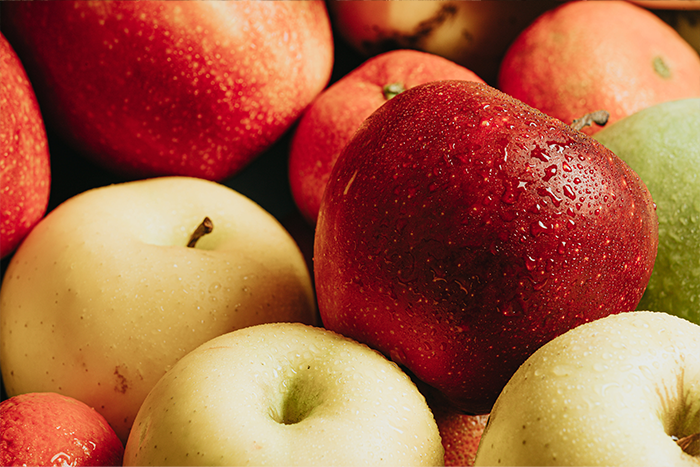
Cider uses apples as its main ingredient. The apples are pressed to extract juice, which is then fermented using its sugar content. It originated in Europe. It is called "Cider" in France and Japan, but in Spain, it is called "Sidra," and in the United States, it is called "Hard Cider." Depending on the quantity and type of apples and yeast used, it can be dry or sweet. While it varies based on the sugar content of the apples, the alcohol content is typically between 5% and 6%.
Cyser
Cyser is a style of mead made by adding apples or apple juice as a secondary ingredient to mead. It is fermented using both the sugar from honey and the sugar from the apples. Similar to cider, the taste can be dry or sweet depending on the quantity and type of honey, apples, and yeast used. The alcohol content ranges from about 5% on the low end to around 14% on the high end. Unlike cider, Cyser contains honey, which adds more sugar and consequently allows for a higher alcohol content. Also, depending on the amount of honey, it is expected that the intensity of the apple flavor will also be influenced.
Focusing on Final Gravity again
In the previous article, I measured the final gravity of an alcoholic beverage for the first time, and since then, a "desire to measure specific gravity" has sprouted within me. So, I’m going to measure it again this time. (I set the temperature at the time of measurement to a constant 20°C!)
What is specific gravity: A value that compares the density of an aqueous solution to the density of water, where water is 1 (1.000).
Specific gravity of water: 1.000
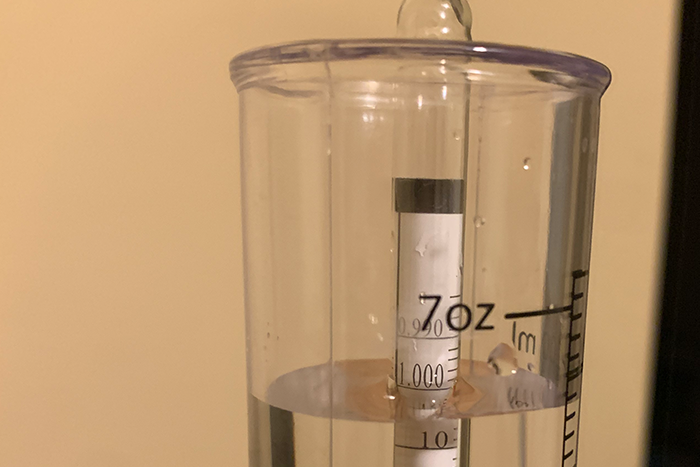
When making alcohol, we measure the specific gravity before and after fermentation; the gravity before is called Original Gravity, and after fermentation is complete, it is called Final Gravity. These two gravity values are essential figures for estimating the alcohol content, which is crucial for any alcoholic beverage. In other words, specific gravity is a very important factor in brewing.
While specific gravity is a "guide value" for the amount of dissolved sugar, sugar is not the only thing dissolved in water; other substances (like proteins and amino acids) can affect whether it tastes sweet or not regardless of the gravity reading. Also, the types of dissolved sugars themselves vary between sweet ones (with short carbon chains) and non-sweet ones (with long carbon chains), so the quality of these sugars also changes the sweetness. For example, compared to mead or cider, beer contains more complex, longer-chain sugars, so it may feel less sweet despite having a higher specific gravity.
I compared two types each of cider and cyser!
The four varieties of cider and cyser I drank this time are as follows. I found the ciders at a local supermarket, and since cysers weren't available at the store, I purchased them from a meadery.
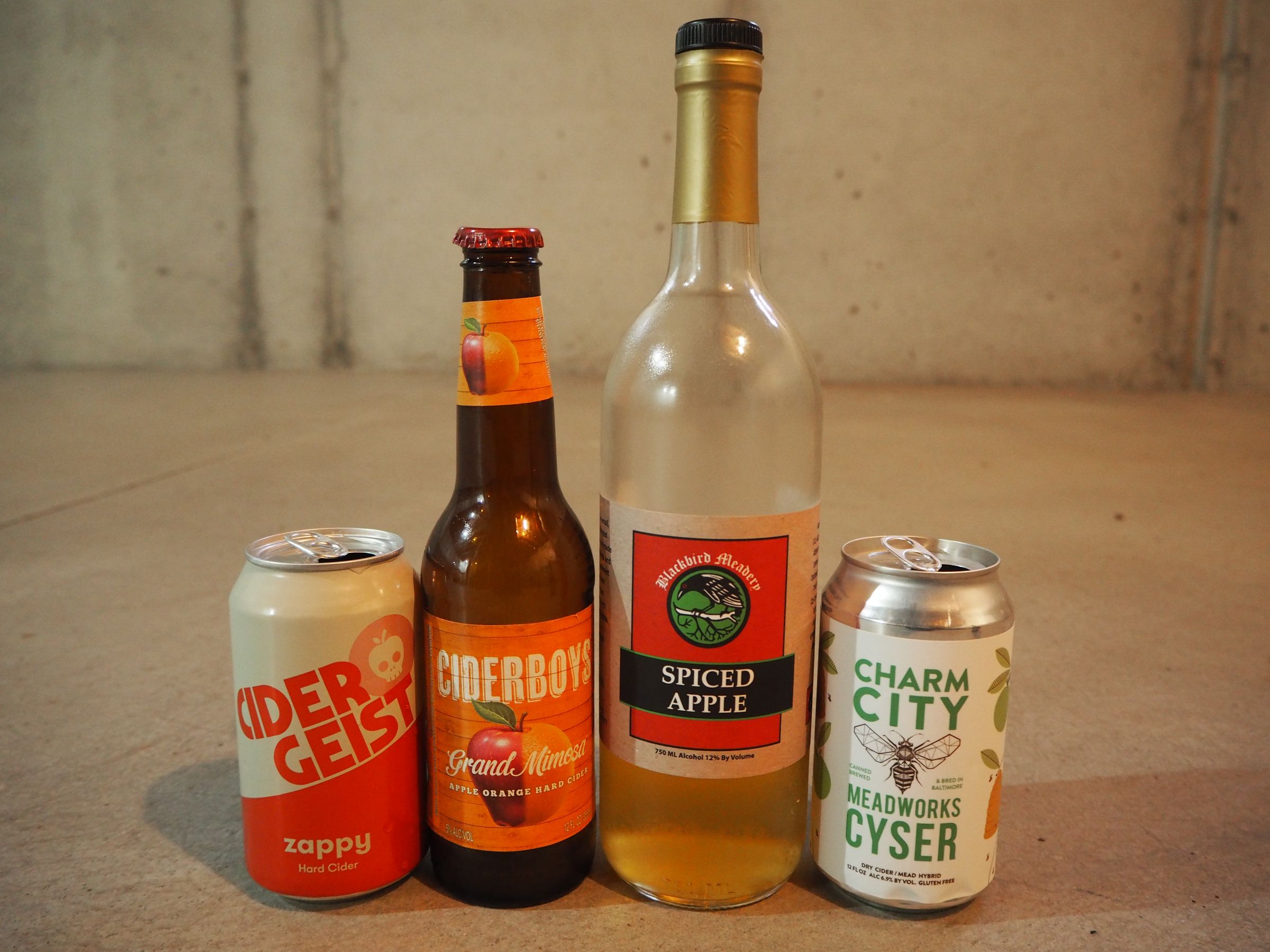
From the left:
1. "Zappy" (CIDERGEIST)
2. "grand Mimosa" (CIDERBOYS)
3. "SPICED APPLE" (Blackbird Meadery)
4. "CYSER" (CHARM CITY MEADWORKS)
(The text in brackets "" is the product name, and () indicates the brewery.)
Let’s get straight to the introductions!
1. "Zappy" (CIDERGEIST)
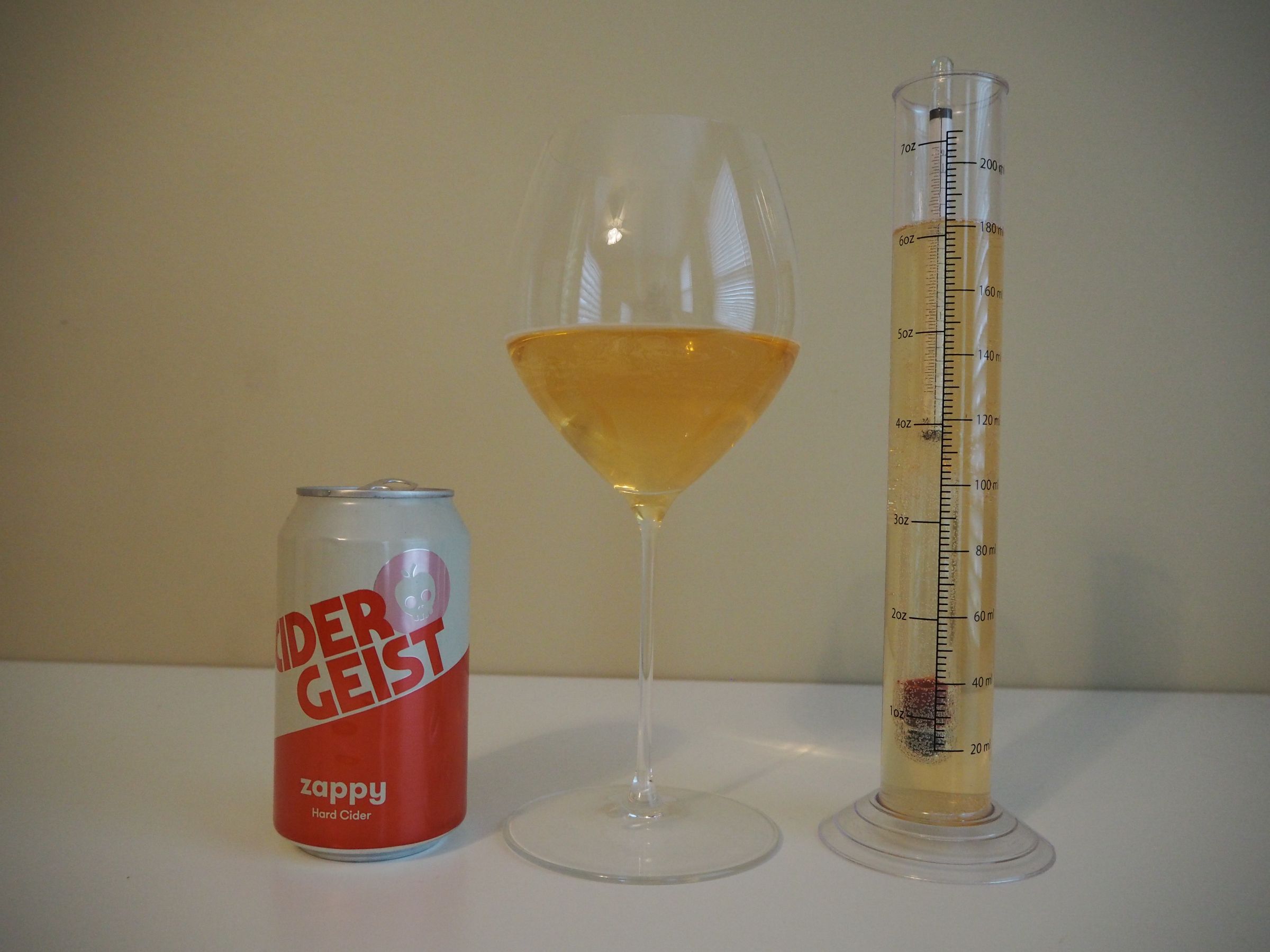
Ingredients: Reconstituted apple juice
Alcohol content: 5%
Volume: 12oz (approx. 355ml)
Price: 11 USD (6 cans)
Carbonation: Yes
Final Gravity: 1.013–14
Perceived sweetness: ★★☆☆☆
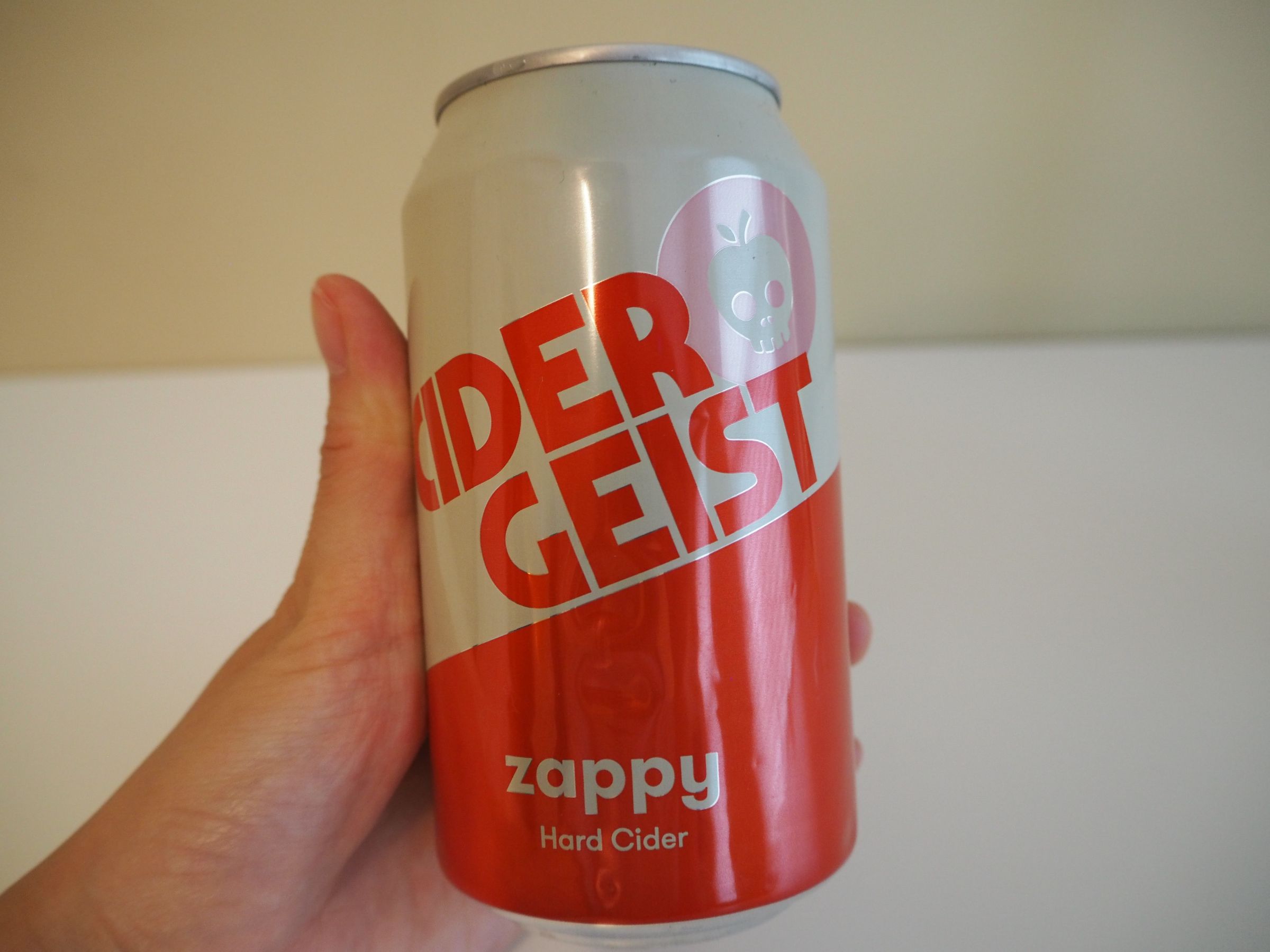
"Zappy" is the standard cider from "CIDERGEIST," a brand specializing in cider produced by the microbrewery "RHINEGEIST" in Cincinnati, Ohio. They aim to create flavors distinct from fruit beers by using secondary ingredients like herbs and spices in their ciders.
When opening the can, the scent of slightly ripened apples really hits the nose. The golden color is absolutely beautiful! It reminds me of apple juice.
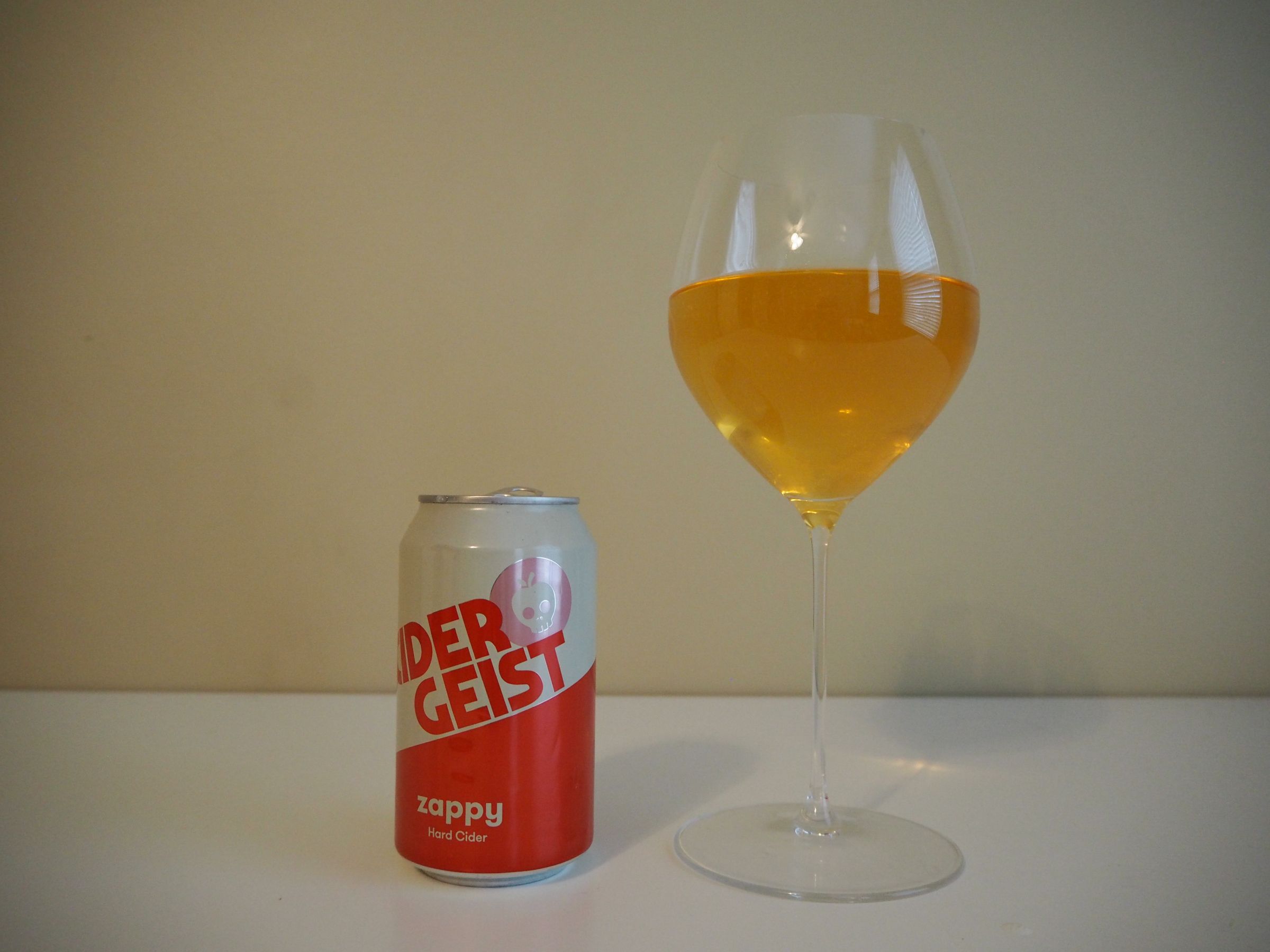
It had a flavor where the natural sweetness of apples could be clearly felt. Since it's not the sweetness of sugar, there is almost no lingering sweetness in the mouth, leaving a refreshing feeling like that after eating an apple. I think the crisp carbonation is one factor that contributes to this refreshment. It feels perfect as a drink to pair with a meal, and seems like it would especially go well with steak or meat dishes prepared with soy sauce, sugar, mirin, and sake.
The final gravity I was curious about is
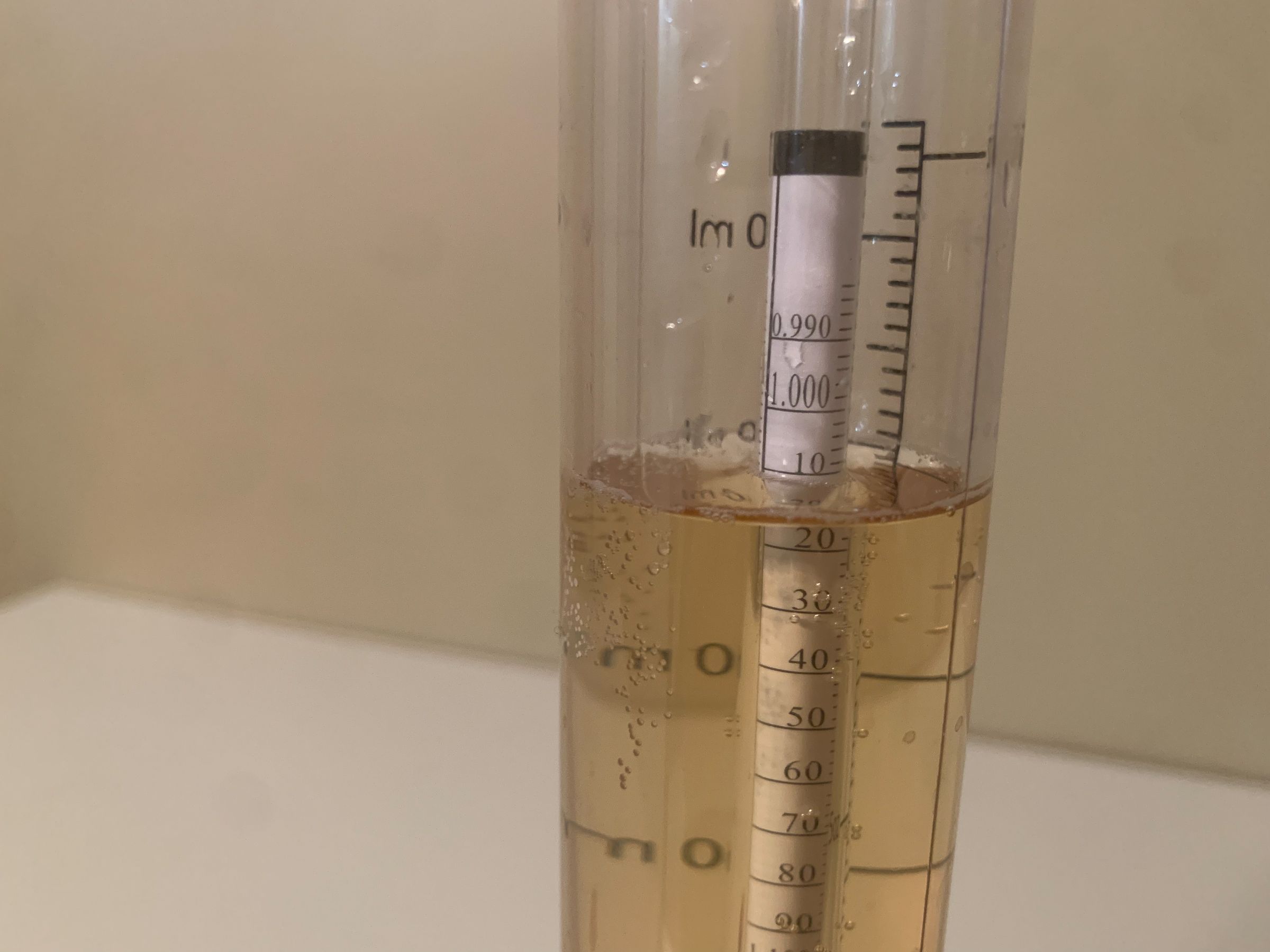
It was around 1.013–14. Actually, I am quite hooked on measuring specific gravity myself. I previously measured the gravity of Sierra Nevada’s Hazy Little Thing IPA, and that gravity was around 1.010–11. If there is anyone who has drunk Hazy Little Thing IPA, I hope you can imagine the sweetness and crispness I felt.
For those who haven't tried it, since the specific gravity of cola is 40, you can imagine that the sweetness is significantly more restrained in comparison!
2. "grand Mimosa" (CIDER BOYS)
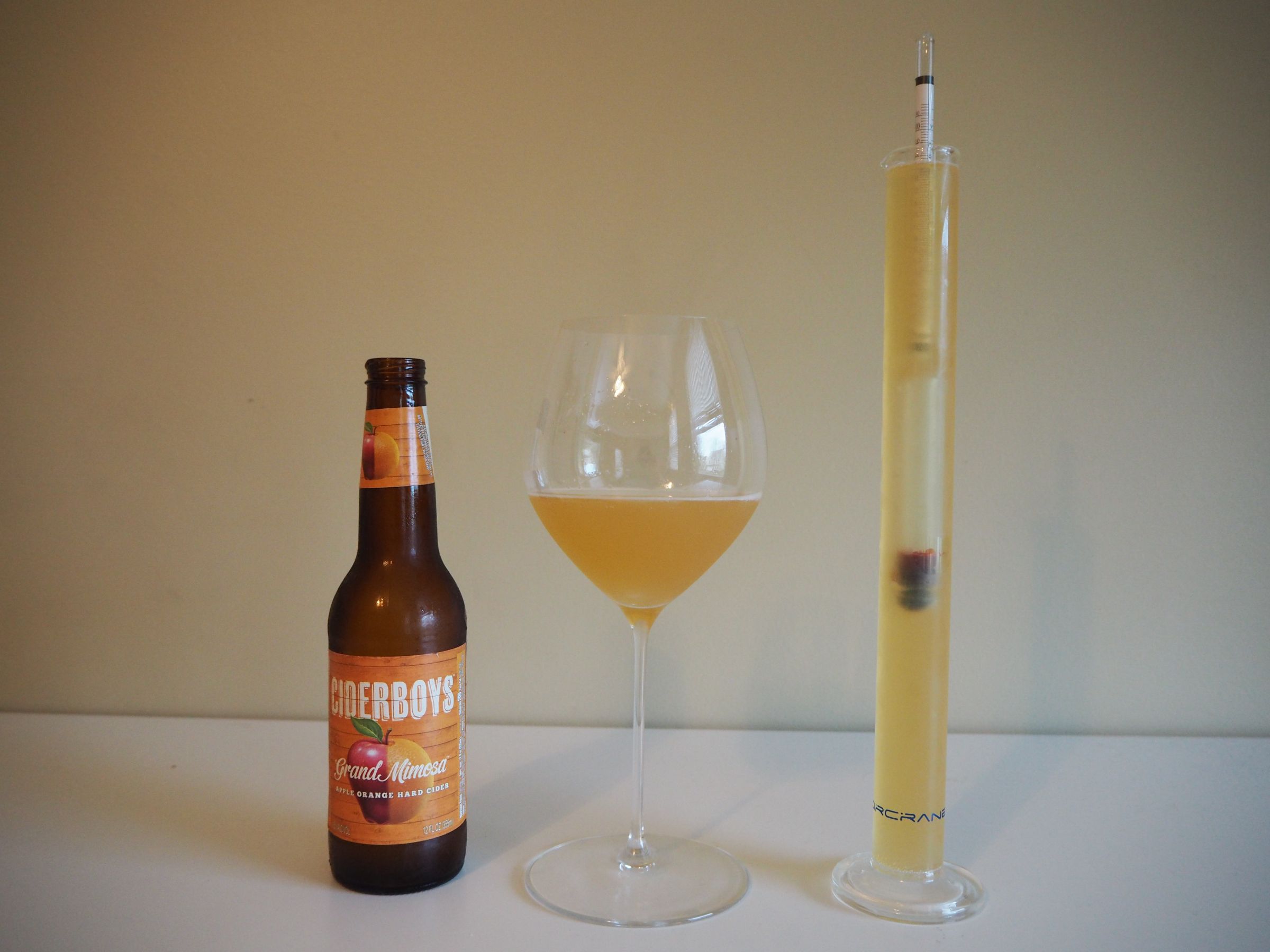
Ingredients: Apple cider, concentrated apple juice, orange juice, malic acid
Alcohol content: 5%
Volume: 12oz (approx. 355ml)
Price: Approx. 10 USD (6 bottles)
Carbonation: Lightly carbonated
Final Gravity: 1.023–24
Perceived sweetness: ★★★☆☆
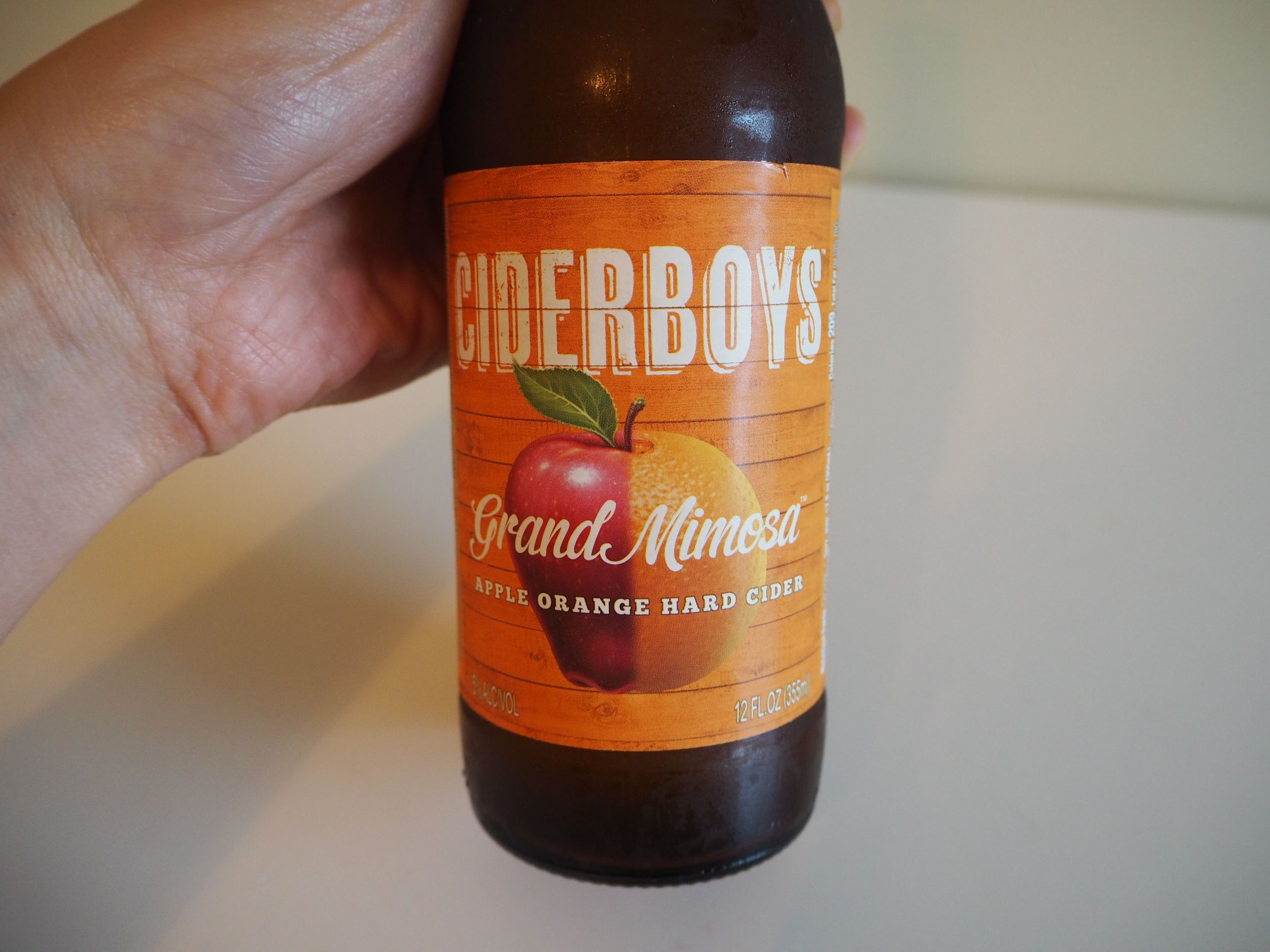
"grand Mimosa" is a cider from "CIDERBOYS" in Wisconsin. This brewery makes ciders using various fruits as secondary ingredients. They have year-round products, as well as seasonal limited editions using peaches or pineapples; this time, I drank the seasonal cider (available from September to February) that uses orange as a secondary ingredient. Compared to Zappy, it has a paler orange color, and the aroma feels more like orange than apple.
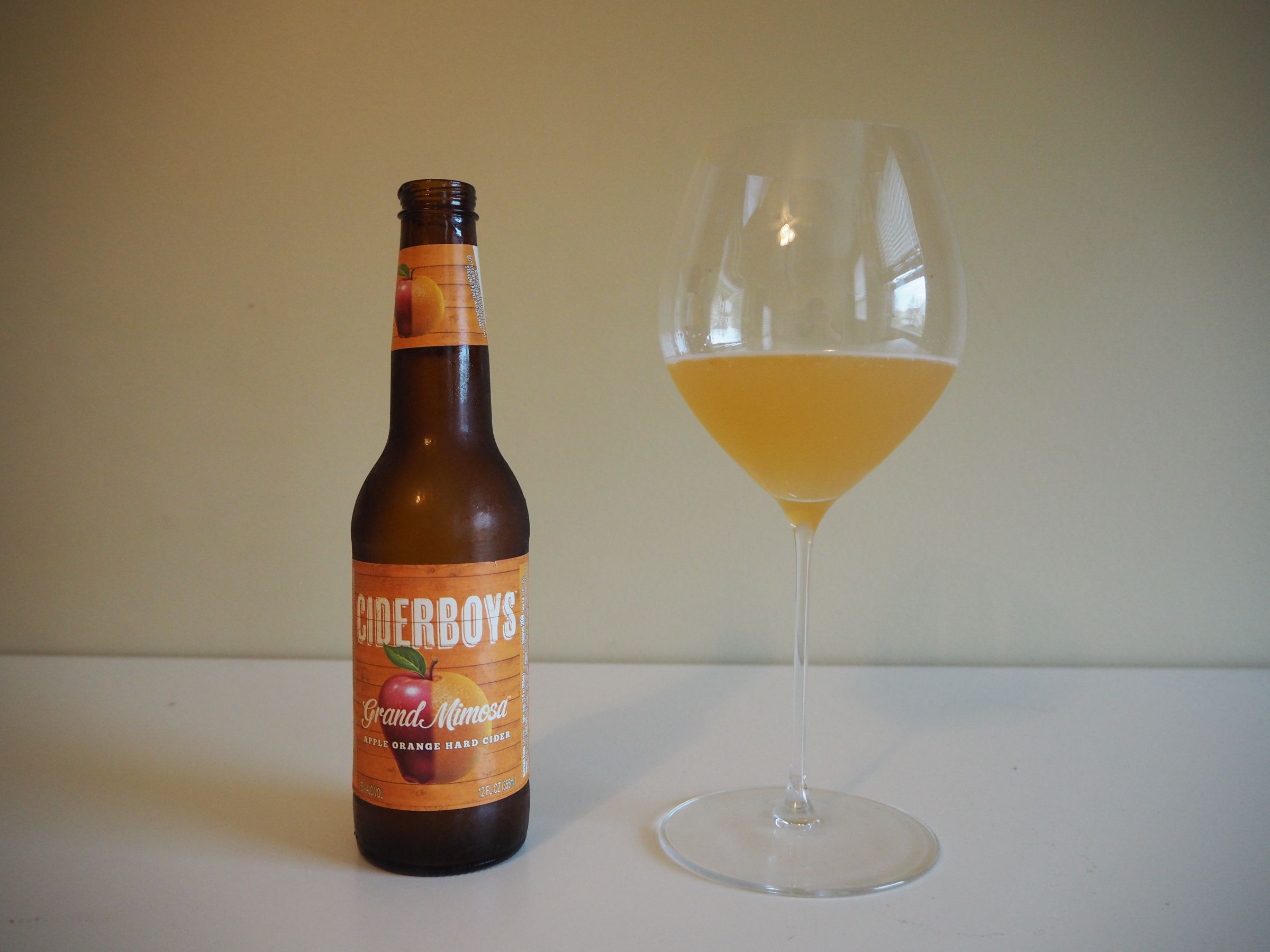
A cider that balances sourness and sweetness well. Rather than an apple flavor, the orange taste feels stronger. This also seems like it would pair well with meat, so it's a bottle I'd want to have on hand for a barbecue.
The final gravity I was curious about is,
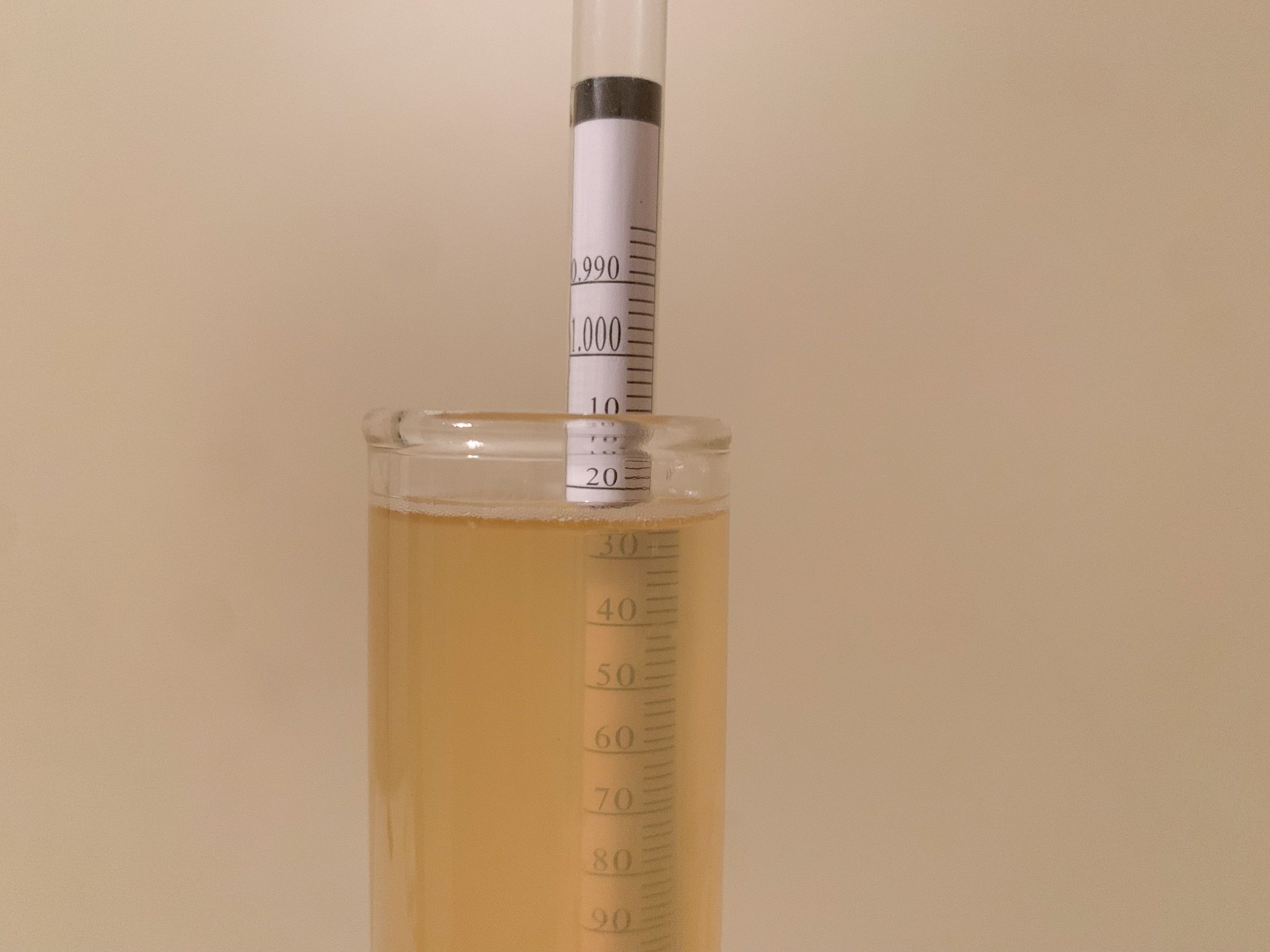
1.023–24. Because it contains more sugar from the orange than a cider made only with apples, the gravity is slightly higher. It felt neither too sweet nor too dry, so the result matched my expectations. (Maybe my tongue is gradually learning to guess specific gravity?)
3. "Spiced Apple" (Black Bird Meadery)
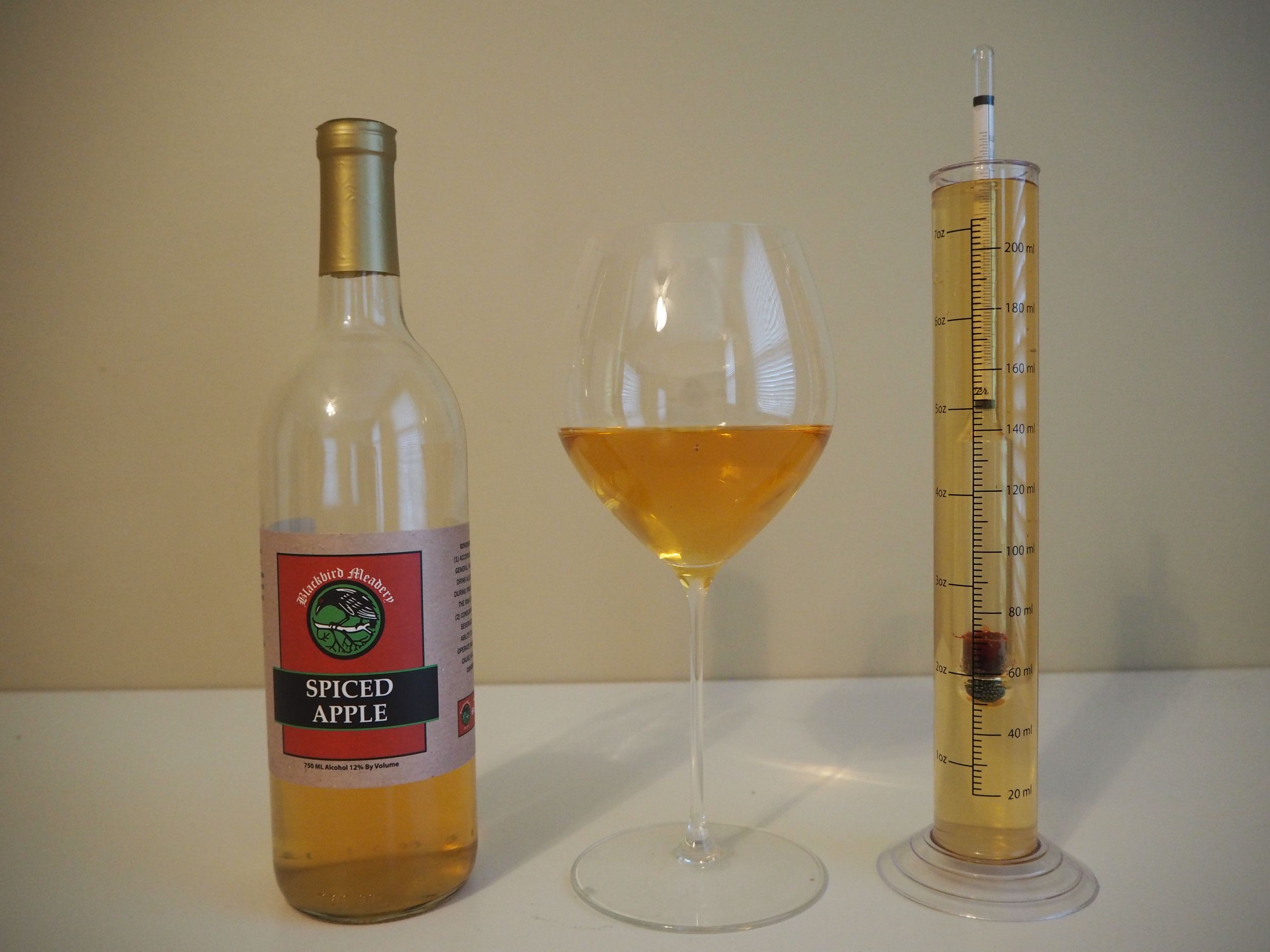
Ingredients: Honey, apples, cinnamon, nutmeg
Alcohol content: 12%
Volume: 750ml
Price: 32 USD
Carbonation: None
Final Gravity: 1.021–22
Perceived sweetness: ★★★☆☆
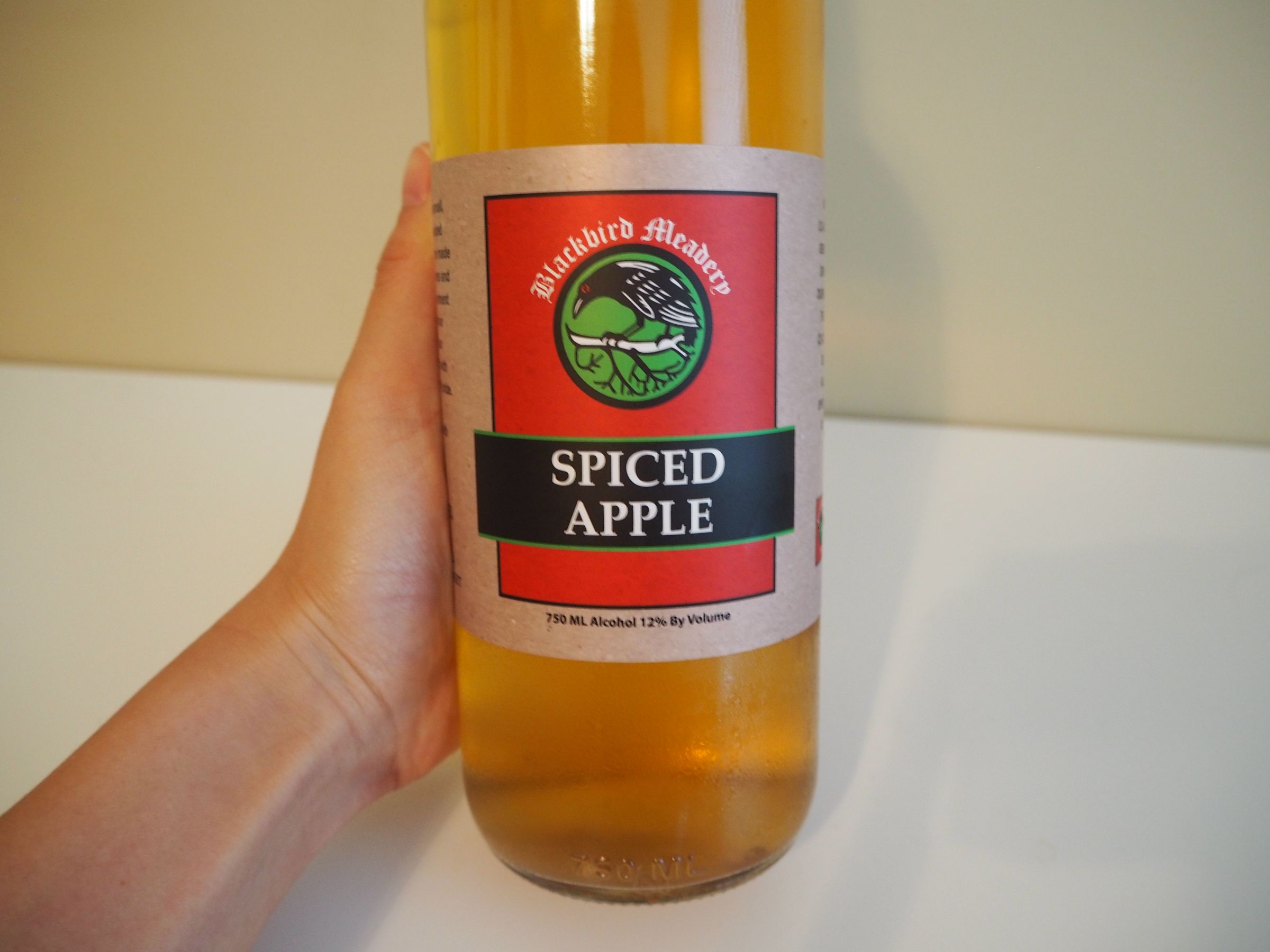
"SPICED APPLE" is a cyser from "Blackbird Meadery" near Dayton, Ohio. This is a micro-meadery run by a husband and wife. They discovered mead through their hobby of homebrewing, and realizing how interesting it was, decided to open a meadery. As the name suggests, it uses spices like cinnamon and nutmeg, and the moment you open the lid, those aromas fill the air. It has the same beautiful orange color as the previous two ciders.
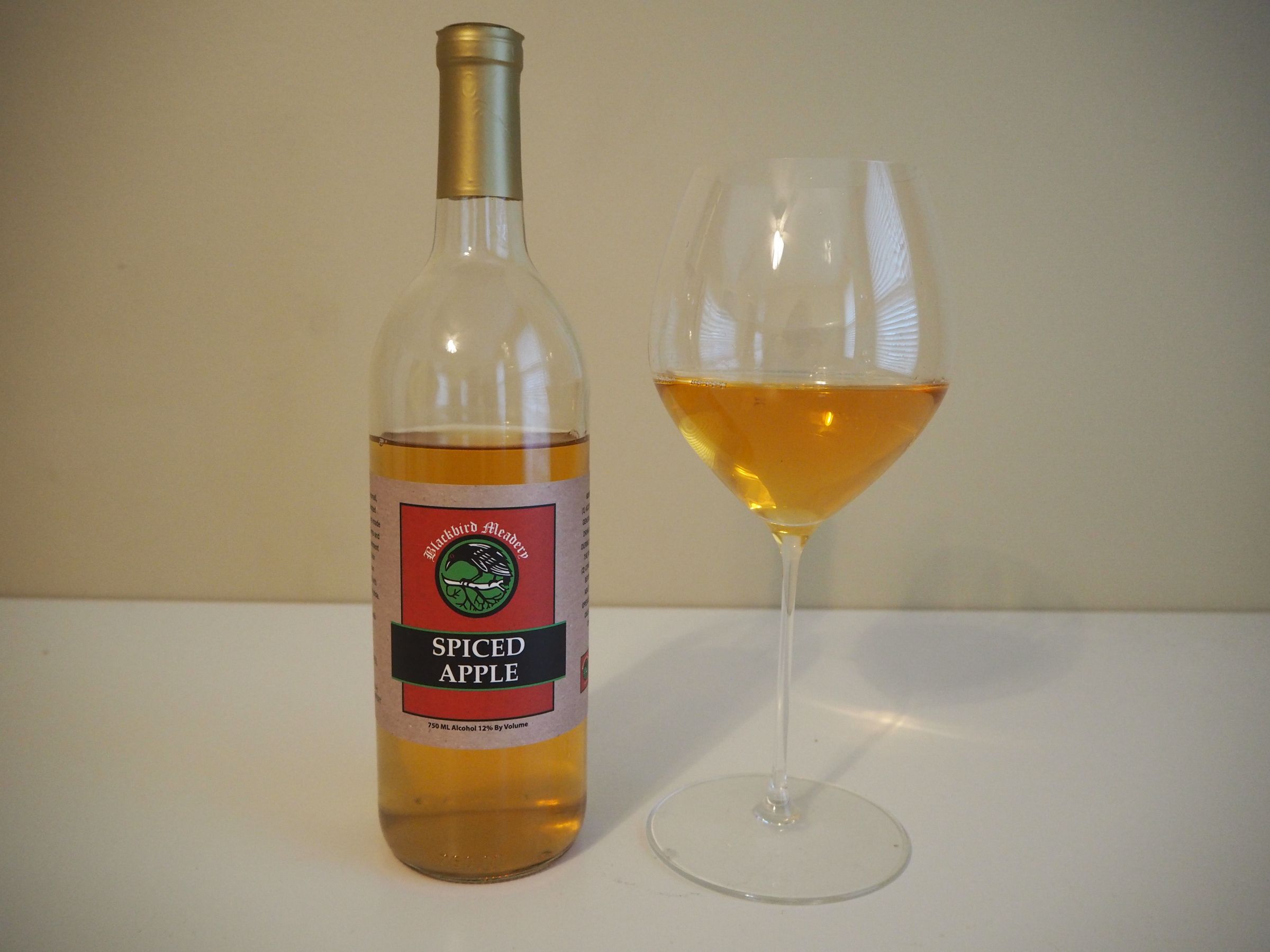
You can feel the spiciness of the cinnamon more than the sweetness of the apples, and you can enjoy a flavor just like eating apple pie. Rather than drinking it quickly, it was a bottle I wanted to enjoy slowly after a meal while watching a movie. As I continued drinking, I was reminded of the mulled wine I drank in Germany. I thought it might be even better if warmed slightly, so I heated it up, and it was a great success. It pairs perfectly with a cold night.
The final gravity I was curious about is,
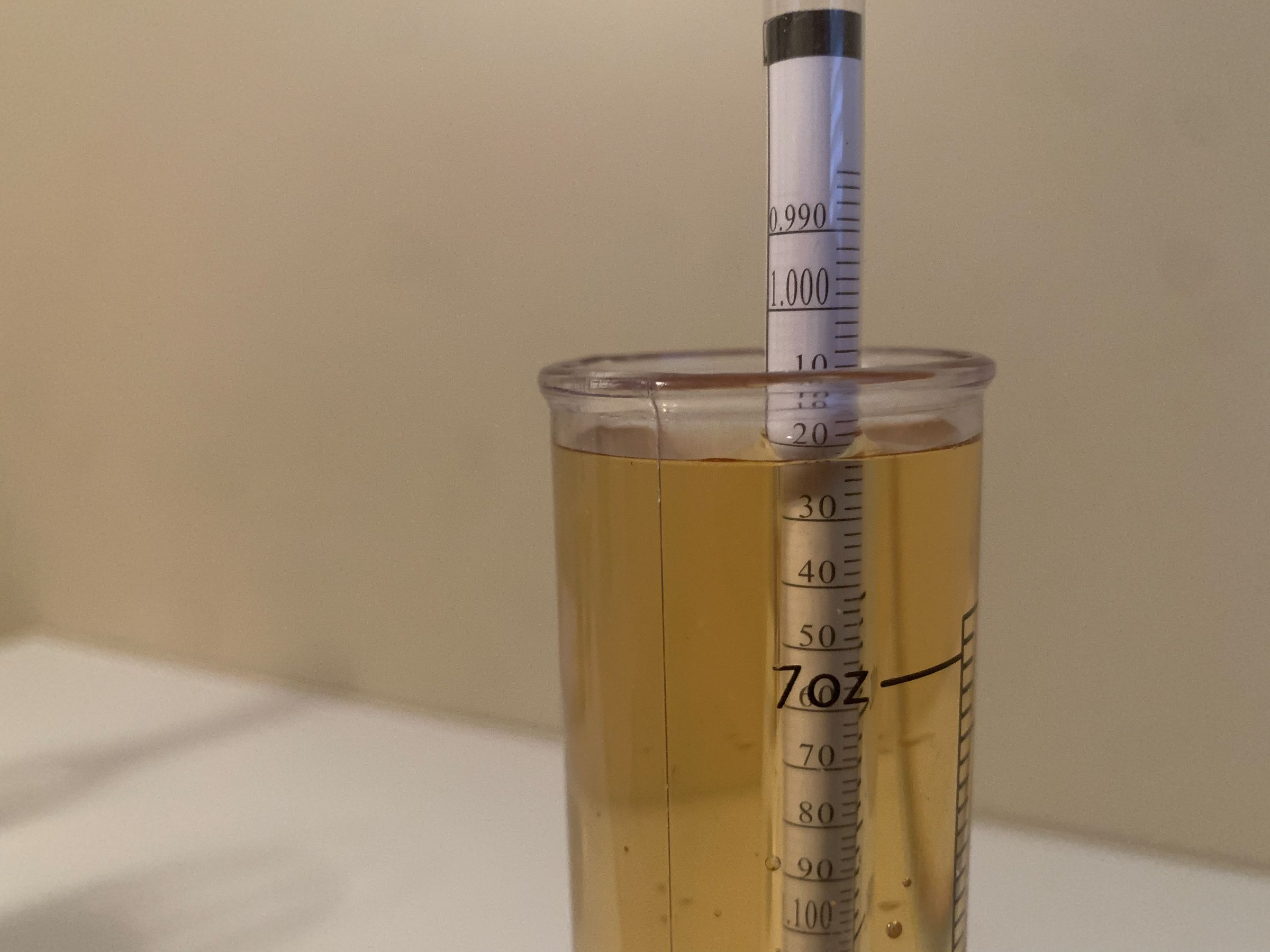
21–22. I felt quite a bit of sweetness, so I expected the specific gravity to be a bit higher, making this an unexpected result! Subjectively, it felt about as sweet as the cyser I drank last time (14% ABV, 33 specific gravity).
4. "Cyser" (Charm City Mead Works)
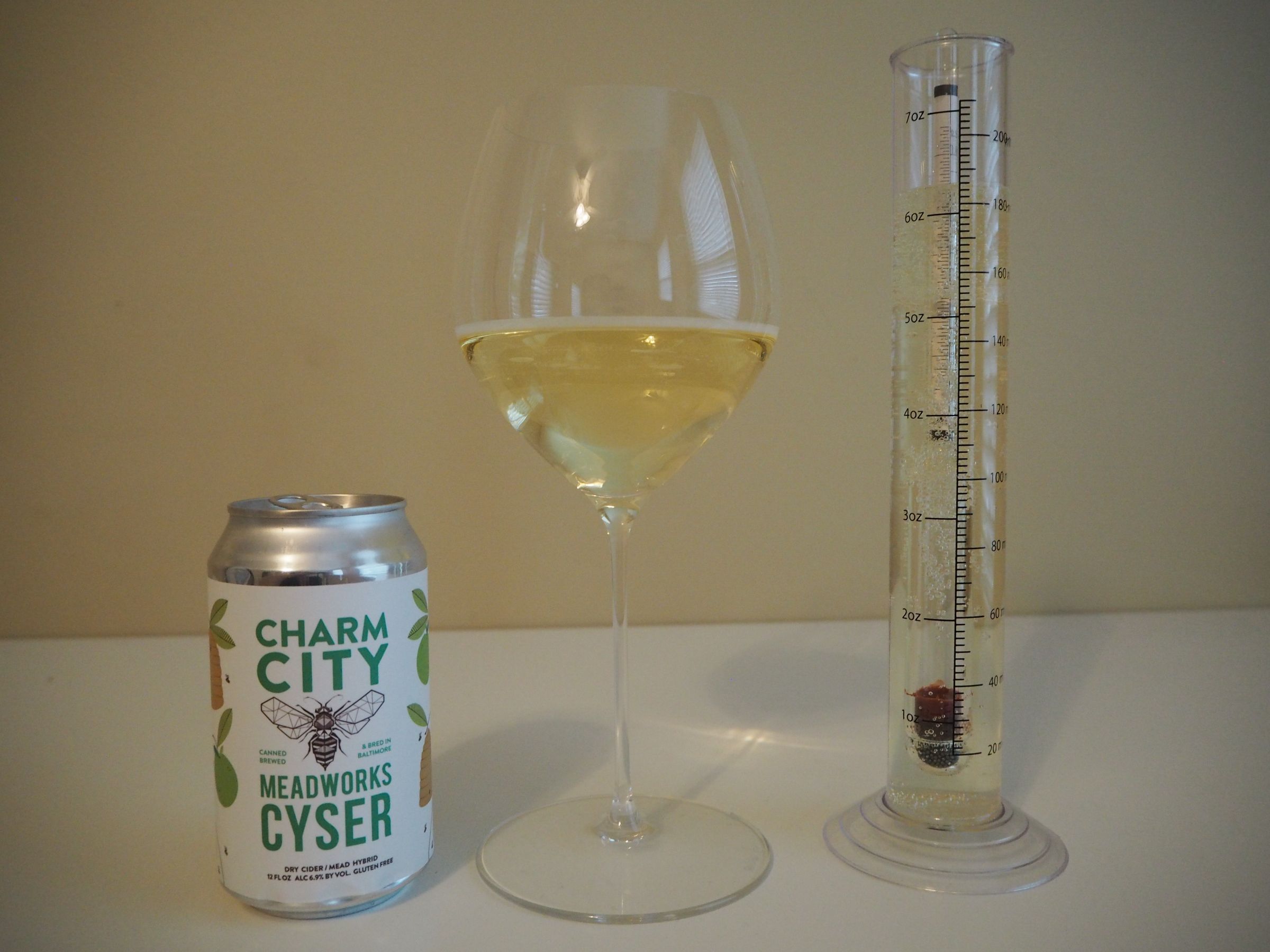
Ingredients: Honey, Apples
ABV: 6.9%
Volume: 12oz (approx. 355ml)
Price: 12 USD (4 cans)
Carbonation: Yes
Final Gravity: 1.001–2
Perceived Sweetness: ★☆☆☆☆
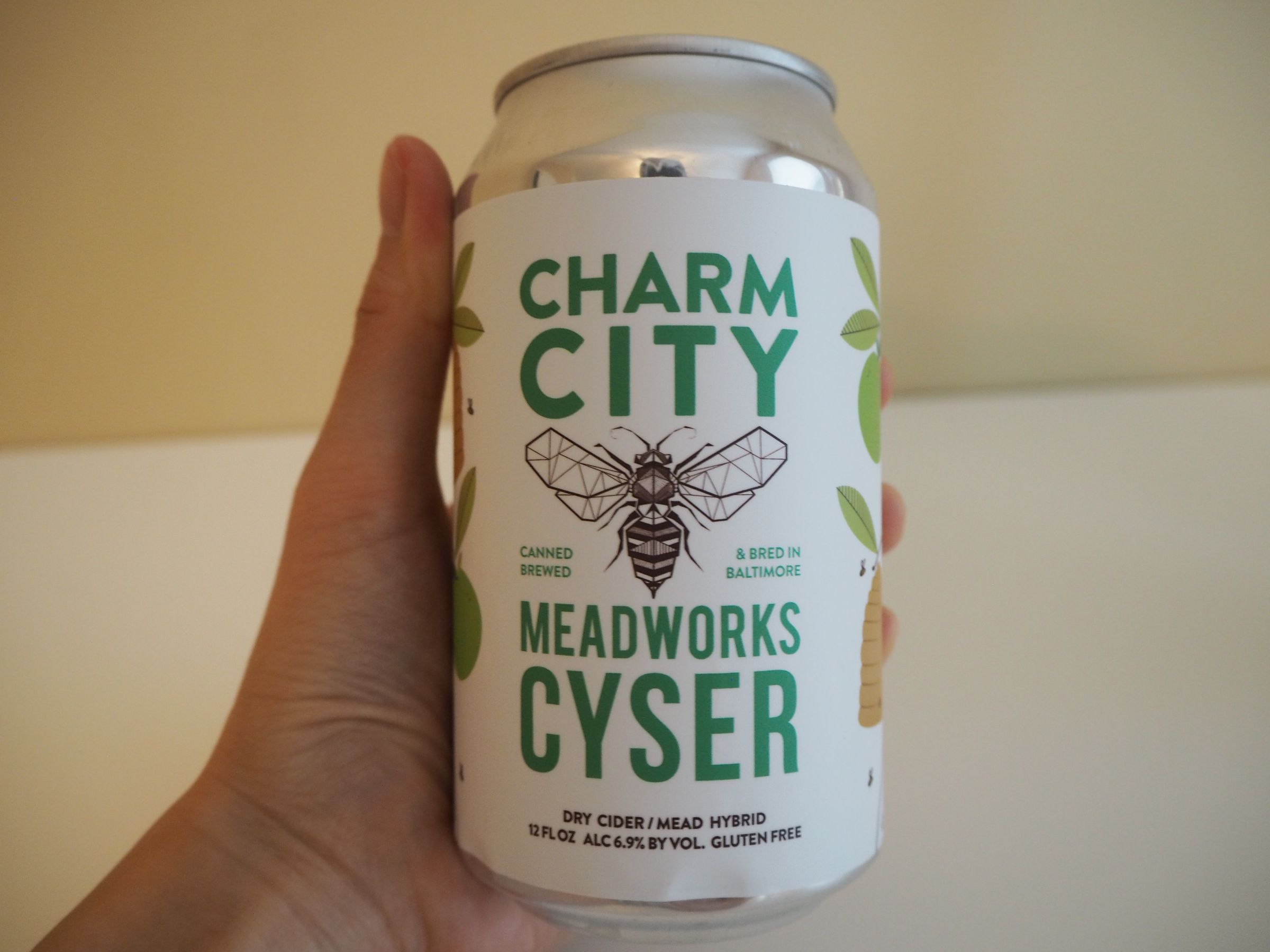
This is "CYSER," a cyser from the Maryland-based meadery "CHARM CITY MEADWORKS." They make light, dry, and refreshing mead intended for everyday enjoyment. While they sell both canned and bottled mead, interestingly, all the canned versions are 6.9% ABV with carbonation, while the bottled versions are uniformly 12% ABV and still.
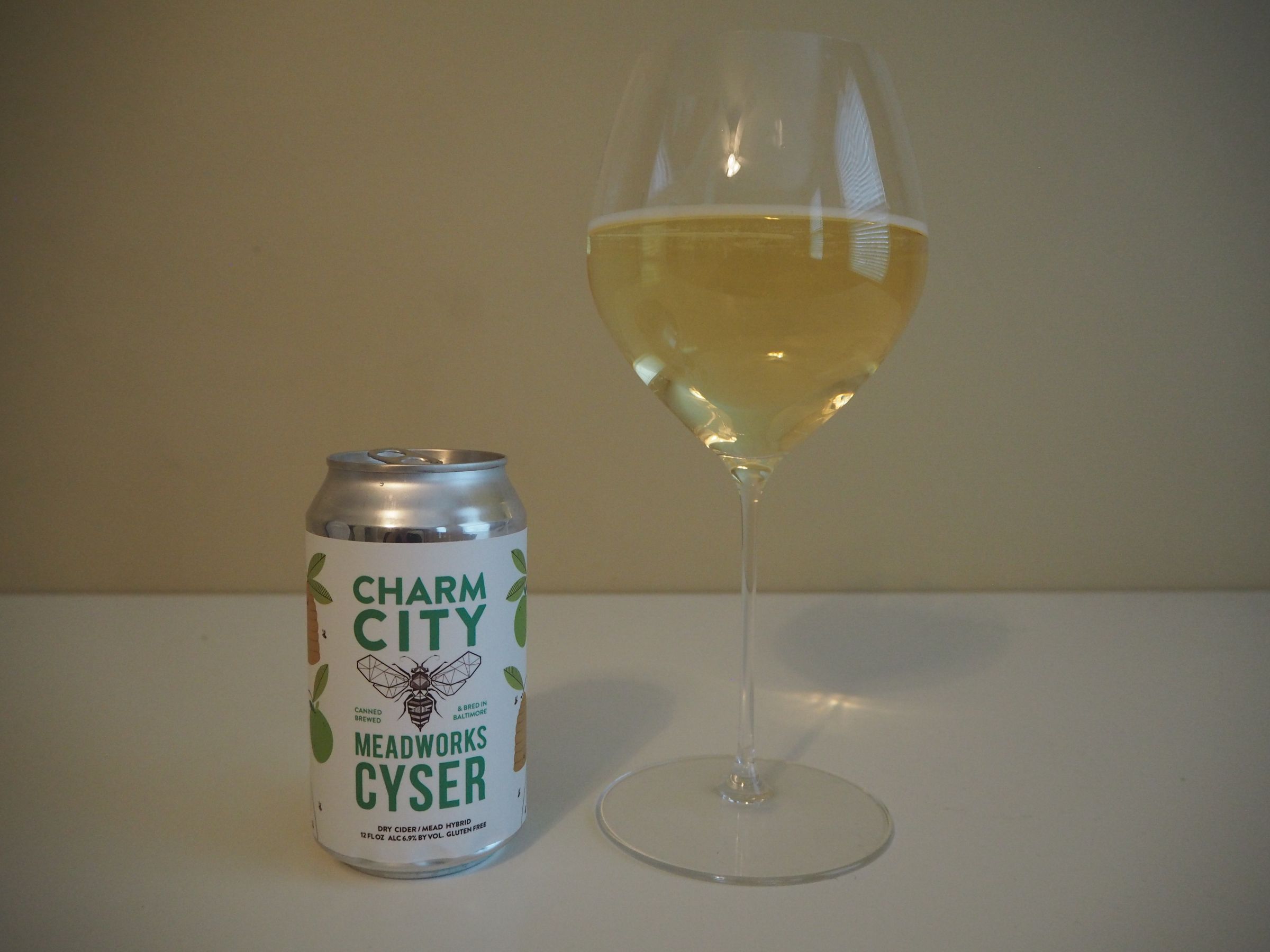
The color is a clear gold, almost like a white wine. It had a distinctive aroma, like an apple core. There was a satisfying prickle of carbonation in the back of the throat, and while there was an apple-like flavor, I felt almost no sweetness. In fact, there was a slight bitterness in the aftertaste, making it perfect to enjoy with a meal. I paired it with braised pork belly, and it was an excellent match.
As for the gravity I was curious about,
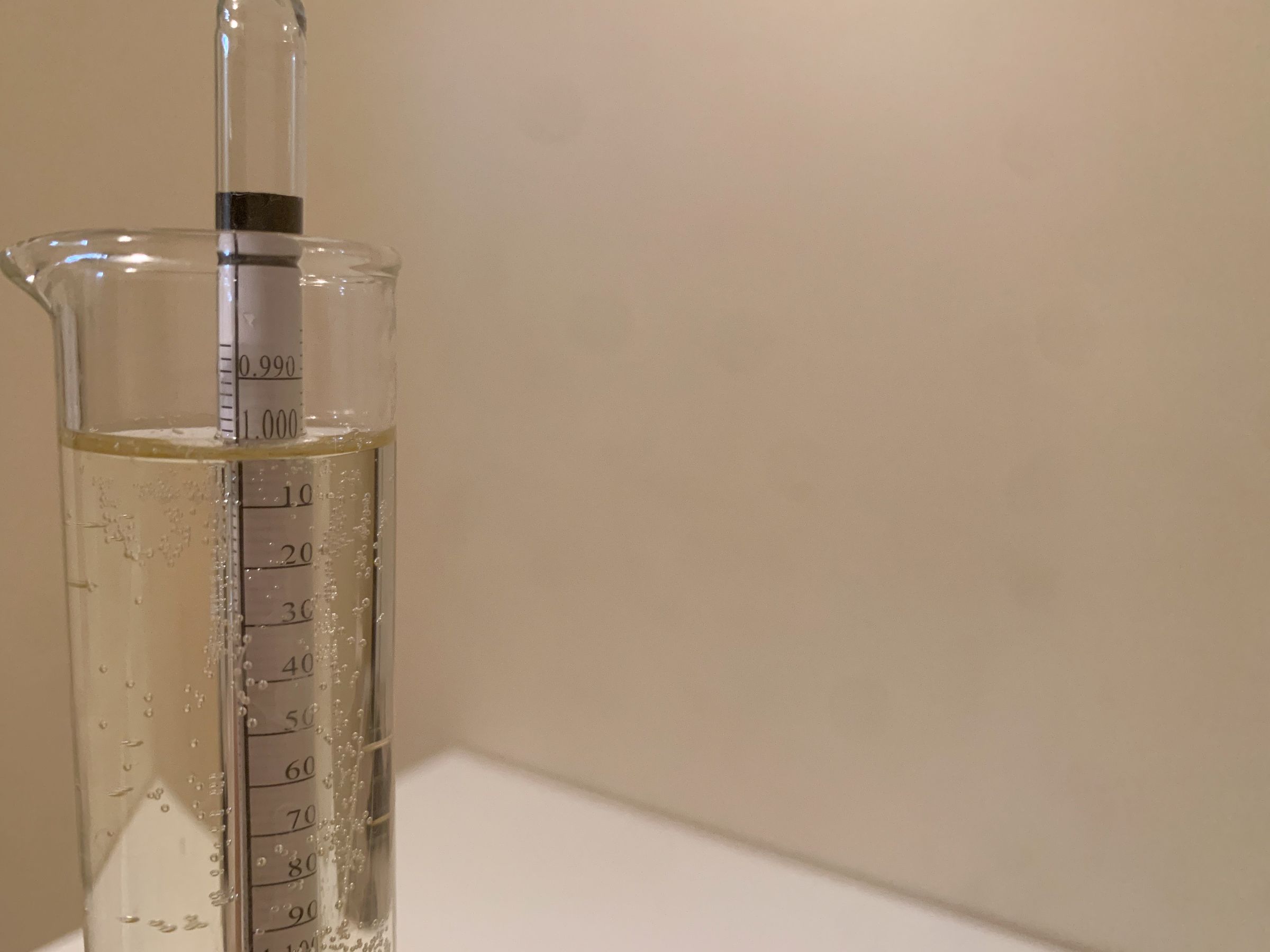
It was around 1–2. This is the lowest gravity of any beer, mead, or cider I’ve had so far. Some dry white wines reportedly have a gravity below zero, so you can use that as a frame of reference.
Bonus: I also tried some mead from Superstition Meadery
"SPACESHIP BOX," a personal recommendation from Yazawa, comes from the American meadery that inspired Shun and Yazawa to start making their own mead: Superstition Meadery.
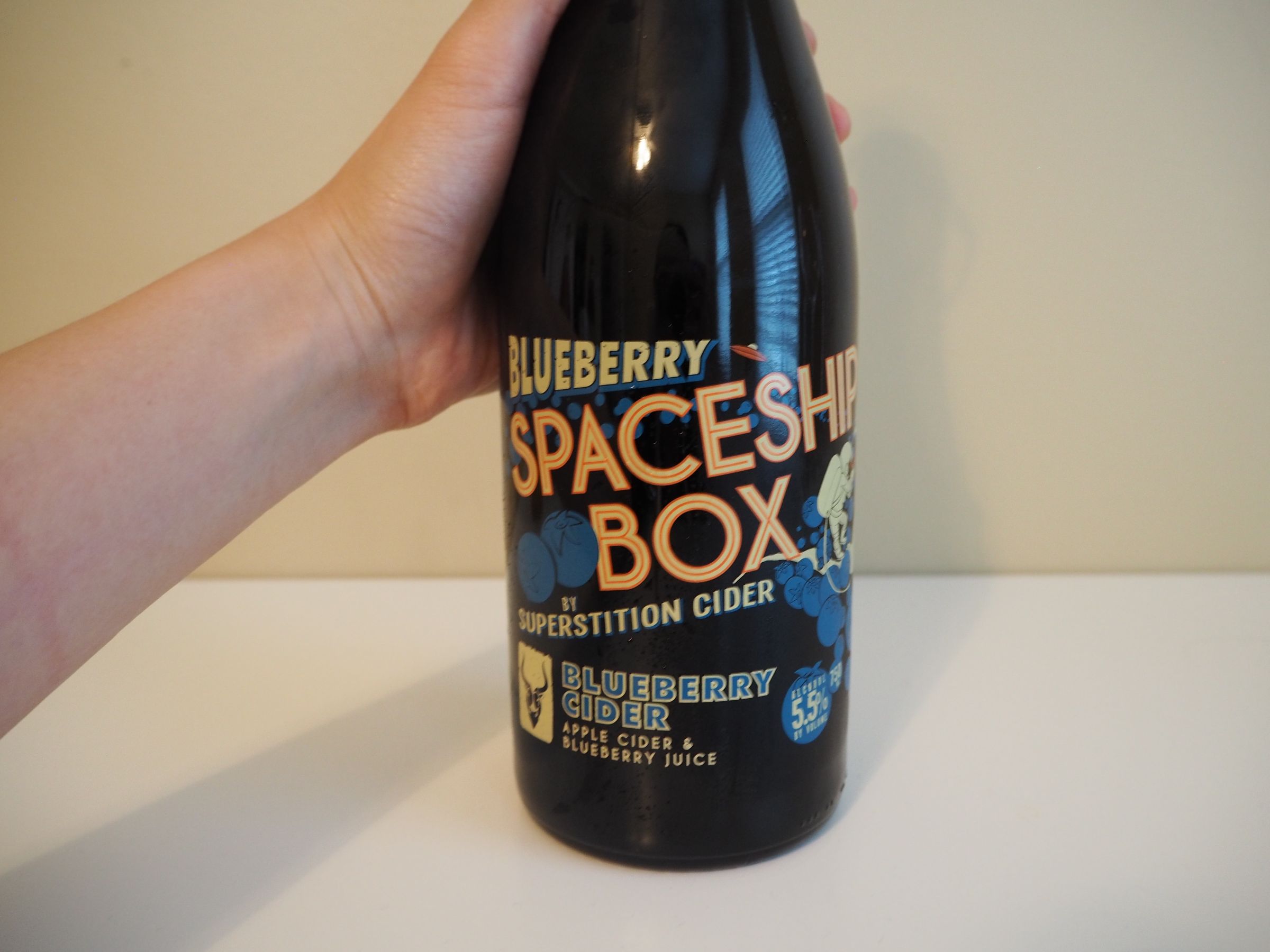
Ingredients: Apple cider, blueberry juice
ABV: 5.5%
Volume: 750ml
Price: 19 USD
Carbonation: No
Perceived Sweetness: ★★★★★
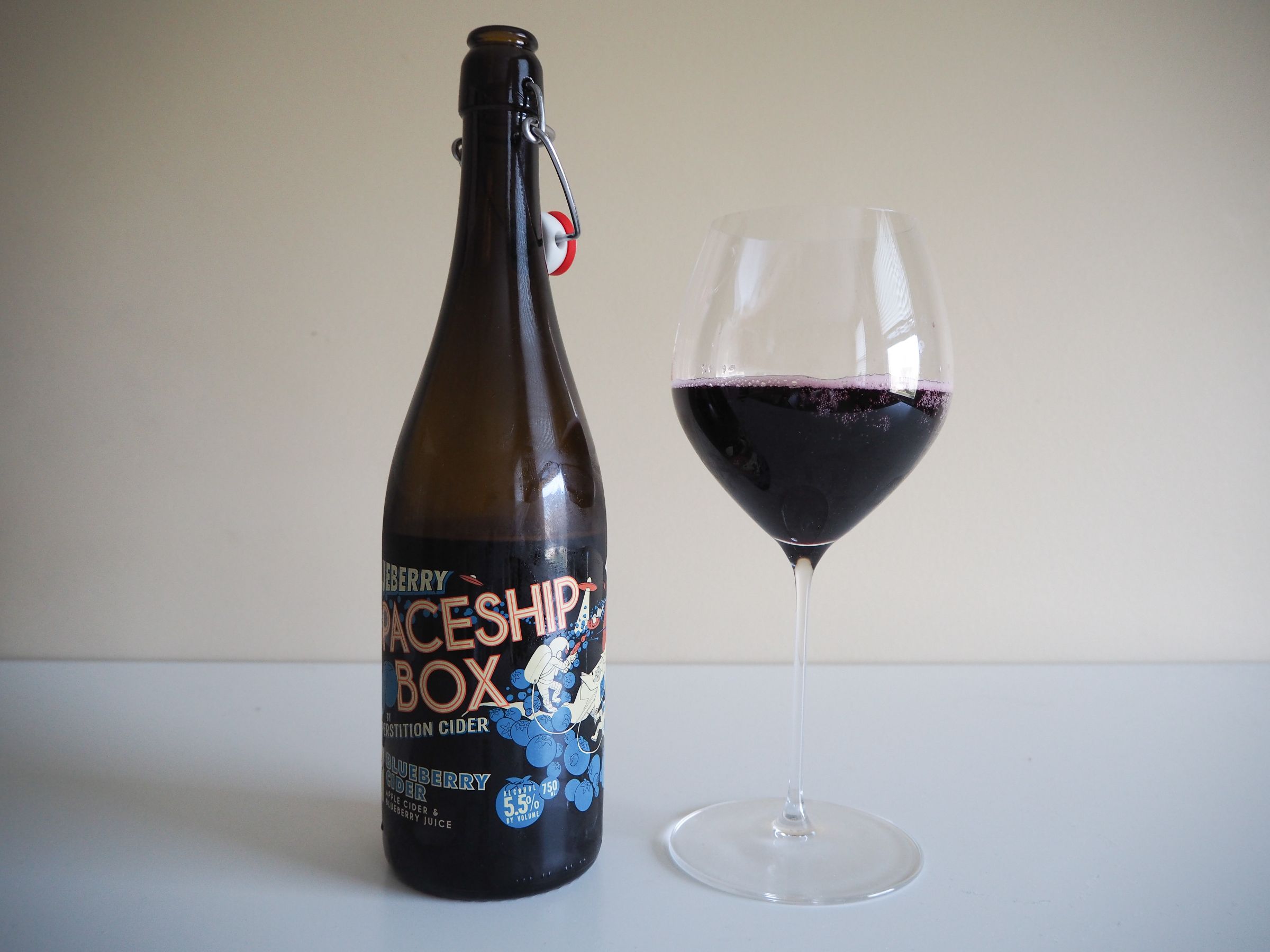
As you would expect from the blueberry color, it has a lovely blueberry aroma. The flavor also clearly features that blueberry profile. It’s unpretentious and easy to drink, so even though it’s a bit sweet, I could drink glass after glass. It doesn’t even need snacks. If I took this to a drinking party with friends, it would definitely be a hit. I think I’ll buy some as a souvenir for Yazawa when I return to Japan!
Conclusion
Comparing these ciders and cysers made me realize once again how interesting alcohol is. Even under the same broad category, the flavor can be completely transformed by the apples used, the fermentation process, and the adjuncts. Since I’m already in America, I’m definitely going to try homebrewing this year...! Look forward to my "Homebrewing Experience" report!!
シェアする:
A story about measuring the specific gravity of American mead made with fruit.