
A bit late, but Happy New Year! It’s Sena!
2021 was a year where I enjoyed my alcohol life more than ever thanks to discovering mead! How was your year?
At ANTELOPE, we wasted no time in sharing our 2022 resolutions, and one that came up a lot was "To strengthen our ability to reach out!" (Clap clap👏)
This year, I also want to share more about mead, the company, and the things I think about on a daily basis. I want to make us a team with a strong "voice," so I look forward to working with you all again this year!💪
Why use fruit in mead?
In this journal, I’d like to introduce some meads currently on the market in the U.S.! I will specifically focus on meads that use fruit as an adjunct ingredient.
The reason is that our brewer, Yazawa, has been struggling with creating mead using fruit. Making mead with fruit is more difficult than making standard mead. The hard part is achieving the exact level of sweetness one wants to express.
This is getting a bit technical, but the basis of alcohol production is fermenting sugar to create alcohol. With standard mead, you use the sugar from honey, but when you add fruit to the mix, you also have to account for the sugar content of the fruit, which simply doubles the effort required.
As we continue to take on the challenge of making fruit-based meads, I thought that by learning exactly what kind of sweetness other companies' products achieve, it might help solve some of Yazawa’s worries! With that in mind, I decided to research the flavor profiles of popular U.S. fruit-based meads!
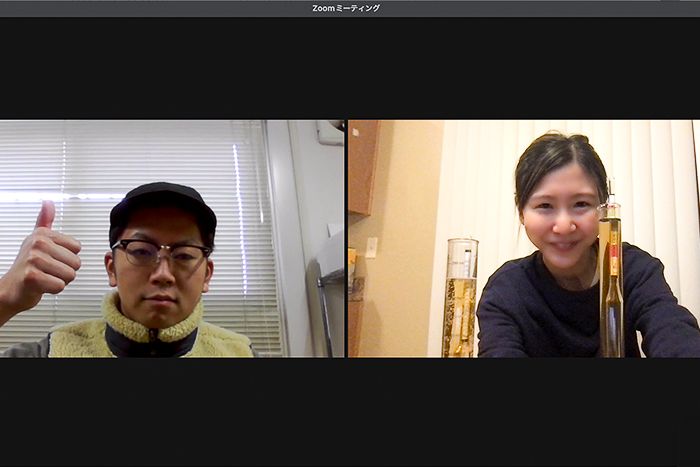
Focusing on more than just flavor: Final Gravity!
"Wait, what's final gravity?"
I can already hear you asking that, so let me explain. First of all, specific gravity (or relative density) is a value comparing the density of an aqueous solution to the density of water, where water is 1 (1.000). If the value is higher than 1, the liquid is heavier than water; if it's smaller, it's lighter.
When making alcohol, we measure the specific gravity before and after fermentation; the specific gravity before fermentation is called original gravity, and after fermentation is complete, it is called final gravity. These two values are critical for estimating the alcohol content, which is essential to making alcohol. In other words, specific gravity is a very important element in brewing.
[Tips for measuring specific gravity]
・When reading the scale, don't look at the part raised by surface tension, but at the horizontal surface around it!
・The liquid should be at 20 degrees Celsius.
[For water]
Specific gravity: 1.000
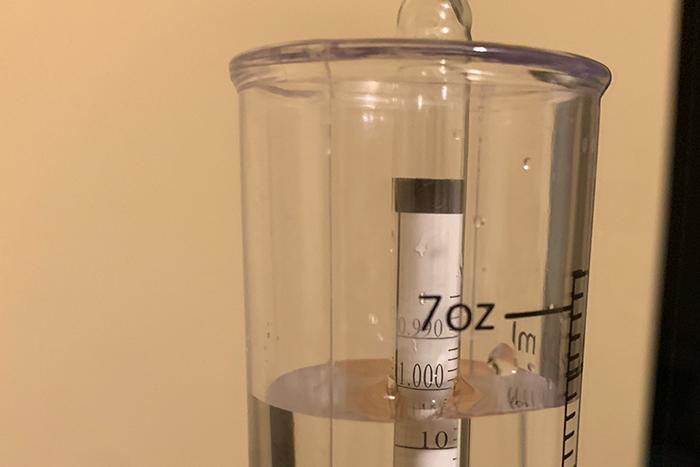
[For cola]
Specific gravity: 1.040
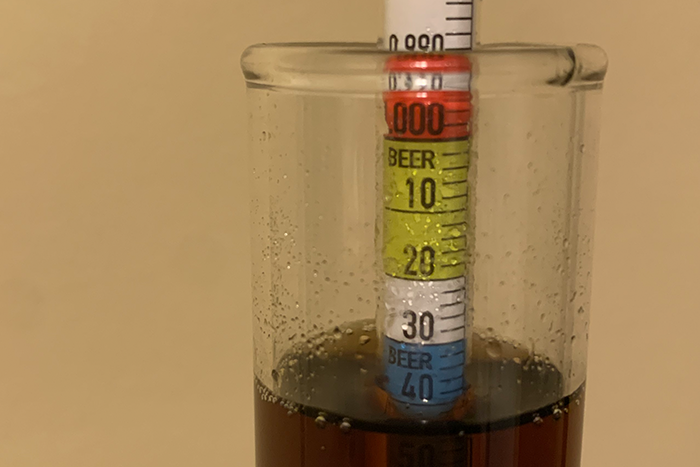
From this, we can see that cola has a higher density than water. It means that in addition to water, it contains 0.040 worth of sugar and other components. Since I'm sure you can imagine how sweet cola is, let’s look at the sweetness of mead with these values in mind!
I tasted three types of mead made with orange, apple, and banana!
The three types of mead I drank are as follows.
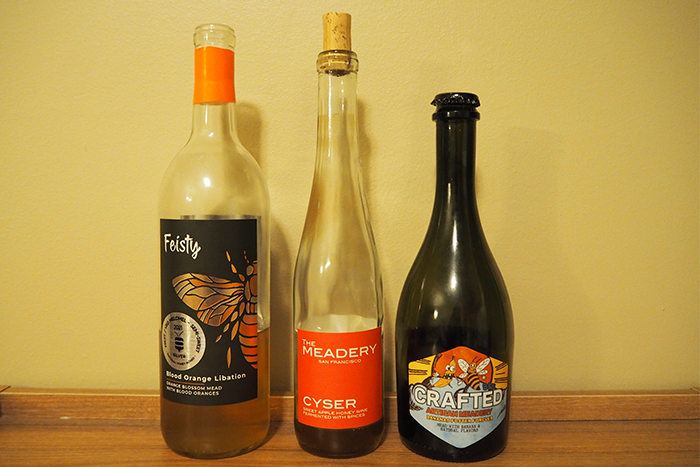
From the left:
1. Mead with orange: "Blood Orange Libation" (Feisty Brood Meadery)
2. Mead with apple: "CYSER" (The San Francisco Mead Company)
3. Mead with banana: "BANANAS FOSTER FOREVER" (Crafted Artisan Meadery)
(Product names are in quotes, and the meadery names are in parentheses.)
So, let’s get straight to introducing them!
1. "Blood Orange Libation" (Feisty Brood Meadery)
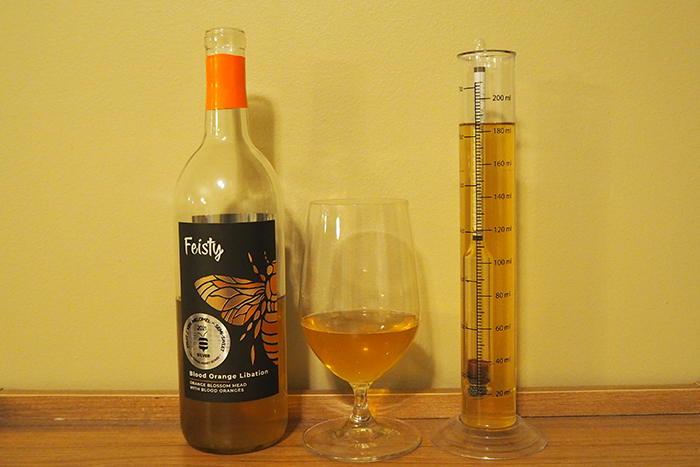
Ingredients: Orange blossom honey, blood orange
Alcohol content: 13.5%
Volume: 750ml
Price: 20 USD
Carbonation: None
Final gravity: 1.030 (read as "30")
Temperature: 20°C
Perceived sweetness: ★★★☆☆
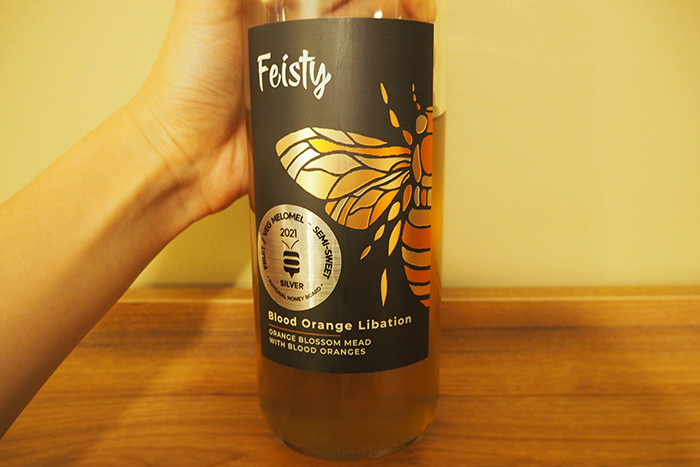
"Blood Orange Libation" features a bold depiction of an orange-colored bee. It is a mead from "Feisty Brood Meadery" in Ohio, USA. It won a Silver Medal in the Mead Crafters Competition Winners category at the 2021 National Honey Board Mead Crafters Competition! Because it uses orange as an adjunct, the style is Melomel.
When you pop the cork, the scent of fully ripened oranges hits your nose hard. While it looked cloudy in the bottle, once poured into a glass, it was a clear, beautiful, pale orange color.
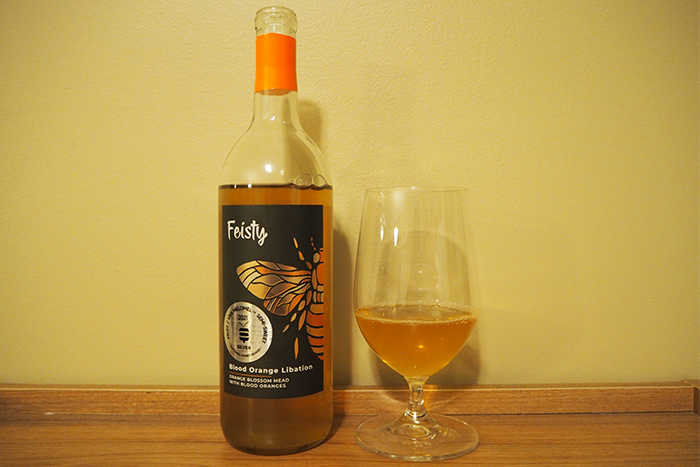
It was an impactful flavor where the sweetness and bitterness of the orange hit the back of the throat with force. I thought it would taste similar to ANTELOPE’s summer orange mead, but perhaps because it wasn't carbonated, it felt heavier.
I thought it might go well with blue cheese, so I tried them together, and they were a perfect match. The mead masked the pungency of the blue cheese, while the blue cheese tempered the bitterness of the mead itself, making me want to have them together again and again.
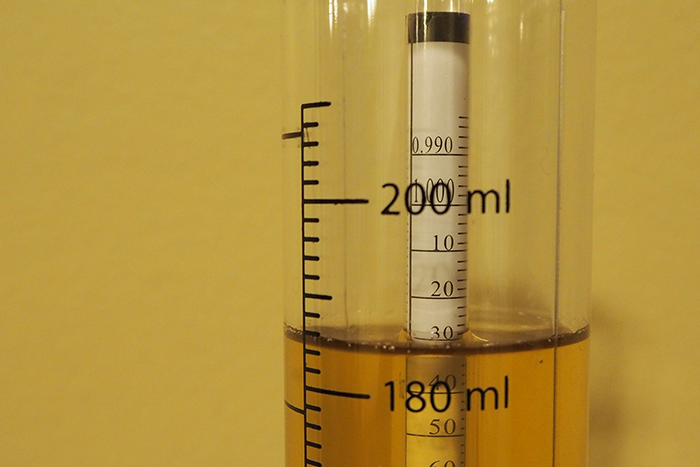
The final gravity is 30. While the actual sweetness felt more restrained than cola, it's strange that the numbers are actually quite close. Could the presence or absence of alcohol also make a difference?
2. "CYSER" (The San Francisco Mead Company)
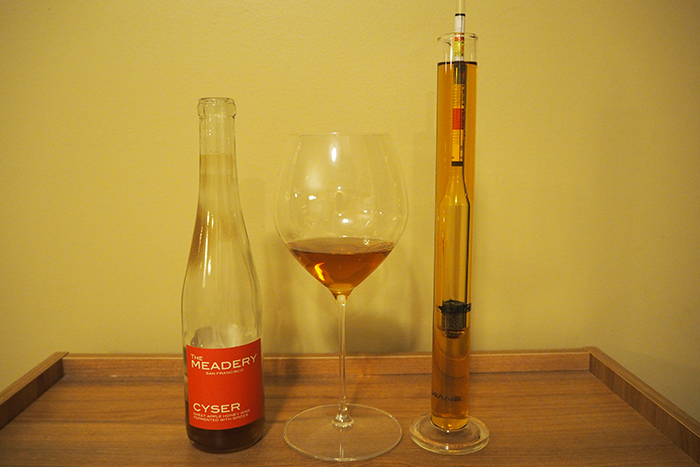
Ingredients: Honey, organic apples (Sonoma-grown)
Alcohol content: 14%
Volume: 750ml
Price: 29.99 USD
Carbonation: Yes
Final gravity: 1.033 (read as "33")
Temperature: 20°C
Perceived sweetness: ★★★☆☆
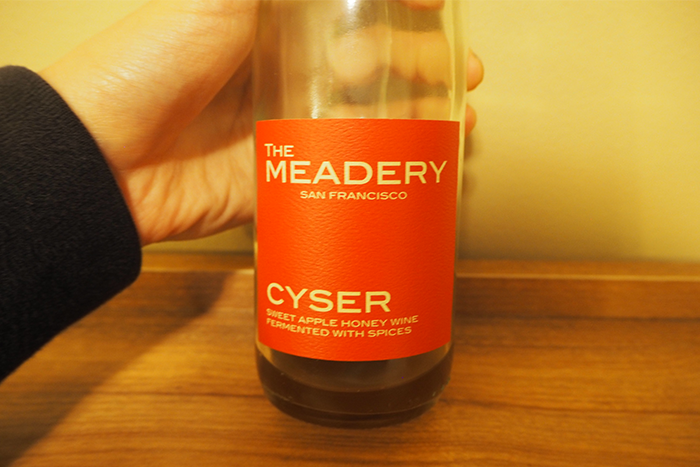
"CYSER" has a stylish design with red imagery reminiscent of apples, featuring only the meadery and product name. It is from "The San Francisco Mead Company" in California, USA. Although this meadery has closed, it was a sister store to "Brother Drake Meadery" in Ohio, which I visited the other day. It seems they are selling the remaining stock in Ohio. Cyser is a general term for mead made with apples.
When you pop the cork, a rich apple scent fills your nose. Poured into a glass, it looks just like rich apple juice.
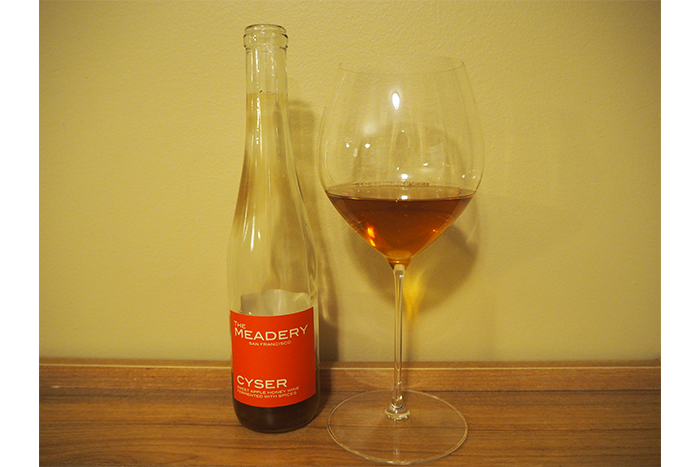
It lacked the bitterness often said to be common in cysers and went down smoothly. Once it reached my throat, a warm feeling spread through it, and the sweetness of the apples followed in my mouth! I felt so blissful that I thought cyser might be the most luxurious way to enjoy apples.
Since I was having braised pork belly for dinner that day, I tried pairing them, and it was a 100% match. The sweetness of the cyser was brought out even more, making the meal more enjoyable than usual.
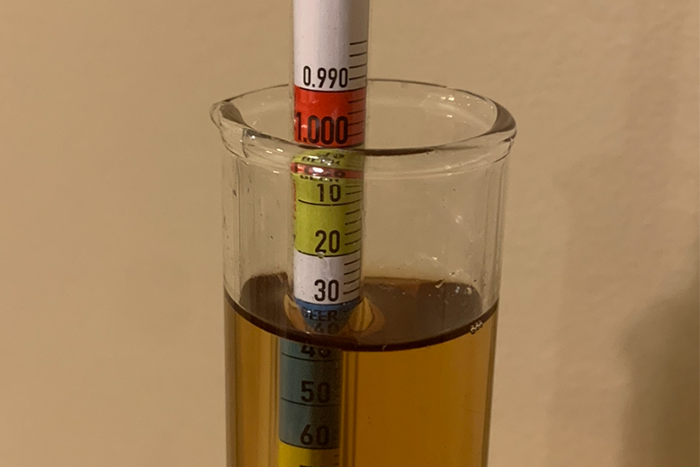
The final gravity is 33. The impact of the sweetness I felt was similar to the orange mead I drank earlier, so this is a convincing number.
3. "BANANAS FOSTER FOREVER" (Crafted Artisan Meadery)
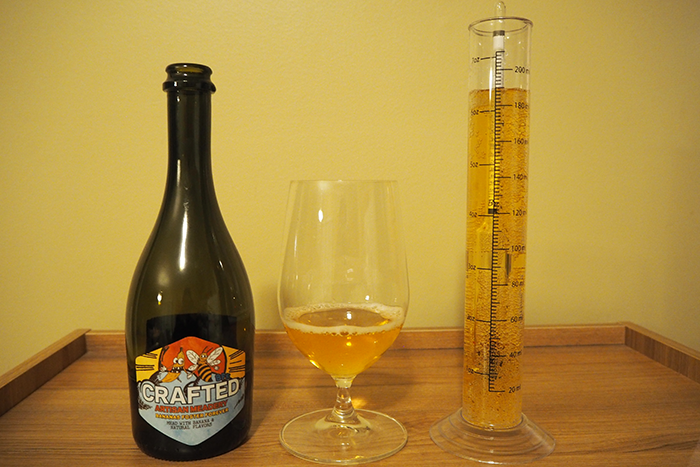
Ingredients: Honey, banana juice concentrate, sugar, coffee beans, vanilla beans,
Potassium metabisulfite, potassium sorbate
Alcohol content: 6%
Volume: 500ml
Price: 9.99 USD
Carbonation: Yes
Final gravity: 1.034 (read as "34")
Temperature: 20°C
Perceived sweetness: ★★★★★
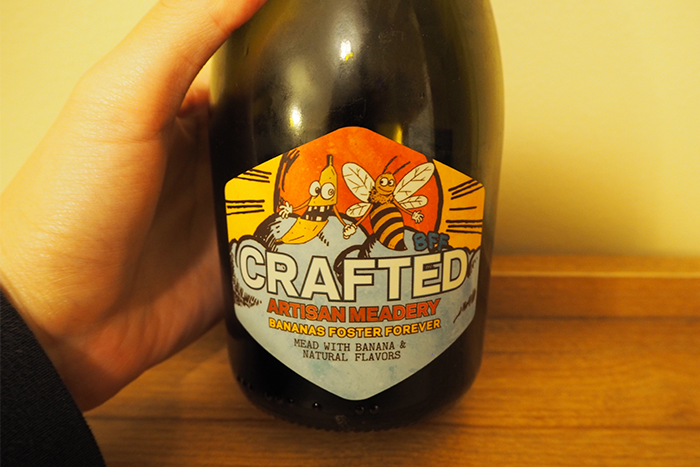
"BANANAS FOSTER FOREVER" has a very cute design with a banana and a bee holding hands. It is a mead from "Crafted Artisan Meadery" in Ohio, USA. It won a silver medal in the Session Mead – Sweet category at the Mazer Cup 2017! (Since the alcohol content is below 7.5%, it is classified as a Session Mead.)
When you pop the crown cap and bring your nose to the bottle, you get the sweet scent of ripe bananas. Poured into a glass, it foams because it is carbonated. It has a beautiful golden color, so it looks like beer.
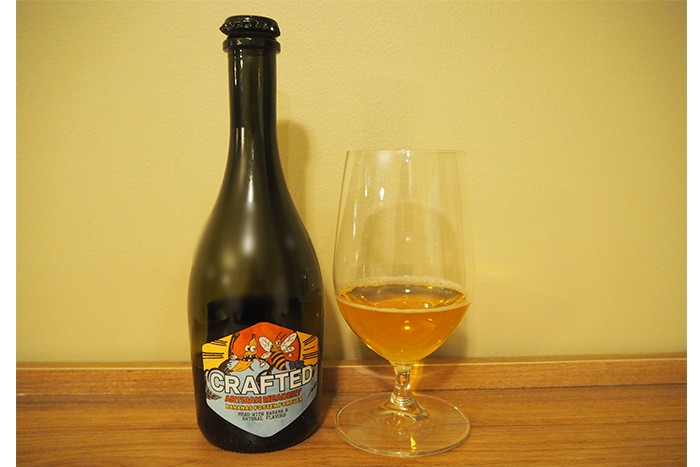
As for the taste,
"Oh, it's so sweeeet...!"
In any case, I found it extremely sweet. In addition to the ripe banana flavor, which matches the aroma, there were hints of vanilla essence and sweet coffee. While it is somewhat refreshing due to the carbonation, once the fizz is gone, it becomes almost like juice. I felt it is better enjoyed like a dessert wine rather than paired with a meal. I have a feeling that if you drink it with some kaki-pi (rice crackers) or spicy potato chips, you'll be stuck in an infinite loop!
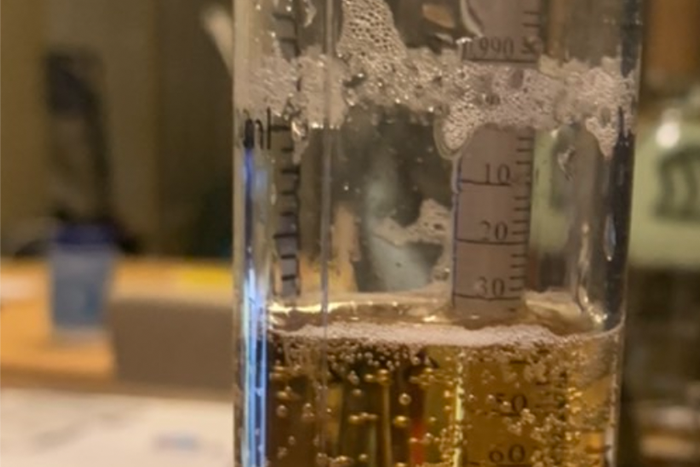
What’s also interesting is the final specific gravity. Despite feeling several times sweeter than the orange mead or cyser I drank earlier, the specific gravity value remained almost the same. In other words, roughly the same amount of residual sugar should be present. The only difference is the alcohol content, with a gap of about 8% between them! This means that the higher the alcohol content, the less sweet it feels compared to the actual sugar content. Wow, you learn something new every day!!
After finishing three types of mead
It was impressive that every mead retained the aroma and sweetness of its fruit, allowing them to truly shine. It was also interesting that I couldn't taste the honey sweetness at all. All the meads were delicious, but my favorite fruit-based mead this time is the "cyser"! My reasons are the following two:
• It had absolutely no off-flavors and the apple flavor was perfectly concentrated.
• It can even be paired with Japanese food.
I’d love to try cysers from other meaderies in the future!✊
From Yazawa
Sena-san, great job! That was your first specific gravity measurement; I rattled off a bunch of things that could be interpreted from the data in quick succession, but I'm glad you enjoyed the process from start to finish!👐
Specific gravity measurements provide hints about "sweetness," so it would be wonderful if you could help uncover the mysteries of various American meads and contribute to the growth of ANTELOPE.
Everyone, you can also get hints about the "sweetness" of a drink with just one really simple tool through gravity measurement, so if you're interested, please give it a try!👐 I'm sure Sena-san will be happy to teach you how (passing the buck, haha).
In closing
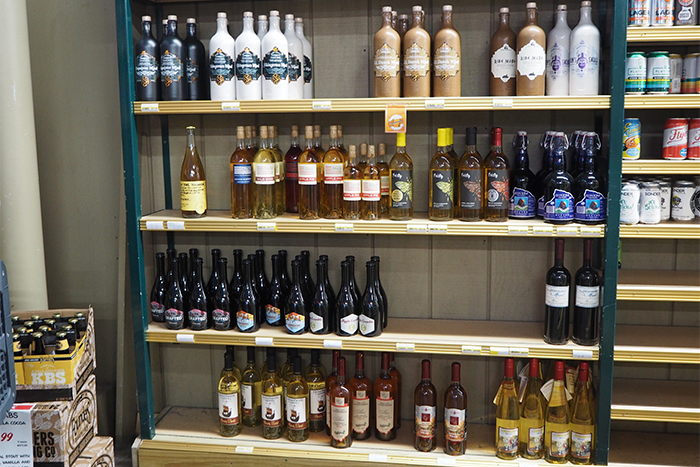
As a side note, I purchased each of these meads at an international market called "JUNGLE JIM'S," which sells food products from over 70 countries around the world. As a mead fan, I’m just so happy they have a dedicated mead section!
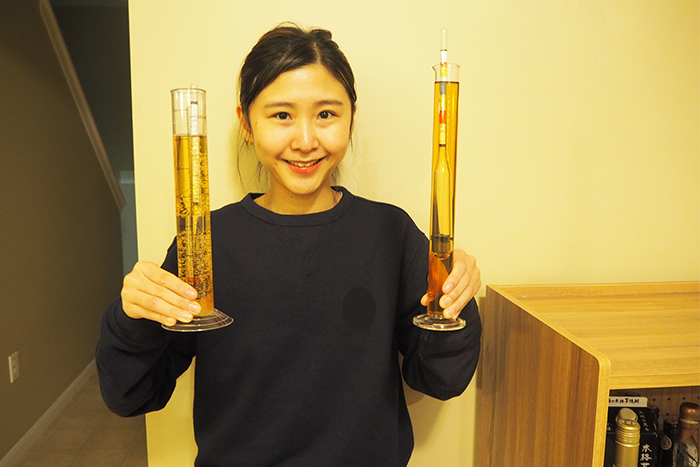
The number of meaderies in the U.S. is increasing year by year, with reports that over 200 new meaderies will open by the year after next. There are still many existing meaderies I haven't been able to introduce yet, so I want to keep uncovering more and more. This was my first time measuring final specific gravity with a hydrometer, and I really enjoyed being able to logically understand the sweetness I was perceiving! I’d like to keep measuring specific gravity in future posts as well♪
See you in another article!👋
シェアする:
Introduction to Mead Vol. 6: Recommended Craft Meads
What are apple-based alcoholic drinks like "cider" and "cyser"?