
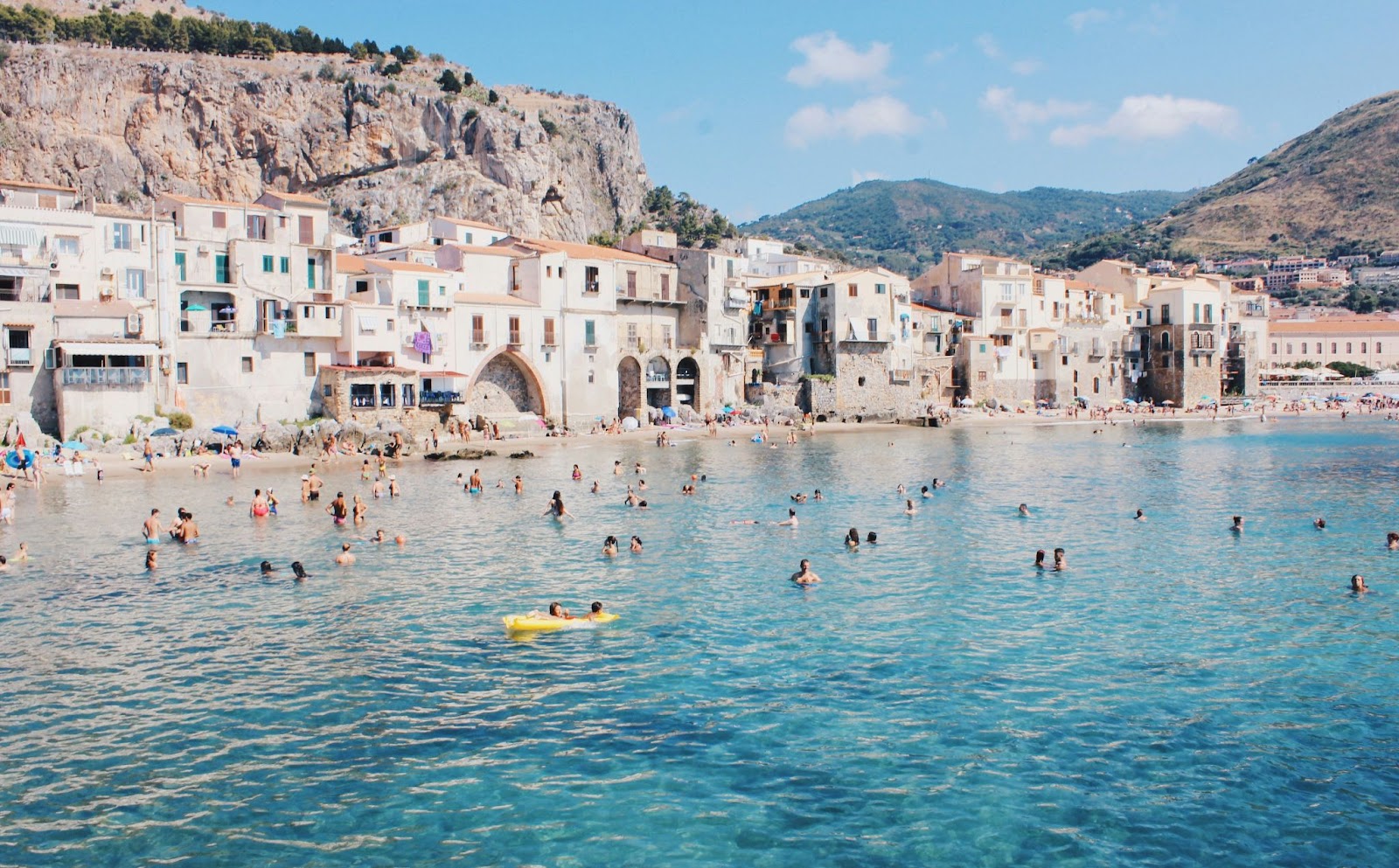
Buongiorno🇮🇹 This is my fourth week exploring Italian wine. After traveling through the northern regions of Veneto and Piedmont, and the central region of Lazio, I’ve stretched my legs all the way to Sicily this week🦵 (I’d love to spend a vacation somewhere like this.)
"To study wine, the best thing to do is drink it!" Following the advice of wine veterans (while doing a little happy dance inside), I am taking this seriously once again.
Today, I’m focusing on a wine called "PARVA RES NERO D’AVOLA." It’s produced by a winery in Sicily and is a red wine made 100% from the "Nero d'Avola" grape variety. "Nero" means black in Italian; as the name suggests, it is the quintessential black grape variety of Sicily.

Nero d'Avola is a grape known for its concentrated, sweet fruit flavors, and it is said that it often produces wines with significant volume (full-bodied).
And so, a few more mysteries have popped into my mind.
-
What conditions lead to the "concentrated, sweet fruitiness" that is the hallmark of Nero d'Avola?
-
Are there any grapes in Italy or other countries that are similar to Nero d'Avola?
-
How does the taste of the grapes change from before fermentation to after fermentation?
I’d love to solve all these mysteries today, but it’s likely to get too long, so I will tackle the first one. I plan to dive deeper into the second and third ones from next week onwards🔍
1. Under what conditions is the "concentrated fruitiness" of Nero d'Avola created?
I recently read a book on "The basics of communication for high achievers." It mentioned that "first, you must define your terms." Since I believe in the back-and-forth between theory and practice, I’d like to put that into practice right away.
What exactly is "concentrated fruitiness"?
A state where the water content in the grape is low, and components like sugars and polyphenols are concentrated.
…
Alright, the definition is complete.
Now, what kind of conditions bring about this state?
From my past studies, the following factors seem relevant:
1. Temperature
2. Sunlight
3. Humidity
4. Soil
5. Cultivation method
Let's look at them one by one.
1. Temperature
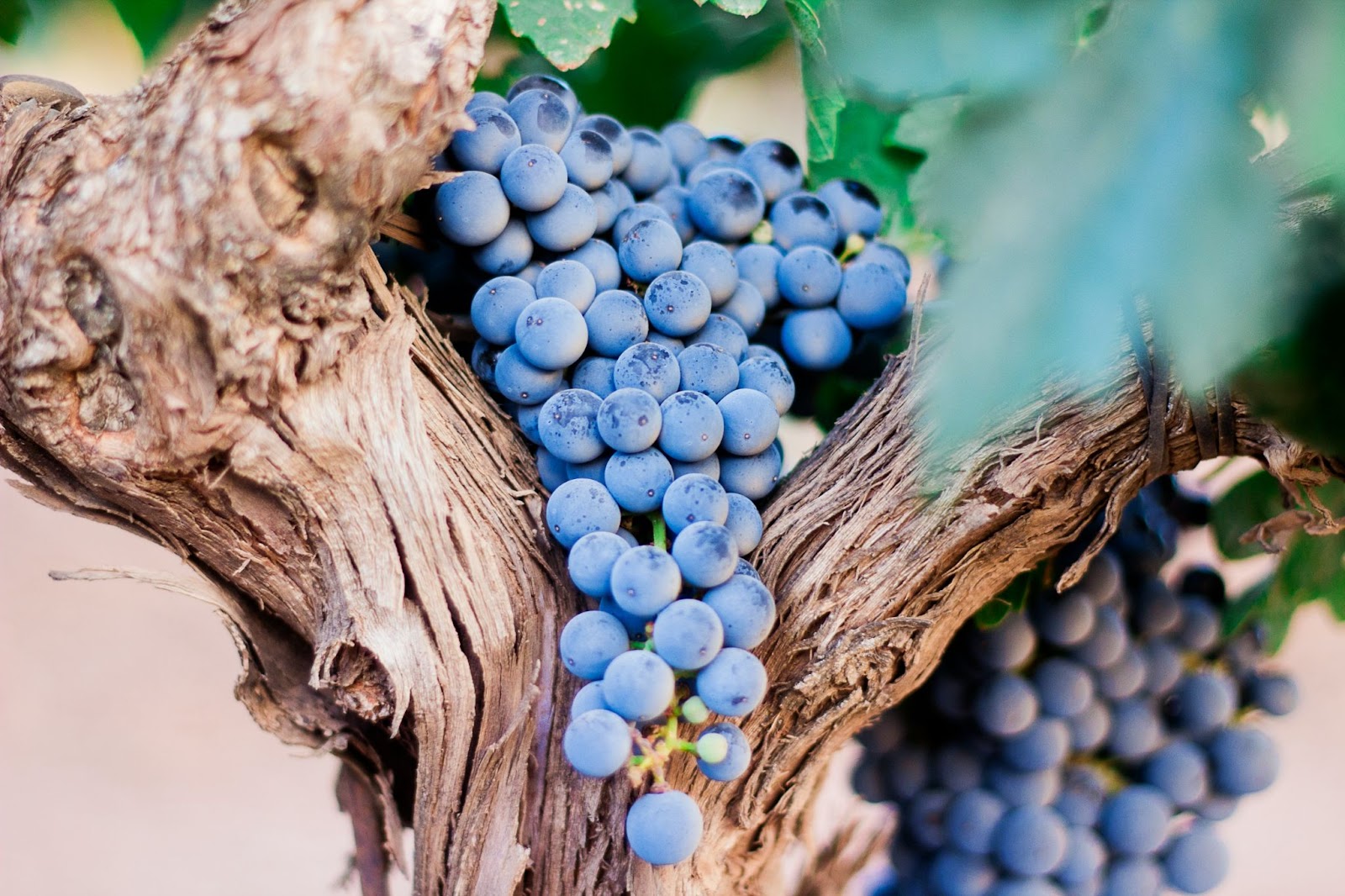
Regarding this, I suspect it’s probably a warm climate.
My reasoning comes from my talk with Mr. Yamashita from 202 WINE & GROCERY, whom I visited two weeks ago.
"Grapes grown in cool climates are tight and have prominent acidity."
"Conversely, grapes grown in warm climates tend to develop sweetness and fruitiness."
So, if a wine made from grapes that should have been grown in a cool region turns out to have strong fruitiness, the conversation goes, "It must have been a warm year!"🍇
In other words, were they grown in a warm climate?
Thinking this, I did some research and found the following☀️
—
・Sicily is extremely hot in the summer.
・According to 2022 weather data, the average temperature in July-August exceeds 30°C.
・The climate is warm even in winter.
—
The temperature difference between day and night is also an important element under the umbrella of temperature. It seems that a large diurnal range contributes to the concentration of fruit flavors.
If you imagine mountain climbing, you can tell that these places likely have high elevations📍 Research shows they are cultivated on hillsides at an elevation of 400-600m💡
A warm climate—it seems my guess was correct.
2. Sunlight
If warmth is involved, wouldn't it be good to have plenty of sunlight?
I found that an "environment blessed with bright sunshine" is preferred.
By receiving a certain amount of sunlight:
- The amount of aromatic compounds in the fruit increases.
- By receiving ultraviolet rays (UVB), grapes produce flavonoids as a defense mechanism. Since flavonoids also function as antioxidants, this is beneficial for winemaking.
However, on the other hand, if they get too much sunlight, they can get "sunburned" just like humans. Sunburn can lead to fatal problems in winemaking, such as loss of water-retention ability or the grapes drying out so much that they produce no juice.
*While "temperature" is directly involved in sunburn, "solar radiation" is cited as something that directly and indirectly affects that temperature.
Regardless, my guess here was also correct.
3. Humidity
Perhaps because I live in Japan, I tend to feel that warm places = humid.
When I recall how easily mold grows during the rainy season, I wonder if humidity isn't good for grape cultivation? Returning to my definition again...
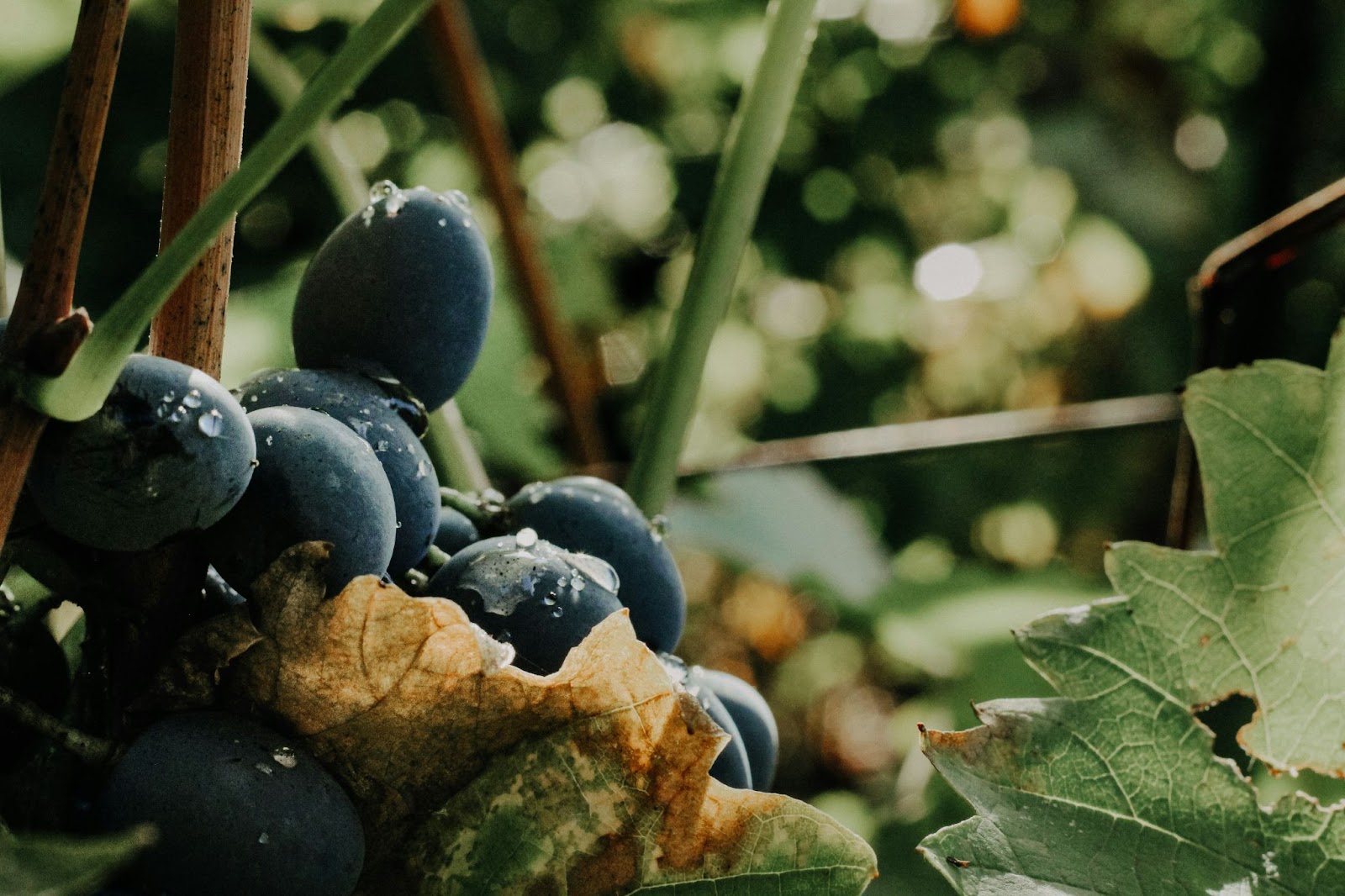
"Low water content in the grape" was written. So, a dry region must be better, right?
The answer is... a dry climate!
I couldn't find solid evidence as to why dryness is good, but it seems there is an advantage in that diseases are less likely to occur.
As an aside, "Malbec," which I studied when learning about Argentine wine, also prefers a dry climate, and I'll add to my review notes that this results in the pigments in the skin becoming more concentrated and turning blacker.
4. Soil
I had no prediction for this and couldn't even form a hypothesis, so I’ll summarize what I found💡
There are three important soil types in Sicily that differ by region, and Nero d'Avola seems to grow in each.
===
1. Volcanic soil
What I learned when studying "Garganega" last time (review):
Rich in minerals and has good drainage, giving wine mineral notes, saltiness, and complex flavors.
2. White limestone
A characteristic soil found especially in the southeast. It tends to produce wines with an elegant taste, and Nero d'Avola grown in this soil is said to have a particularly refined flavor.
3. Clay soil
If the climate is dry, wouldn't there be a lack of water?
This is a question that crossed my mind during the humidity section. What solved it for me was clay soil. This soil is characterized by high water retention. They balance things out well, don't they? It is rich in minerals and gives a salty, savory flavor.
===
The taste should be slightly different depending on the soil. Which soil is the wine I’m drinking today from? What would happen if you mixed them? I can't stop the excitement.
5. Cultivation method
I reflect on the fact that I haven't learned this properly either. (I want to go see the vineyards with Okada-kun and Yusuke-kun next time🏃♀️)
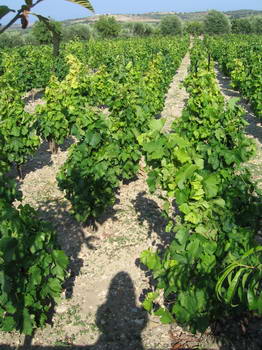
Research reveals it is grown using a traditional method called "Alberello training," which is said to have continued since the ancient Greek era.
■Features
・Each vine is independent and trained low (no stakes or wires used).
・About 10,000 vines can be planted per hectare!
・Since the grapes grow in low positions, harvesting is done on one’s knees.
■Merits
・Good ventilation, making them less prone to disease.
・Does not overwork the soil and absorbs only what is necessary, making it sustainable.
・Allows for detailed management because you can work with each individual tree.
■The tough parts
・Maintaining this level of quality requires considerable effort!
・Up to 200 days of work per year (about 4 times more than trellis training!).
・Only 400-500 vines can be maintained per day.
I feel like the love of the people who grow the grapes is poured into each one, which makes them very endearing. It's nice to make them into wine, but they would probably be wonderful eaten as they are or turned into other processed goods🍇
Summary
Nero d'Avola produces "concentrated fruitiness" by growing under the following conditions:
===
・Warm climate with a diurnal temperature difference.
・Sufficient solar radiation.
・Dry climate.
・Volcanic soil, white limestone, or clay soil.
・Cultivated by "Alberello training." This method is infused with the time, effort, and affection of the artisans.
===
The grape "Nero d'Avola," blessed by the nature of Sicily and the love of its artisans. I will approach the tasting with excitement to see what kind of taste it has.
■This week's tasting report
PARVA RES NERO D’AVOLA (Caruso & Minini)
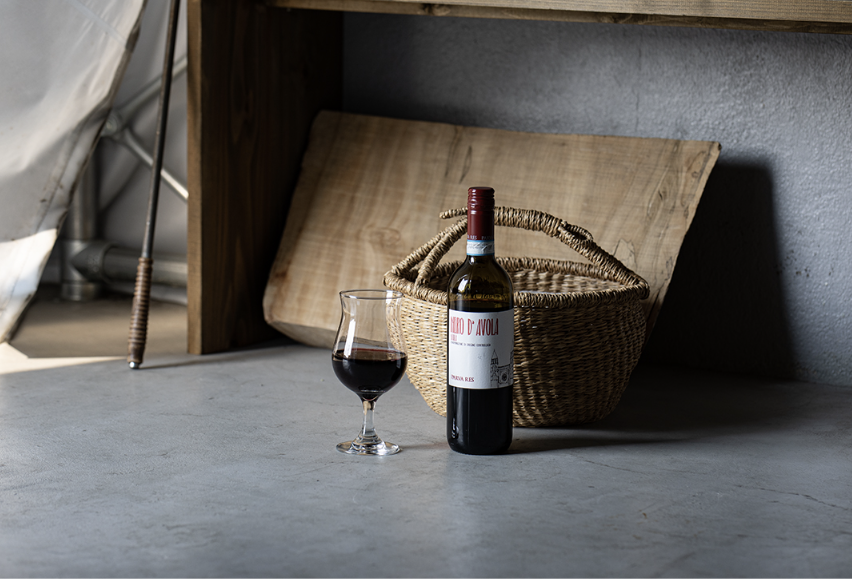
The producer of this wine is "Caruso & Minini." Located in the Marsala district along the coast of Sicily, this winery is co-managed by "Caruso," a traditional Sicilian winery, and "Minini," a modern winery that invests in the latest technology.
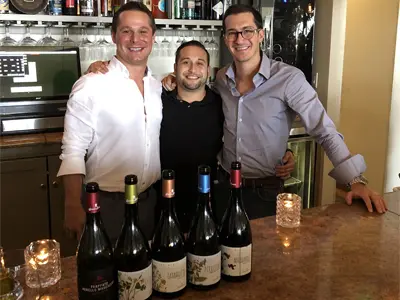
They handle a wide range of grapes, from the "Nero d'Avola" featured this time to international varieties like "Syrah." With the motto "Creativity, Elegance, Grace," they implement quality control that incorporates modern technology while valuing tradition. I feel a deep love for Sicilian wine in their attitude of carefully finishing each bottle while taking advantage of Sicily's soil and climate.
===
・Appearance: Clear ruby color. Compared to Malbec or Montepulciano, it is a paler red. Almost no viscosity, youthful appearance.
・Aroma: Balanced, neither too open nor too closed. There are hints of raspberry and cassis, but also a nuance of dried fig. There is a slight mineral feel like the one I felt in white wine, and when I checked, it turns out that "clay soil" is the closest among the three options mentioned above, so I don't think I'm far off.
・Taste: The attack is light. Sweetness spreads softly in the finish, but when you drink it, astringency spreads on the tongue. So this is tannin! It has enough body when you take a mouthful, but because the finish is gentle, it doesn't seem like it would get in the way of a meal.
・Dishes I want to pair it with: Beef stew with large chunks of meat or braised pork belly—I want to stuff my mouth with juicy meat and wash it down with this wine, repeating the process.
Postscript: It paired very well with biscotti from theta, which has the subtle sweetness of natural yeast, the fragrance of whole wheat flour, and the flavor of fruits soaked in mead. The sweetness of the biscotti stood out, and the astringency of the wine disappeared. Nice marriage.
・Price: 1,650 yen (tax included)/750ml
Affordable and wonderful* I want to use it for everyday drinking.
—
It ended up being long after all. But I look forward to next week as well*
シェアする:
Dear Sommelier - Malvasia Bianca di Candia
Dear Sommelier, Nero d'Avola No. 2