
Buongiorno🇮🇹 This is my 5th week exploring Italian wine!
When I went to the wine section at the supermarket last week, I spotted the grape variety "Garganega" and a wine labeled "Soave Classico," which gave me a chance to explain them to my partner. I was also able to act a bit smug when I spoke to the staff at Enoteca, mentioning, "Ah, this is a Gaja wine, right?"
Even with just a little more knowledge, I feel like my conversations with others have broadened and my life has become a bit richer🍷 It really is true that "wine is a hobby you can enjoy for a lifetime." I’ve only studied wines from four countries including Japan so far, and I can't stop feeling excited thinking about all the things I have yet to learn.
My preamble was a bit longer than usual, but today I’m continuing from last week. It’s a story related to the grape variety "Nero d'Avola." Out of the three questions I came up with last week, I’m focusing on the second one this time.
===
【Last week's three questions】
-
What conditions lead to the "concentrated sweet fruitiness" that is said to be a characteristic of "Nero d'Avola"?
-
Are there any grapes similar to "Nero d'Avola" in Italy or other countries?
-
How does the taste of grapes change before and after fermentation?
===
These questions arose because I frequently saw descriptions stating, "Nero d'Avola is a grape that offers a concentrated, sweet fruitiness, and it is often used to produce full-bodied wines."
In the world of grapes, there is a concept called "synonyms." This refers to different names used for the same grape variety. These differences arise due to region, language, and historical circumstances.
For example, the synonym for "Malbec," which I studied in Argentina, is "Cot" in France, and it is called "Auxerrois" in the Cahors region (Southwest France), where it is the main variety.
Thinking that "concentrated sweet fruitiness" sounded like a very common expression, I wondered if there might be similar grapes—in other words, synonyms.
Also, questions arose:
・Why does this grape produce full-bodied wines?
・How does the fermentation process affect the taste of the grapes?
I became curious about how wine fermentation relates to the taste of the grapes in the first place.
I covered the first point in "Ohayo Biwako vol.91," so if you're interested, please take a look back at it🔍 I plan to deliver the answer to the third point next week📮
For now, let's dive into the second question!
Are there any grapes similar to "Nero d'Avola" in Italy or other countries?
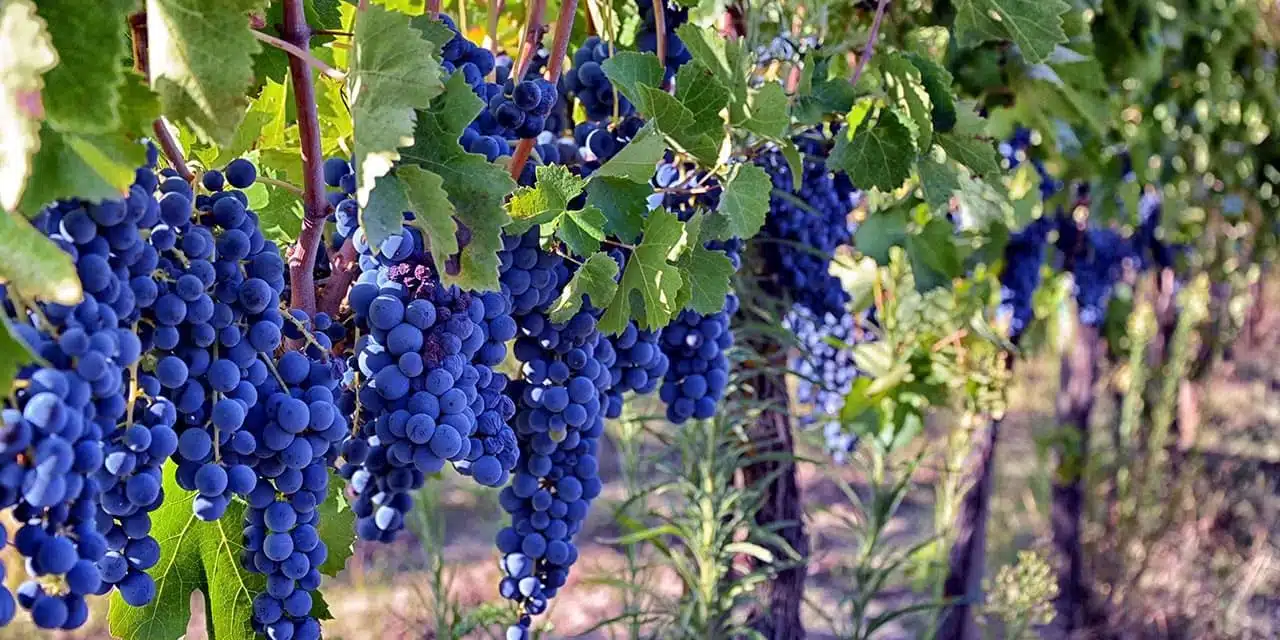
■ Are there synonyms?
When I looked to see if there were any "synonyms," I found "Calabrese," another black grape variety that represents Sicily.
While one might easily associate it with the southwestern region of Calabria, it actually originates from the dialect "Calaulisi" (grape of Avola) from the town of Avola in southeastern Sicily.
Calabrese shares the same genes as Nero d'Avola, but since they grow in different regions—meaning different soil and climate—the taste of the grapes also differs.
Is it like the relationship between Katchan and Tatchan in the manga "Touch," or perhaps the relationship between Imagawayaki and Obanyaki? Since the final taste is different, I feel it's the former, but what do you think?
Let me summarize their characteristics🍇

===
〈Regional Characteristics〉
1. Calabrese
- Main region: Northwest (Trapani Province, etc.)
- Soil: Sandy clay
- Wine characteristics: Powerful tannins, spicy flavors
2. Nero d'Avola
- Main region: Southeast (around Avola), all of Sicily
- Soil: Limestone
- Wine characteristics: Minerality, cherry-like aromas
===
Last week I wrote that the soil where Nero d'Avola grows is "clay," but this was actually a characteristic of the northwest region. I’ve learned that although Nero d'Avola is cultivated across all of Sicily, its name varies depending on the region.
Two varieties that share the same genes but grow in different regions. Now, what about beyond synonyms and beyond Sicily?
■ Possibilities in regions outside of Italy
When I searched for "Nero d'Avola" in English, I found two interesting descriptions that I’d like to share.
The first is from the British online wine retailer, "Virgin Wine Online Ltd."
===
- if Cabernet Sauvignon is your thing, or perhaps you’re a fan of Syrah, then this should definitely be next on your list to try!
If you like Cabernet Sauvignon, or perhaps you're a fan of Syrah, then this wine (Nero d'Avola) should definitely be next on your list to try!
Source:https://www.virginwines.co.uk/hub/wine-guide/grape-varieties/nero-davola/
===
When I checked the characteristics of Cabernet Sauvignon and Syrah, it does seem there are similarities. I’ll make sure to taste Nero d'Avola alongside them when I study those wines!
—
◎ Points similar to "Cabernet Sauvignon"
・Full-bodied and powerful
・Dark color (deep ruby red to purplish)
◎ Points similar to "Syrah"
・Full-bodied and powerful
・Concentrated fruitiness (that same expression!!)
—
The second one is a study description I found on the website of the IWC (International Wine Challenge).
===
- The expert and trained tasters also drew similar comparisons between Shiraz and Montepulciano (both of which came from the Barossa Valley), as well as between Grenache and Nero d’Avola wines.
Expert and trained tasters also drew similar comparisons between Shiraz and Montepulciano (both of which came from the Barossa Valley), as well as between Grenache and Nero d'Avola wines.
Source:https://www.internationalwinechallenge.com/Canopy-Articles/climate-change-substitute-reds.html
===
This study was conducted in Australia, where warming has been progressing, to see if grape varieties from Sicily and Portugal could serve as substitutes for existing varieties. Here, a similarity to "Grenache" was found.
The points of note are that both have nuances of red fruit, flowers, and candy, while also being relatively moderate in body and tannins💡 If you're interested in other comparisons, please take a look at the site🔍
I’m thinking of organizing a separate session to compare and taste wines made from Nero d'Avola, Cabernet Sauvignon, Syrah, and Grenache, and then report back on it🍷 (I wonder if the ANTELOPE team will join me?)
Anyway, this week I tried tasting a different wine made from "Nero d'Avola." I still had some of last week's wine left, so I did a comparison too🍷
■ This week's tasting report
ROCENO NERO D’AVOLA 2021 | Roceno Nero d'Avola (Cantine Europa)
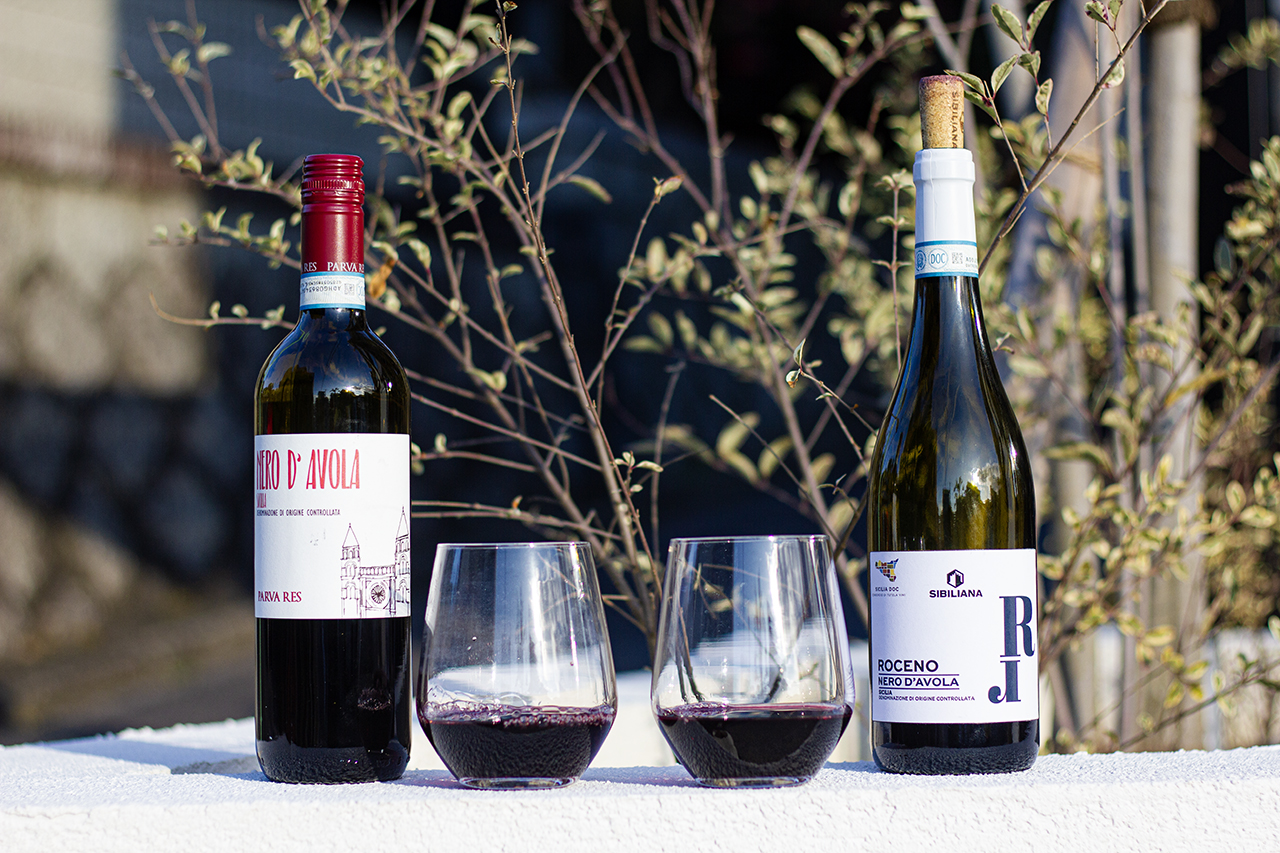
This wine is made by "Cantine Europa," one of the largest producers in Sicily, grouping together over 2,000 farmers. They were established in 1962 near Marsala in the western part of Sicily.
Wait? Given the location, this should be the grape called "Calabrese." Feeling confused, I looked it up and found that "Nero d'Avola" is the internationally used name, while Calabrese is just a local name used only in that region. Geographically, since it's the northwest, surely I should feel some powerful tannins and spice✍️

Also, the "Siciliana" mark above is apparently granted to wines with particularly high-quality lineups. It was on this bottle too, which just added to my excitement!!
===
・Appearance: Deep blackish-purple. The color is darker than the "PARVA RES NERO D’AVOLA" I drank last week. There is almost no viscosity; it feels light.
・Aroma: I definitely smelled something like nail polish or ethyl acetate. The aroma is quite prominent, and I sense cassis and black cherry. There’s also a tobacco-like or earthy smokiness that sits as a foundation for the wine.
・Taste: The attack is neither light nor heavy. Lively acidity spreads through the mouth. After swallowing, there's an alcoholic sensation like after drinking whiskey, and a distinct astringency remains on the tongue. (This is the tannin!) The finish is on the longer side.
Side note: Since the "PARVA RES NERO D’AVOLA" was lighter and had a white wine-like minerality, I thought it was a southern Nero d'Avola, but it turned out this winery was also in the same district as this one. It's interesting how things are never simple.
・Food pairing: Juicy fried chicken, a tomato-heavy tomato pasta, or even a Margherita pizza would likely pair well🇮🇹
・Price: 1,650 yen (incl. tax) / 750ml
This is also affordably priced, which is great* I can use it for everyday drinking!
—
Next week, the Nero d'Avola chapter will finally come to an end. It's about winemaking, so it seems like it might be a bit difficult. I'll do my best while asking everyone questions!
シェアする:
To my dear sommelier friend: Nero d'Avola from Sicily
Dear Sommelier, - The taste of grapes