
Buongiorno🇮🇹 Starting this week, I'm beginning my studies on "Italian wine"🇮🇹 Speaking of Italy, it’s the setting of Part 5 of JoJo's Bizarre Adventure, which I love.
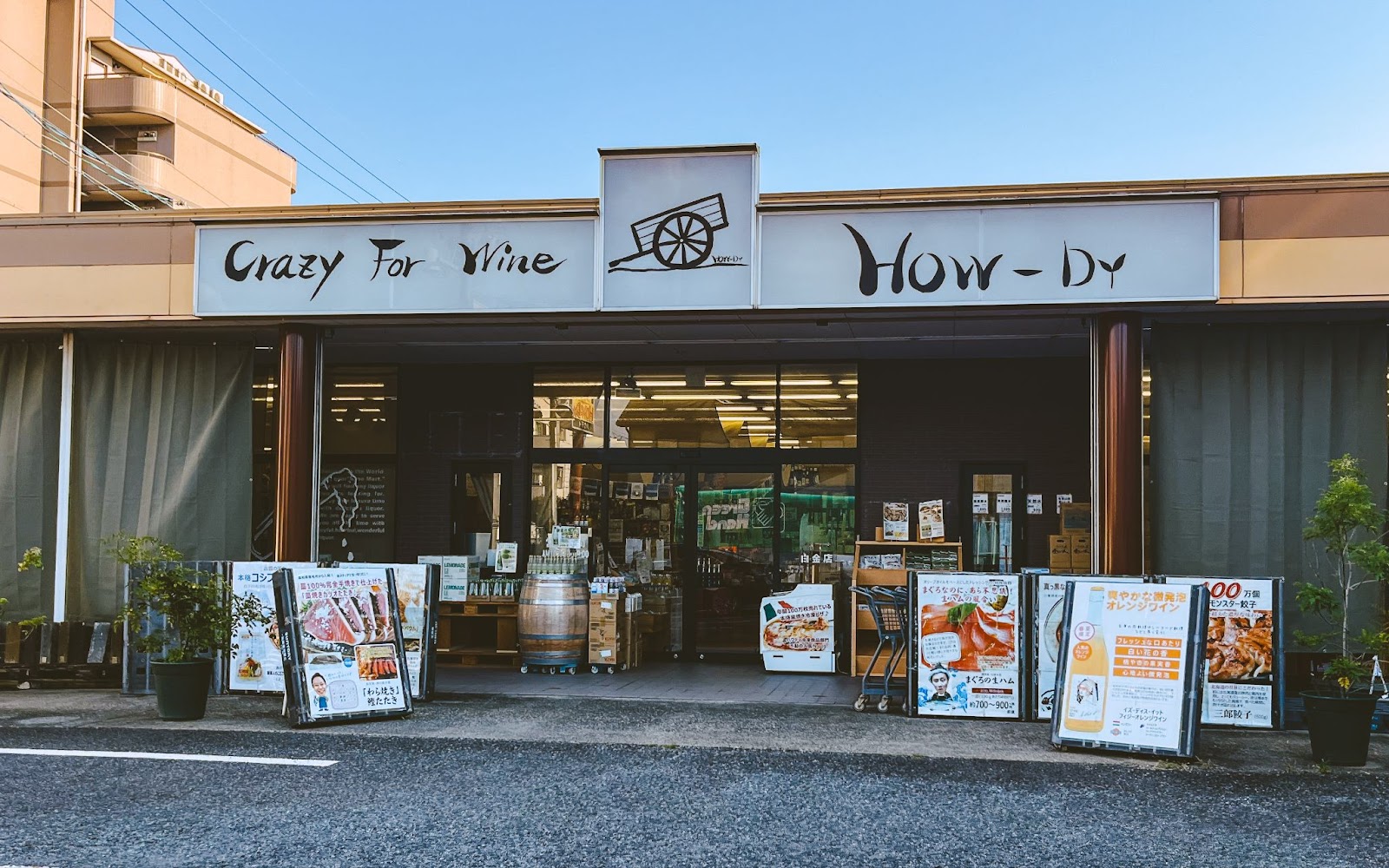
Feeling like a pilgrim on a sacred journey, I opened my textbook with excitement, but I was immediately overwhelmed by the sheer number of varieties and the amount of terminology I have to memorize. I decided to start by talking to a professional, so I headed over to the Nagoya wine shop "Howdy"🏃♀️
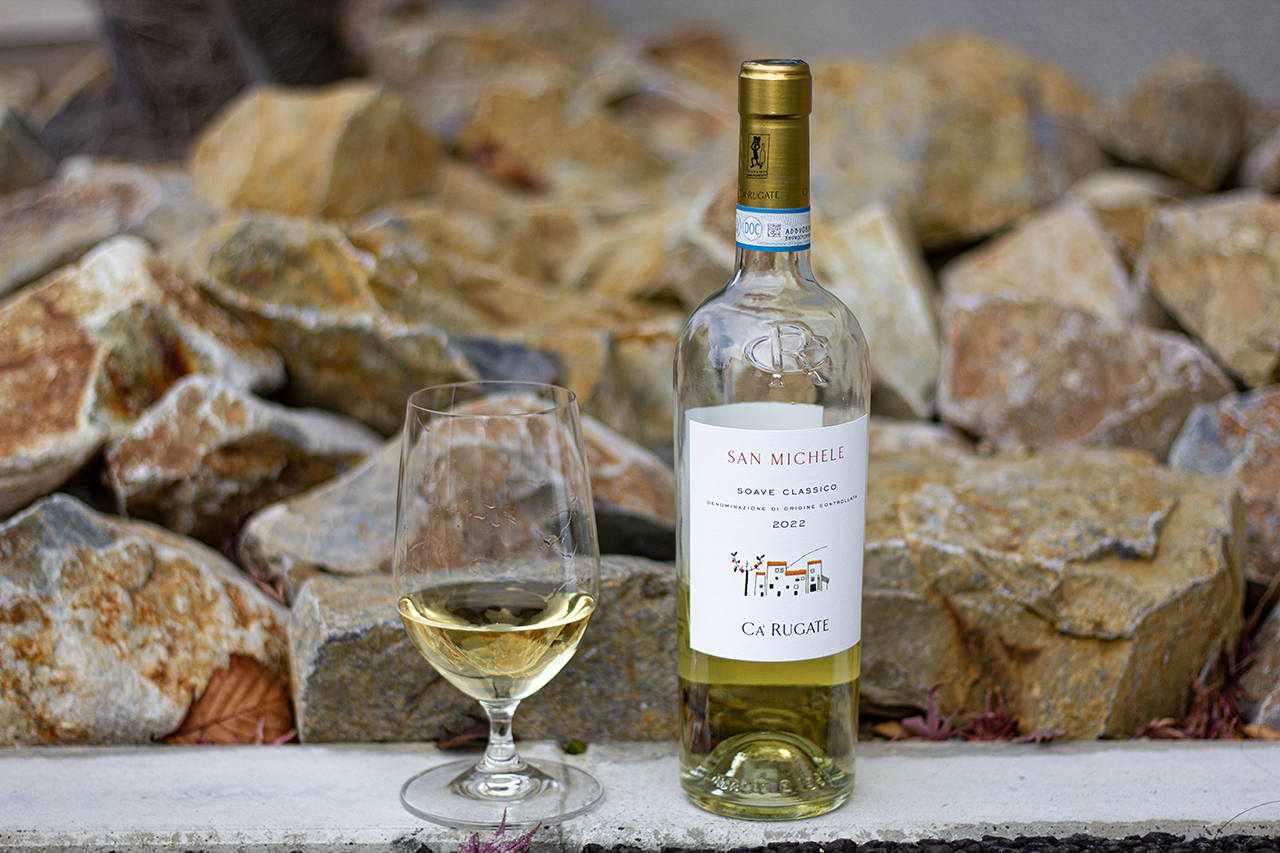
The white wine recommended by the shop staff, Mr. Yamanaka, as a first drink was the "Soave Classico San Michele."
It’s in a moderate price range and is perfect for meals, pairing easily with Japanese dishes like mizutaki (chicken hot pot). It left an impression on me that Mr. Yamanaka kept repeating the word "Classico," though I missed the chance to ask what it meant. Since he kept saying it, I felt that it must mean... ./
I was also very curious about the "Garganega" grape, which is used 100% in this wine. Rather than sounding delicate, this grape, which sounded quite robust, was a new variety I hadn't encountered in my studies until now.
This time, I’d like to delve deeper into the world of Italian wine through these two intriguing keywords.
1. What is "Classico"?
Does it have a significant meaning? It seems my guess was correct.
"Classico" is an Italian word, spelled "Classico."
It refers to wine produced in a traditional and historically significant central area within a specific wine-producing region. Some of these histories date back to the Roman era. It is a strictly defined term by law, and only those that have consistently produced particularly excellent wine within their region are entitled to use the "Classico" designation.
Examples of wines that bear the "Classico" label, besides "Soave Classico," include "Chianti."
"Chianti" is a red wine widely produced in the central Italian region of Tuscany and is world-famous as an Italian wine. Within that, only those produced in the traditional area located between Florence and Siena are allowed to be called "Chianti Classico."
The background to this trend is a common issue where the quality of Soave and Chianti declined as a result of mass production over wide areas. By attaching the name "Classico" to each, they protected their traditional, high-quality zones.
Source:https://www.viticcio.com/chianti-classico/differences-between-chianti-and-chianti-classico/
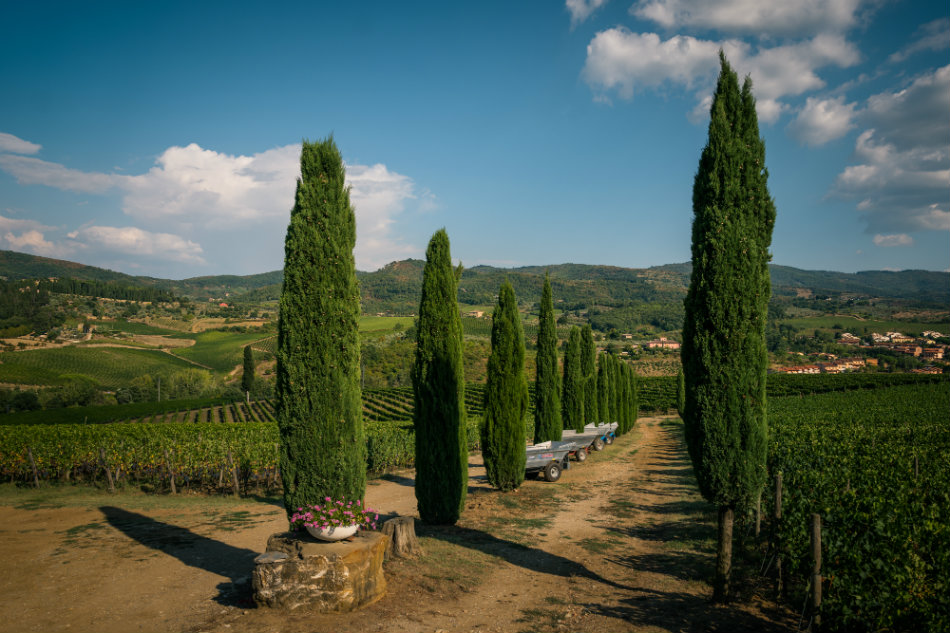
Stefano Inama, owner of the winery "Inama," which produces Soave Classico, speaks as follows about the current state of Soave.
"The real Soave Classico is not a lot; unfortunately, the bad Soave which is not classic and grows around on the plains, that was a very big political mistake to allow people to call Soave what originally is not Soave even if it comes from the same variety."
I could really feel his strong indignation regarding the loss of reputation caused by the circulation of Soave that is not "Classico," as well as his passion for Soave Classico. I felt I understood why Mr. Yamanaka was so particular about "Classico."
I hope to try the Soave Classico produced by "Inama" on another occasion soon!
▶︎ You can find the video including Mr. Inama's interview here. Please check it out.
https://youtu.be/Pocm3CO7bag?si=wyIernxOIzIk5QU2
2. What kind of grape is "Garganega"?
Source:http://www.soavestyle.jp/grape/index.html
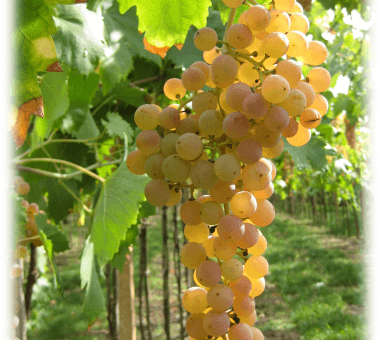
"Garganega," whose name drew me in with its powerful ring, is a white grape said to have originated in Greece. Currently, it is mainly cultivated in the Veneto region of northern Italy. It is the star grape of "Soave," resulting in a wine with a soft flavor characterized by a yellowish-straw color.
Its light color stands in contrast to the dark intensity of "Malbec," which I learned about in the previous Argentina segment. It makes sense that the color of the wine is reminiscent of the grape itself.
I learned that for "Soave," there is a traditional, high-quality wine called "Soave Classico." The grapes used for "Soave" without the "Classico" label include those grown on plains, while "Classico" is made from grapes grown in traditional hilly areas (around the villages of Soave and Monteforte d'Alpone).
Let’s look at their differences✍️
—
1. Garganega of the plains
■ Soil characteristics
・The soil of the plains is fertile and contains a lot of clay and sediments.
・Because it retains moisture easily, a large quantity of grapes can be harvested, but it can sometimes lack depth and complexity.
■ Climatic conditions
・Summers are often hot and humid, which can increase the risk of diseases.
・The warm environment causes the grapes to ripen early, tending to result in lower acidity.
■ Wine style
・Often a fruity and simple style.
・Typically intended for mass production and enjoyed as a daily wine.
2. Garganega of the hills
■ Soil characteristics
・Volcanic or calcareous soil.
■ Climatic conditions
・In hilly areas, there is a large temperature difference between day and night, which provides acidity and aroma to the grapes.
・Because they receive cool breezes due to the elevation, the grapes ripen slowly, resulting in a well-balanced flavor.
■ Wine style
・Has a mineral-rich and complex flavor.
・Produces high-quality wines like "Soave Classico."
—
I was curious about what makes volcanic and calcareous soil different compared to the plains, so I looked into it a bit more.
===
・Volcanic soil: Rich in minerals and drains well. Gives the wine minerality, salinity, and complex flavors.
・Calcareous soil: Also rich in minerals and drains well. Maintains acidity and brings out an elegant, fresh flavor.
===
By combining these two soil characteristics, a balanced, high-quality wine is created. As a drinker, I have nothing but gratitude for the miracle where a unique, one-of-a-kind flavor is born from the combination of such conditions as soil and climate.
By the way, I was curious about the origin of the impactful name "Garganega," so I looked it up. Apparently, nothing is certain. According to the blog "Do Bianchi" by food and wine historian Jeremy Parzen, there are two theories.
===
1. Place name
Derived from a dialectal expression referring to "Gargano," a region in the Foggia province of the Puglia region, Italy.
2. Historical background
Based on the fact that grapes said to be of "Greek origin" were often given names like "Greco" or "Grecanico."
===
Both theories seem plausible, but which one do you think it is?
Considering its Greek origin, I think the second theory is more likely! If anyone knows, please let me know✍️
Now, based on what I’ve learned so far, I’m finally going to taste the 100% Garganega wine, "Soave Classico San Michele 2022"!
■ This week's tasting report
Soave Classico San Michele 2022 | Ca' Rugate
The wine I tasted this time is from a winery called Ca' Rugate. It is a family-run winery located in the Veneto region of northeastern Italy. They began grape cultivation in the early 1900s and officially started as "Ca' Rugate" in 1986. "Ca'" means "Casa" (house), and "Rugate" refers to the "hills of Rugate," so the winery's name means "House on the hills of Rugate."
They have achieved the feat of receiving the top award from Gambero Rosso, the most authoritative media brand in Italian wine and food culture (it's like the Michelin Guide!).
Source:https://www.carugate.it/ca-rugate
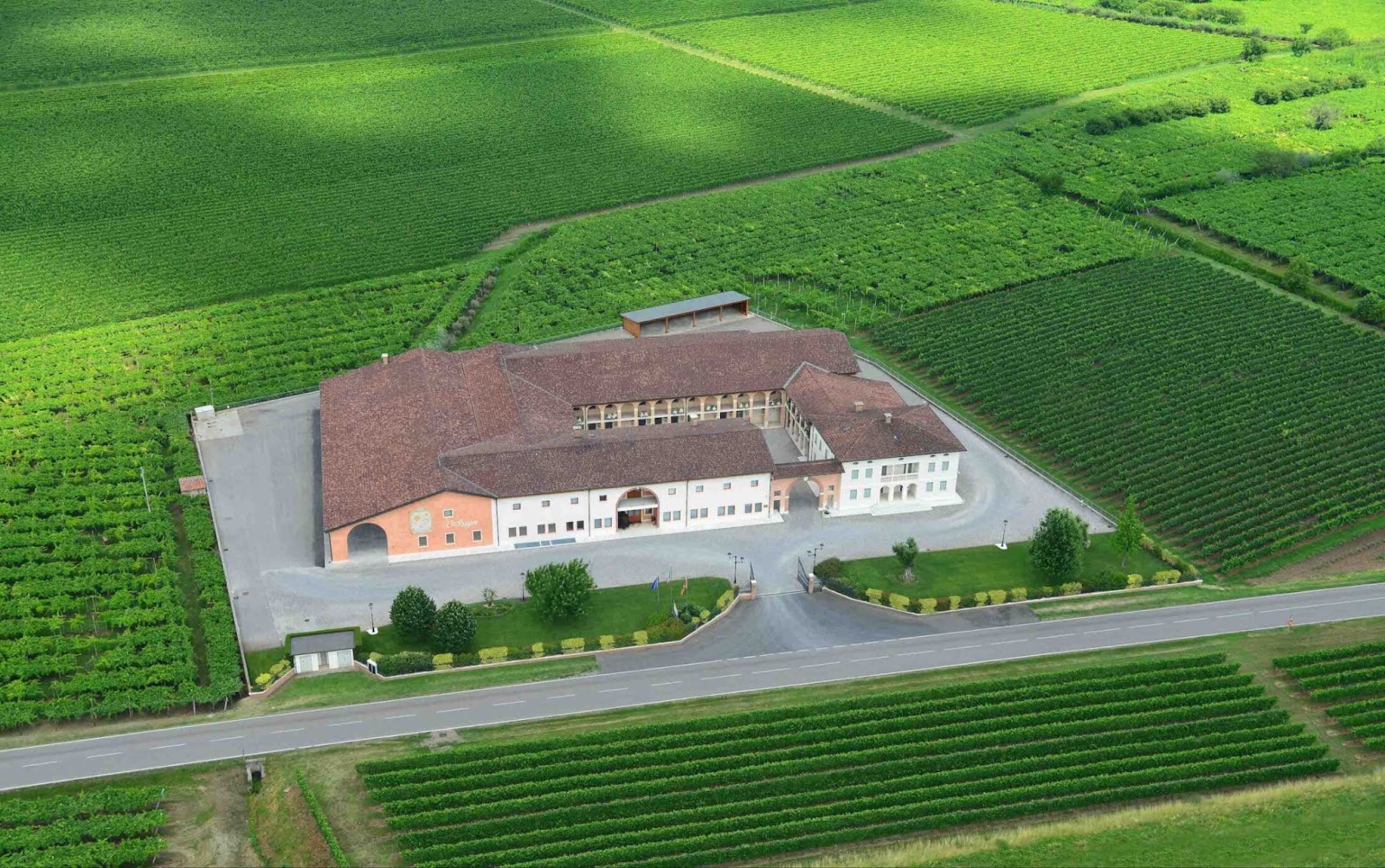
Is the red-roofed building on the wine label the Ca' Rugate building? The surrounding vineyards are blindingly beautiful!!
===
・Appearance: Clear, pale lemon yellow, a hue generally described as straw-colored (a bright color blending yellow and orange). The texture is light.
・Aroma: Restrained and elegant impression. There is a sense of happiness like burying your face in a bouquet of flowers, with notes of white peach, a faint minty freshness, and a feeling of youthfulness. I also saw the expression "scent of lemon," but personally, I didn't detect it.
・Flavor: Light and dry impression. Smooth on the palate and easy to drink, with gentle bitterness, tight acidity and astringency, and a clear salinity in the middle of the tongue. A hint of bitterness and alcohol remains in the finish. I could certainly feel the characteristics of volcanic/calcareous soil that I learned about earlier, so I was able to confirm what I researched for today's column.
・Price: 2,750 yen (tax included) / 750ml
The shop where I purchased it is the liquor store of love and adventure, "Howdy." It is a long-established shop founded in 1922 and is currently managed by the 4th generation, Akinori Okuhata. The shop name "Howdy" means "Hi, hello!" Indeed, from the friendly atmosphere of all the staff, such a warm greeting seems to echo. When I told them, "I've finished my studies on American and Argentine wines!", Mr. Okuhata happily gave me a quiz, and we had a lively wine discussion. Actually, they also recommended a red wine to me this time, so I will introduce that next week or later. Thank you, Mr. Okuhata and Mr. Yamanaka!
シェアする:
Dear Sommelier - Argentine Malbec
To you, my sommelier - The Gaja Family