
Good morning 🇮🇹 I have been studying wine in the order of countries, just as the textbook suggested, but this time I’m taking a little break. I’ve become interested in reading other books, too.
That’s when I came across "Wine as Liberal Arts: What Global Business Elites Should Know." I was drawn in by the title and couldn't help but pick it up. (I’m at that age where I want to sound a bit more sophisticated.)

Happily, I found a section on Italian wine, which I am currently studying with great enthusiasm. As I read on, I encountered an episode that made me laugh out loud. It’s the story of the Gaja family.
—
"Angelo Gaja suddenly uprooted Nebbiolo vines (an Italian variety) from his vineyards in Barbaresco and planted the French variety Cabernet Sauvignon."
"The person most unable to hide his shock was his father, Giovanni. He lamented and cried out, 'What a pity' (or 'Darmagi' in Italian)."
"Gaja named the wine after his father’s exclamation, and that is how the Cabernet Sauvignon-based 'Darmagi' was born."
—
- Source: "Wine as Liberal Arts: What Global Business Elites Should Know"
In the Italy of that time—especially here in the Piedmont region—winemakers saw France as a rival and were in an era of sticking strictly to traditional methods using indigenous Italian varieties.
Given that context, uprooting everything to replant is a huge deal. Yet, his father just lamented it, and then they even named the wine after that lament—it’s like a comedy routine! I couldn’t help but laugh at how it all played out.
But it made me wonder, "Why did Angelo make such a drastic decision?" and "Was his father’s reaction really just that?" Today, I’d like to dig deeper into these two points.🔍
1. Who is the Gaja family?
They are the family behind "GAJA," a winery founded by Giovanni Gaja in 1859 and now known as the "King of Italian Wine." Based in the village of Barbaresco in Piedmont, Northern Italy, they have been crafting wine as a family for five generations.
From left in the photo: Gaia Gaja (eldest daughter), Lucia Gaja (wife), Rossana Gaja (third daughter), Angelo Gaja (himself), Giovanni Gaja (third son)
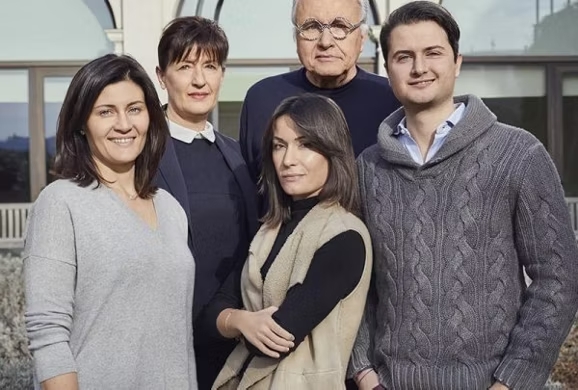
Currently, Angelo oversees everything while his daughters and son handle the actual operations. According to an interview, the Gaja family seems to possess both a spirit of "protecting tradition" and a "penchant for going against the grain."
For example, while it is becoming standard for wineries to share information via SNS and their own websites, GAJA is not exactly active in its communication.
(Please do take a look at their website!! [https://gaja.com] It only shows the text "GAJA" and their address, phone number, and email address!!)
As I read on, I found another interesting statement.
"My father taught me that you have to be able to think differently," says Angelo.
This wasn't Steve Jobs talking, but Angelo's father, Giovanni—the very man who supposedly said, "Darmagi."
Wait, Dad! Did you actually push Angelo to do this?
2. Why did Angelo uproot Nebbiolo and plant Cabernet Sauvignon?
Back in the 1960s, Italian wine lagged far behind French wine and received almost no attention in the international market. Wine was largely consumed as an everyday beverage, with quantity often prioritized over quality.
In Angelo’s home of Piedmont, traditional winemaking using the indigenous Nebbiolo variety was the mainstream. It was a tough time, with many producers suffering from falling prices and some even being forced to sell off their vineyards because they lacked markets outside their local area.
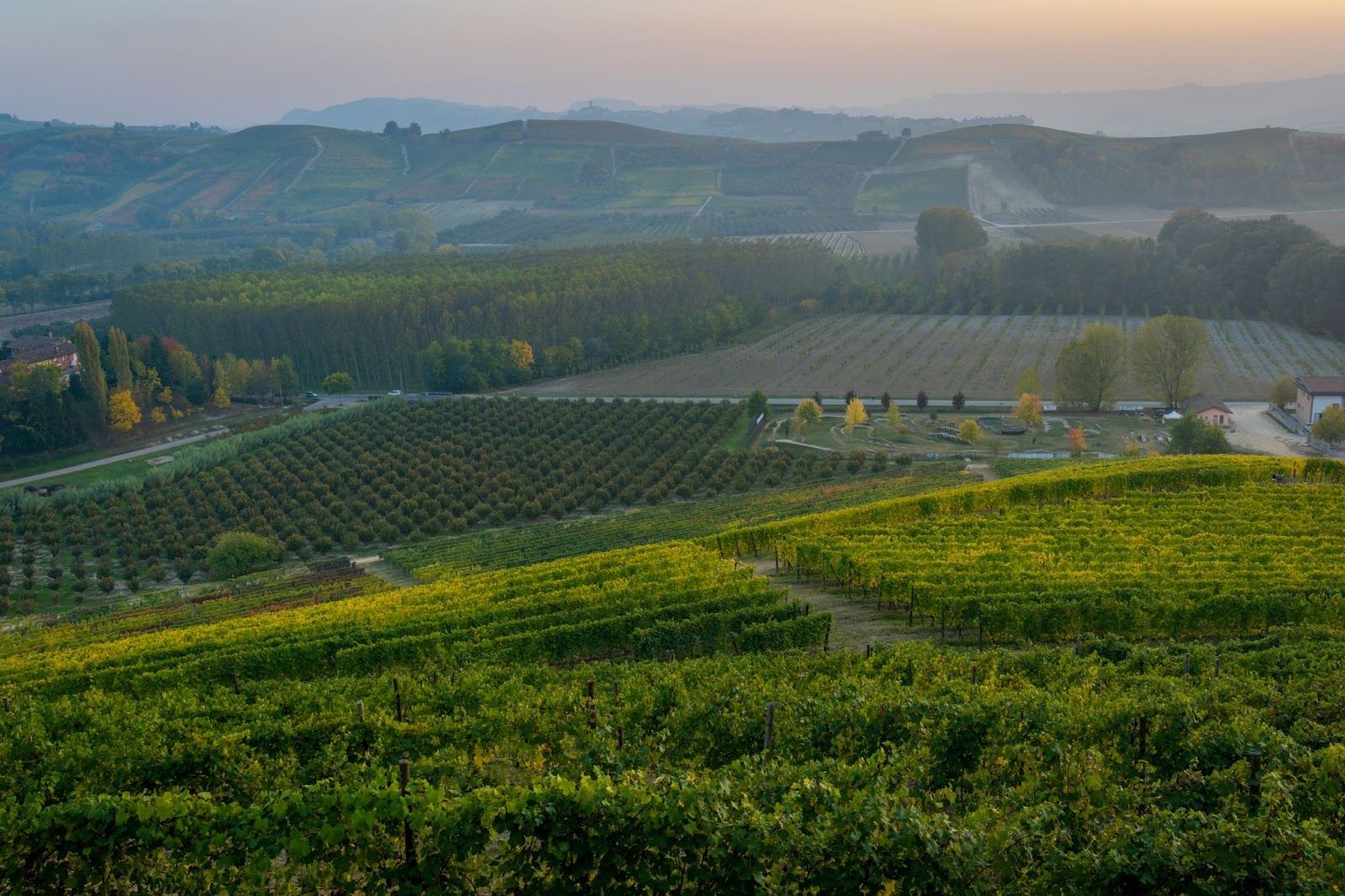
Amidst all this, Angelo was driven by the strong desire to "somehow raise the level of Italian wine to be competitive internationally."
He operated under the belief that "if the soil is good, you can create a magnificent wine even without indigenous grapes." By cultivating the internationally acclaimed "Cabernet Sauvignon" in Barbaresco and producing a world-class wine, he intended to elevate the reputation of all Italian wine.
It was planted in 1978, and although there were mixed opinions upon its release, it has since repeatedly earned top marks from the wine magazine "Gambero Rosso." (To use an analogy, it’s like a feat comparable to winning three Michelin stars over and over again.🛞)
In another interview, Angelo talked about his father:
‘To him,’ smiles Gaja, ‘wine only had one colour – red – and it had to be from local grapes.’
This was in an interview where Angelo discussed how he and his father disagreed over various innovative initiatives, including Darmagi.
Even though his father taught him to "Think differently," he had certain non-negotiable standards, namely that "wine must be red" and "it must be made from local grapes."
But was his father truly lamenting it from the bottom of his heart?
3. Thinking about the meaning behind "Darmagi"
Given the spirit of "protecting tradition" and "going against the grain" that flows through the Gaja family, I’ve started to think that maybe his father, Giovanni, wasn’t truly lamenting it in a negative sense.
Everyone has something they feel they "simply cannot compromise on," and perhaps that exclamation came from being challenged on that very point. If he were truly distressed, would he have let his son name the wine after that very comment? (I don’t think so.)
Surely, he felt happy and proud of his son’s growth as he put those lessons into practice.
Before I knew it, I was completely absorbed by the story of Darmagi and the Gaja family. Even half a century later, it seems I’ve fallen under the spell of the strategist, Angelo.
I decided I had to buy a bottle of "Darmagi," but when I looked it up on Enoteca, the 2019/20 vintages were 77,000 yen...! I’ll have to save that for a special occasion.🍷
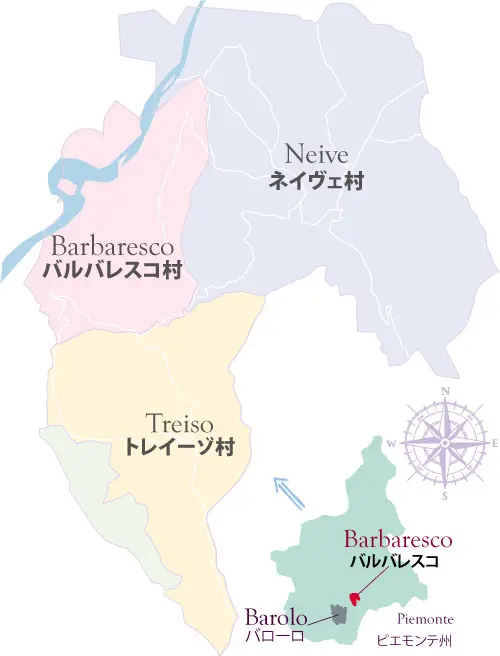
By the way, "Barbaresco" is considered one of Italy’s three great red wines, alongside "Barolo" and "Brunello." Wines from the village of Barbaresco, where Gaja is located, tend to have "pure fruit flavors," while Neive tends to have "spicy tones," and Treiso is known for "mineral-forward flavors." This is definitely something for a comparative wine tasting party!🍷
---
This week’s tasting is another wine I purchased from Howdy in Nagoya, following last week.
This was a recommendation based on my request for something with a full body that isn't too astringent.🍷
■ This Week’s Tasting Report
Casale Vecchio Montepulciano d'Abruzzo 2022 | Fantini (formerly Farnese)
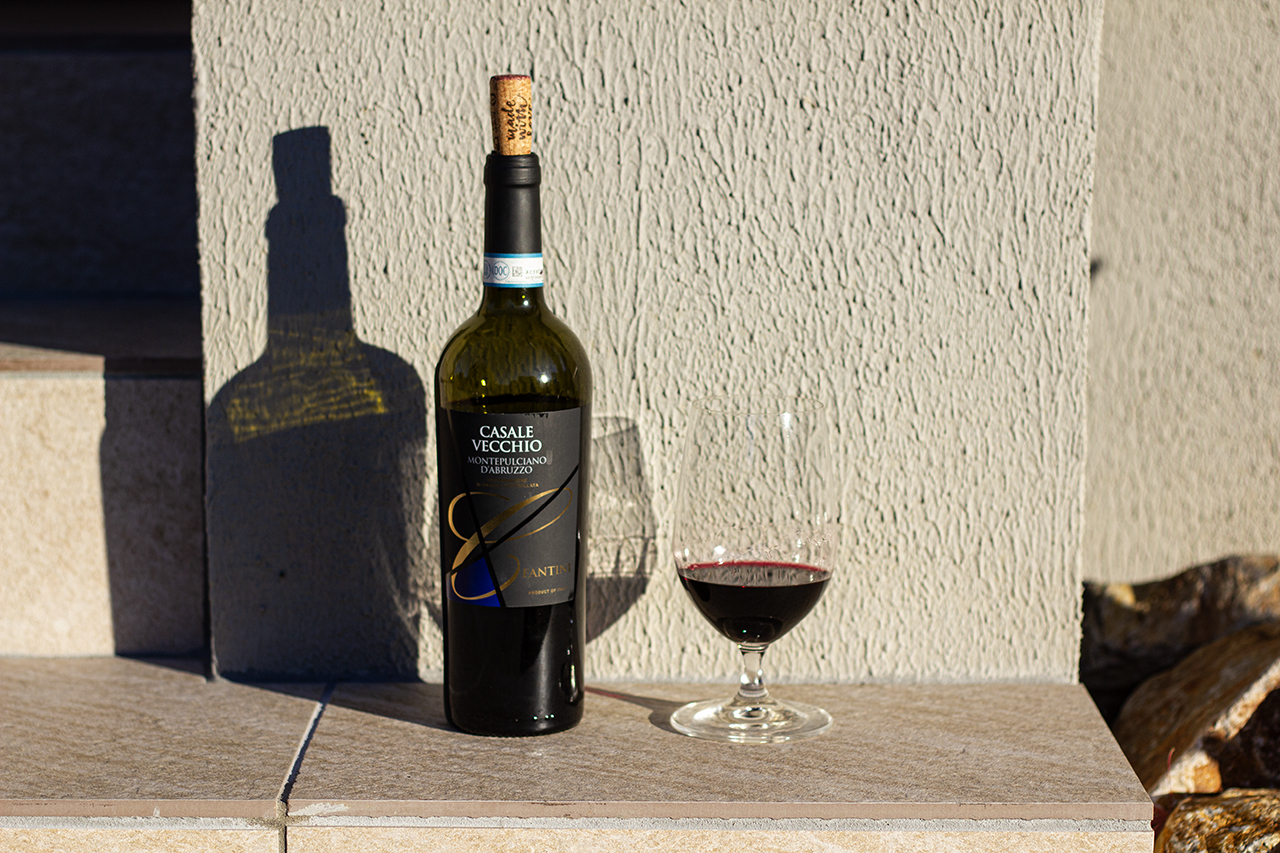
The wine I tasted this time is from "Fantini," a winery based in the Abruzzo region of Central Italy. Operating on the belief that "only good grapes produce good wine," they not only use their own vineyards but also contract with small local farmers to utilize the high-quality grapes they grow with such care. They have won numerous awards at international competitions.
The wine I drank this time is made from grapes where the yield was restricted to only 4 bunches per vine, instead of the usual 8. Because of this, the color is deep, the aroma is prominent, and the flavor is surprisingly concentrated.
Apparently, it also shot to fame after being highly praised in the manga "Drops of God" as "not losing to a 16,000 yen wine." I can't yet distinguish the taste of a 16,000 yen wine, but let’s dive into the tasting!
===
・Appearance: Clear, cloudless, and smooth liquid. Deep purple tint. Reminiscent of dark cherries.
・Aroma: Gorgeous, deep fragrance. I could sense cassis, raspberry, and a touch of plum. I also clearly felt a vanilla aroma. There was also a nuance like the brown cap of a shimeji mushroom. (When I checked the product description later, I was happy to see vanilla listed.)
・Taste: A strong attack. Since the liquid is quite thin/smooth, it rushes into the mouth all at once. There’s almost no residual sugar, and a good sense of alcohol. It’s interesting how there’s a sharp acidity that lingers after biting into a berry, and a faint sweetness reminiscent of citrus after eating an orange. There was also a sensation like eating chocolate with over 90% cacao, making the aftertaste very enjoyable.
・Price: 3,080 yen (tax included)/750ml
===
See you all again next week! Ciao!!
シェアする:
Dear Sommelier - Italian Classico
Dear Sommelier - Malvasia Bianca di Candia