
After spending 6 weeks in Italy, today I’m diving into the Uruguay chapter 🇺🇾
I first saw a video of Go☆jas talking about "Here, Uruguay" last weekend, and I felt like Uruguay was calling out to me.
...
Uruguay is the second smallest country in South America, yet it is the fourth largest producer of wine. So, what is the grape variety that best represents Uruguay?
Its name is"Tannat." It is a black grape variety native to "Madiran" in southwestern France, brought to Uruguay in the 19th century by Basque immigrants (people living in the region straddling the border between Spain and France).
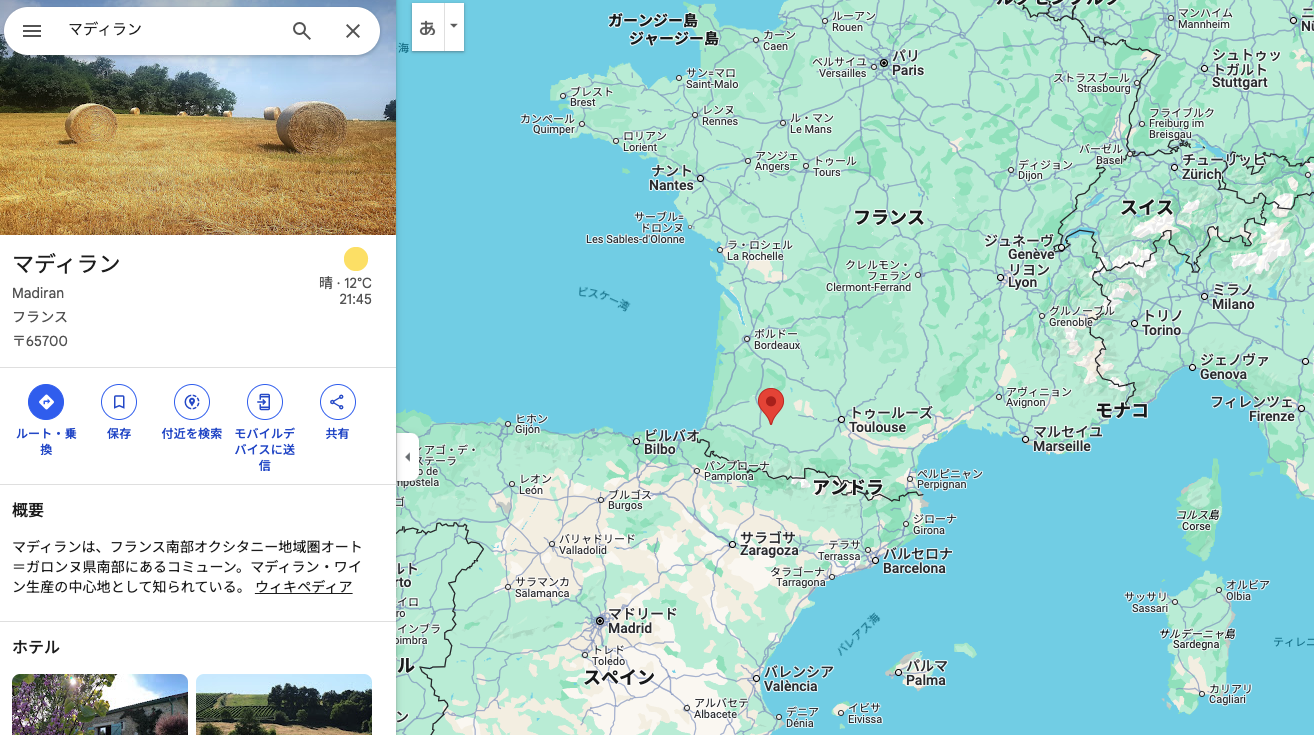
Just as "Malbec," also native to France, found success in Argentina, Tannat adapted well to Uruguay’s climate and soil, and it has now become a national variety, accounting for about 27% of the planted area.
—
・Malbec (22.39%) in Argentina
・Sauvignon Blanc (66%!) in New Zealand
・Merlot (11.5%) in France
・Chenin Blanc (18.4%) in South Africa
・Kyoho (29%) in Japan
—
Excluding New Zealand as an outlier, 27% seems like a fairly significant figure. (The 29% area for Kyoho in Japan is almost entirely for table use! This shows that the history of wine there is still short.)
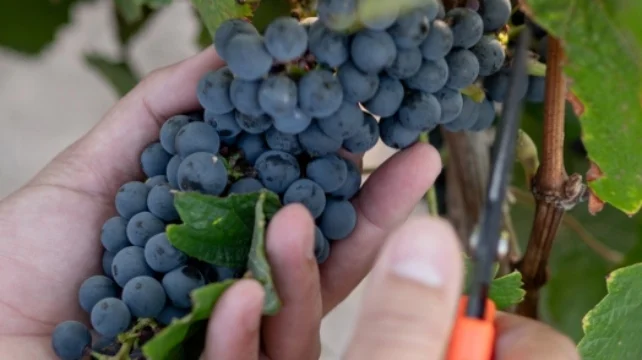
Tannat, a heavyweight in the Uruguayan wine world. Its name is said to be derived from "Tanat," meaning "colored like a suntan," and it is characterized by its deep berry color and high tannin concentration.
Argentina's Malbec shares these same characteristics, and being a neighboring country, I assumed their climate, soil, and resulting wine flavors would be similar. However, upon researching them, I found many differences, so I’d like to introduce them here ✍️
Tannat vs. Malbec: What are the differences between these two French-origin grapes that blossomed in South America?
1. Differences in personality born from climate and soil
Tannat is grown in Uruguay, and Malbec in Argentina. Despite being neighboring countries, their climate and soil conditions are polar opposites.
Tannat in Uruguay is cultivated in an oceanic climate. This region sees high annual rainfall of 1,000–1,300mm (compared to 240–500mm in Argentina) and is characterized by a humid environment. Most of it is grown on lowlands (under 100m elevation), where the temperature difference between day and night is relatively small, causing the grapes' sugar content to rise slowly. Since they grow in a mix of clay and limestone soil that retains moisture, they face no stress from water scarcity.
On the other hand, Malbec in Argentina is the exact opposite. It is grown in a dry, continental climate. It is cultivated in high-altitude areas (800–1,500m) like Mendoza, where the day-night temperature difference is large, and intense daylight causes sugar levels to rise rapidly. They grow in a mix of well-draining gravel and limestone soil, experiencing a moderate level of water-deficit stress.
I initially thought both were limestone soil, so why the difference? But it turns out the Uruguayan soil is influenced by clay, while the Argentine soil is influenced by gravel, which changes the drainage.
Having grown up in different environments, the two show different expressions once they become wine.
2. Differences in flavor resulting from their upbringing
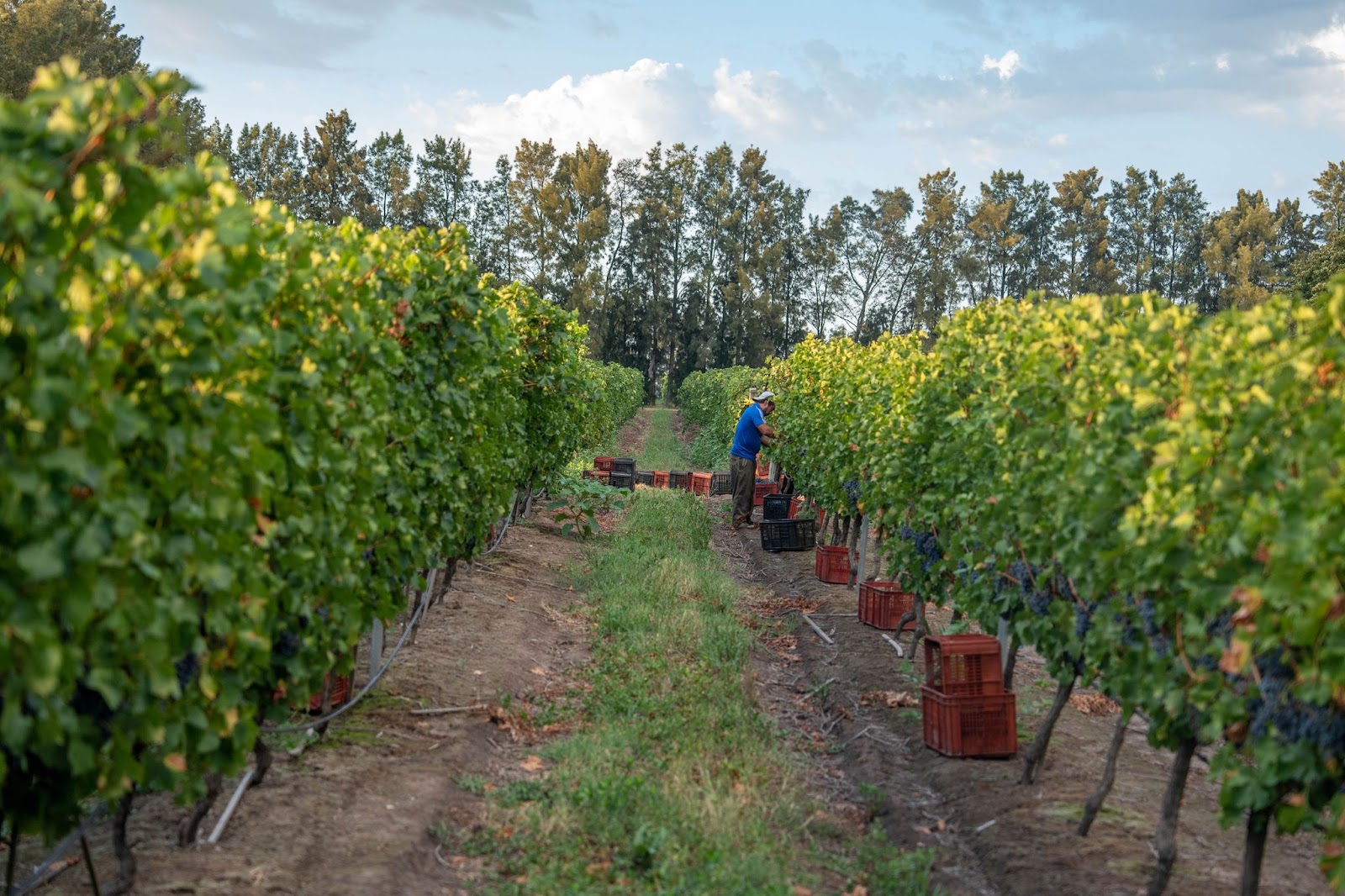
While both are firmly packed with tannins, Tannat is known for retaining solid acidity, whereas Malbec is characterized by its rich fruitiness.
Why do these differences arise?
- Regarding acidity (Why Tannat > Malbec)
This is related to temperature and malic acid, which is affected by temperature.
Malic acid is broken down within grapes as part of respiration (a metabolic process). This process accelerates in high temperatures. (Think of it like using up more calories when running a marathon in the heat.) While daytime temperatures in Argentina are around 30–35°C, Uruguay is around 28–29°C. Because of this temperature difference, the consumption rate of malic acid in Uruguay slows down, and as a result, the acidity is well-preserved.
Uruguay is also cool at night (15–18°C), and in this low-temperature environment, respiration is suppressed, further reducing malic acid consumption. On the other hand, while Argentina is also cool at night, the high rate of malic acid consumption due to the high daytime temperatures dominates, making it easier for the fruit's acidity to be lost.
- Regarding fruitiness ① (Why Malbec > Tannat)
One reason is the characteristics of the soil.
Malbec grows in well-draining soil. It seems grape roots have moisture sensors (such as the plant hormone abscisic acid) and grow in search of water when they detect dryness. In well-draining soil, moisture is hard to retain in the upper layers, so the grape roots stretch deep underground in search of water. (You could say that because drainage is good, moisture moves downward due to gravity, and the roots grow deep by following it.)
As a result, the mineral resources collected underground are absorbed by the grapes, creating a complex and concentrated fruit flavor. This doesn't mean the minerals themselves create the flavor directly, but rather that they support the vine's metabolic processes.
For example, potassium promotes photosynthesis and enzyme activity. Iron and magnesium contribute to chlorophyll production (a pigment necessary for plants to perform photosynthesis) and photosynthesis activity, which also promotes sugar production. As sugar levels rise, a sweetness and concentration derived from black fruits like plums and blueberries are added when it becomes wine.
- Regarding fruitiness ② (Why Malbec > Tannat)
Another factor is humidity.
When grown in a dry region, moisture supply is low, which suppresses the growth of the berries, resulting in smaller grapes. Furthermore, because Malbec also has thick skins, the ratio of skin (rich in polyphenols and anthocyanins) to juice becomes higher, making it easier to produce a rich, concentrated flavor.
3. Summary - Don't judge only by what you see
They say that 90% of a person is their appearance, but in reality, when you get to know them deeply, you see a different side of them, right? The same goes for wine; you shouldn't judge it only by its appearance. Exploring the environment in which it was raised and the situation it is currently in reveals facts you never would have imagined.
Through studying wine, I learned something important about life this time.
I wanted to drink a Tannat red wine, but I couldn't get my hands on one, so that's for next time. Instead, I tried a wine from an up-and-coming Uruguayan winery, purchased at "Howdy," the liquor store of love and adventure that taught me about "Classico" in the Italy chapter!
■ This week’s tasting report
Nakcool vino Bianco 23 | Proyecto Nakkal Wines
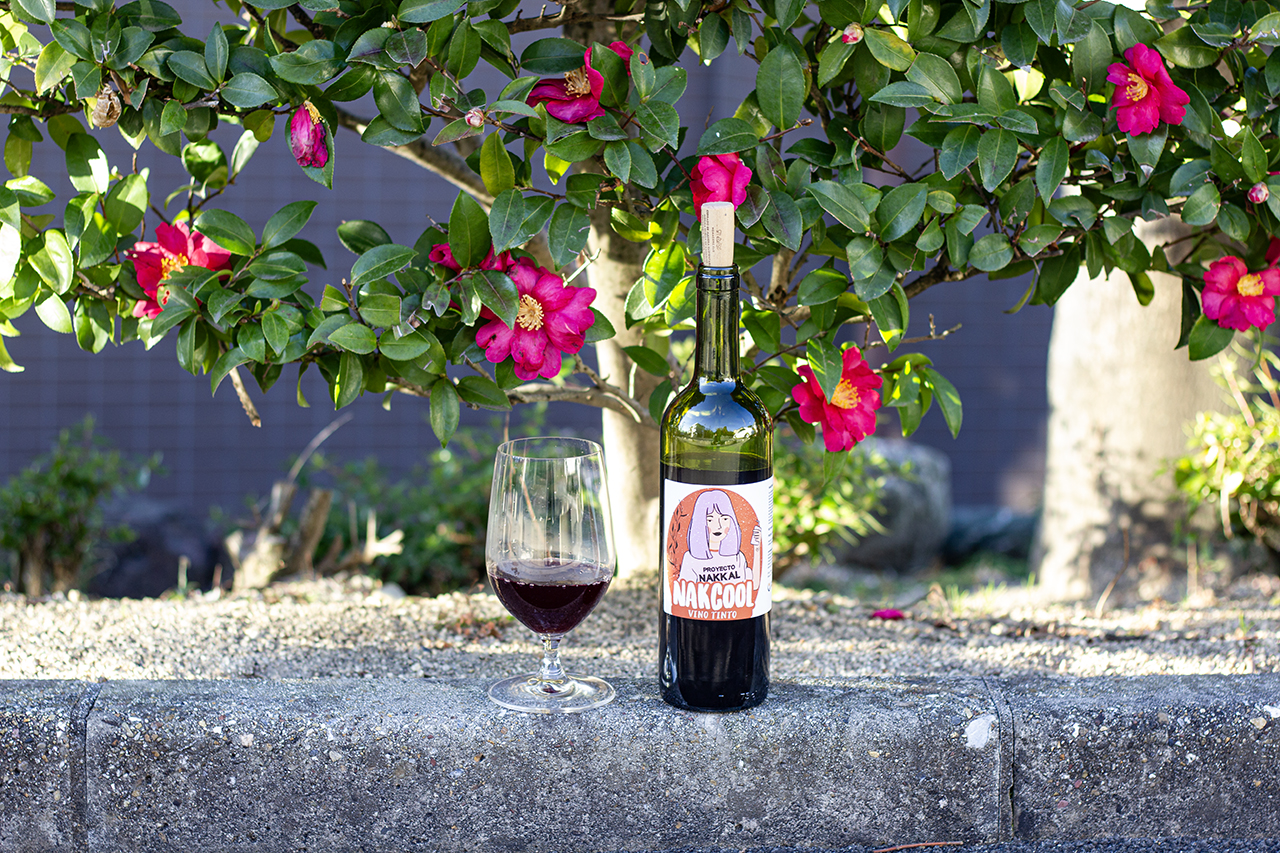
"Proyecto Nakkal Wines," a natural winery launched in 2020 by two young Uruguayan winemakers. The two, who studied oenology together at university, started a small-scale project driven by their passion for natural winemaking. Production, which started at 3,000 bottles, has now grown to 30,000, and it has earned high acclaim around the world—a rarity for Uruguayan wine, as 95% of it is consumed domestically.
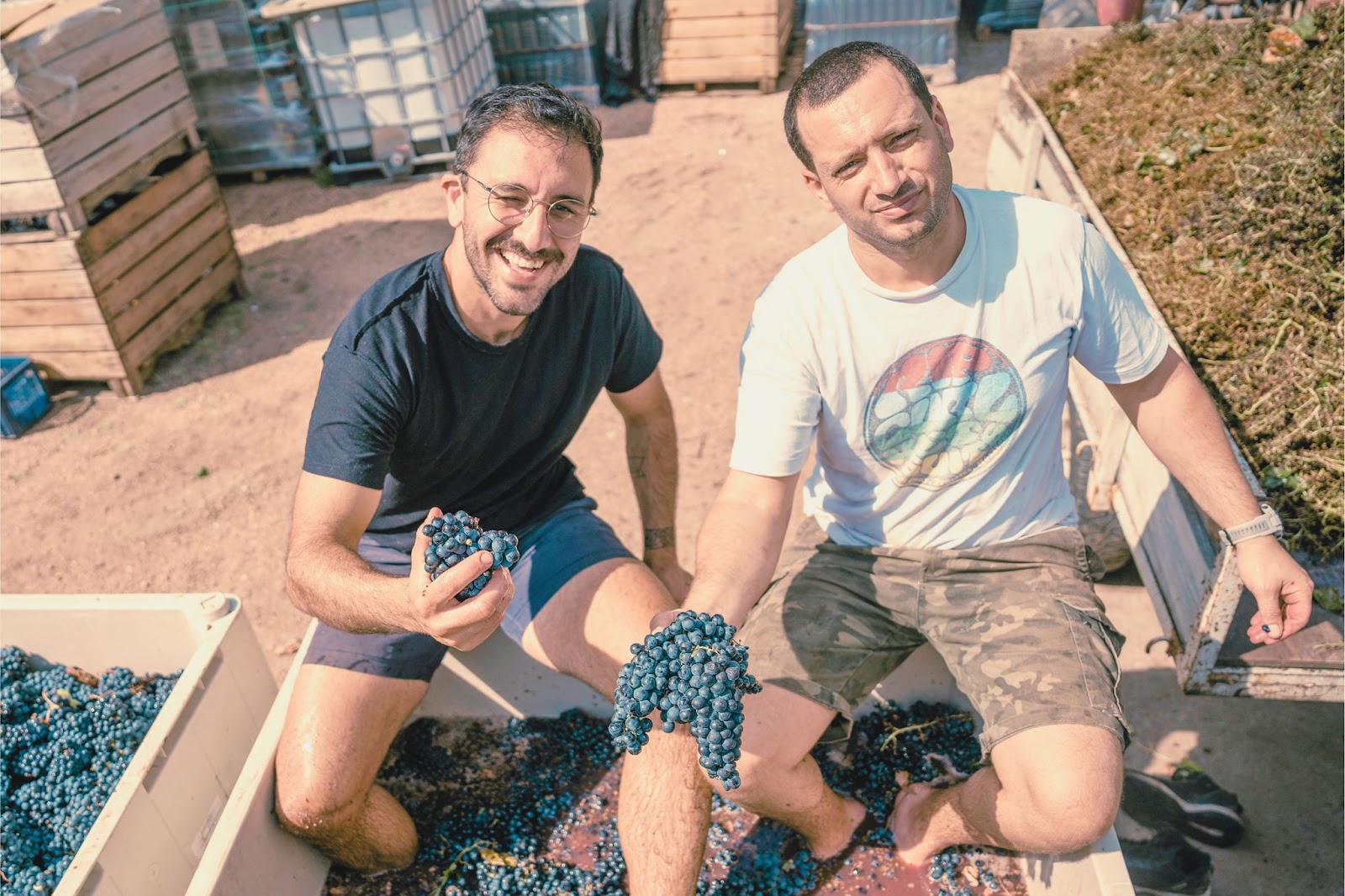
The name comes from "Nakkal," the protector of Atlantis in Greek mythology. They value the philosophy of "letting things take their course" and practice winemaking with minimal human intervention. "Make the wine that the grapes want to become." This is their credo. Through simple brewing processes like wild yeast fermentation and the absence of fining agents or filters, they bring out the original personality of the grapes.
Merlot 80% / Muscat Ottonel 20%
===
・Appearance: Slightly cloudy with a hazy look. A dull light purple, with viscosity that felt slightly higher (I felt it took longer for the wine legs to form compared to previous wines).
・Aroma: A complex aroma. Hints of paint, like the wood section of a hardware store. Maitake mushrooms, cedar, conifers, and animalistic nuances as well.
・Taste: The attack is slightly strong, with almost no sweetness; it’s dry. I don’t feel much acidity. It’s smooth on the palate. There’s a faint bitterness, but the smoothness of the liquid coats the mouth well. I don’t feel much alcohol or lingering finish.
・Food pairing ideas: Seems like it would pair well with game meat or Genghis Khan (lamb barbecue). Uruguay has high domestic wine consumption at 95%, and the reason is said to be how well it pairs with their meat dishes. I’m a bit unsure if I can recreate that, but I’ll try it for myself next week!
・Price: 2,640 yen (tax included) / 750ml
—
シェアする:
How to make Nuruk
Sake Brewing Science - vol. 3 - Steaming Methods