
After spending two weeks in Uruguay, I’ve made my way to the UK🇬🇧
Perhaps you were thinking, "Wait, did you forget about the UK before Italy?"
Actually, since the textbook referred to it as "Eikoku" (the kanji for the UK), that’s how this came about.
- A brief aside -
South Korea and China also refer to it as "Eikoku." The "Ei" (英) refers to England, one of the four constituent countries of the UK. It is called this because of the central role England has played in the politics, economy, and culture of the UK as a whole.
On the other hand, in Western countries, "United Kingdom (UK)" or "Great Britain" are standard, and "England" is used specifically to refer to just one of the constituent nations.
But I’ve digressed.

Pulling myself together, today I’m going to take a deep dive into the UK.
Geographically located in Europe, I have a vague feeling that wine might be popular there. But honestly, if you mention British wine, I can't quite picture it.
If France and Italy are in the top tier, I wondered if the UK might be in the next group down? However, when looking at Europe as a whole, it’s actually very small-scale and ranks near the bottom compared to major wine-producing countries. (The specific ranking is unknown.)
Why isn't wine production very popular?
My first thought was climate. The UK has a reputation for being cloudy, rainy, and cold. I don’t really have an image of it being sunny and warm. I feel like black grapes, which seem to need a certain amount of solar radiation, would struggle to grow, but perhaps white grapes could?
When I looked into it, it seems that, generally speaking, the lack of sufficient sunshine hours and temperature required for grapes to ripen has been a barrier to wine production for many years. Interestingly, however, the cultivation ratio of white to black grapes is 50:50. That’s a surprise!
Temperature, humidity, soil, and sunshine hours are the keys to grape cultivation. The south of England is an environment that successfully meets these conditions for certain grape varieties.
In fact, southern England accounts for about 83% of the UK’s total grape cultivation area! With over 75% of the wine production, it can truly be called the mecca of British wine.

〈Wine situation outside the South〉
Outside the south, grapes are grown in places like Yorkshire in Northern England, Wales, and Scotland.
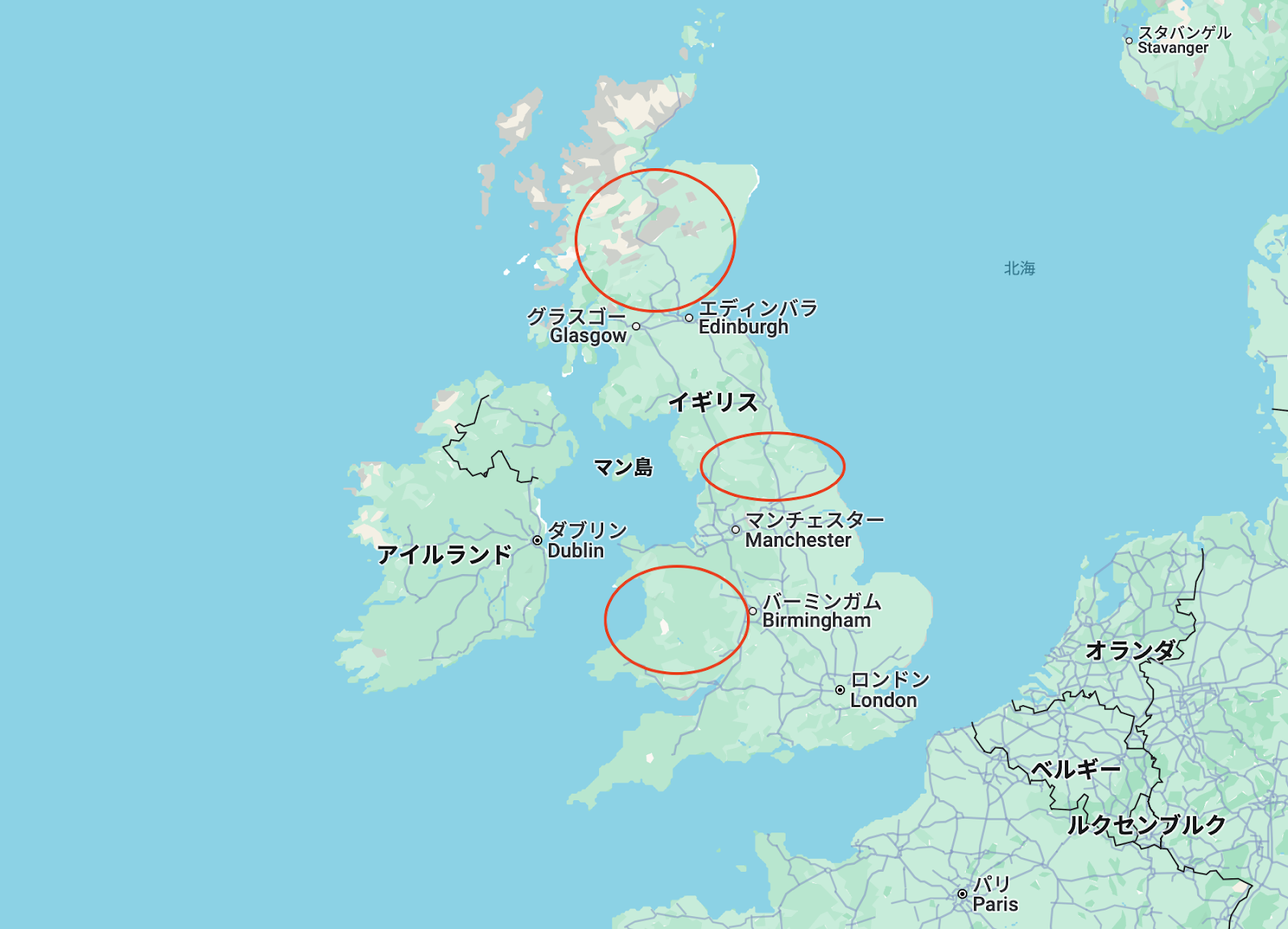
The temperatures are low, falling below the range needed for the growth period (17–27°C). The sunshine hours are also short. Therefore, photosynthesis does not proceed efficiently, and the accumulation of sugars (mainly glucose and fructose) is insufficient. Malic acid is also difficult to break down, resulting in high acidity and a poor balance with the sugar content.
Since rainfall is also relatively high, there is a risk of mold.
I thought, "Isn't the 'Ugni Blanc' we studied last week (low sugar, high acid, disease-resistant) the perfect fit?" but the answer is NO. While its characteristics seem ideal, the "Ugni Blanc" variety itself is grown in warmer regions with plenty of sunshine, so it isn't cultivated in the cool climate of the UK. (*For more details, check out Ohayou Biwako Vol. 118🔍)
By the way, when it comes to British distilled spirits, it's whiskey. The fact that brandy culture isn't as mainstream might also be a factor.
The grapes growing in the north are full of new varieties I’ve never heard of in my studies so far. For white grapes, there's "Seyval Blanc" and "Bacchus." For red, there's "Rondo" and "Pinot Noir" (I knew that one!). Since I hadn't heard of the others, I wondered if they were native to the UK, but apparently, there are no indigenous grapes in the UK! It’s hard to imagine grapes originating from scratch in this climate.
Is the UK "Old World" or "New World"?
Since many varieties originate from Germany or France, I thought it might be classified as "New World," but it is actually classified as "Old World"! It seems it's categorized by its geographic location in Europe.
A winery in the UK called Stanlake Park Wine explicitly states not to forget that the UK is Old World! Perhaps many people, like me, mistake it for New World! (I’m sure anyone who has studied wine has thought that at least once.)
—
These are all traditional wine making countries so it’s easy to think of them as old wine producers, but do not forget, that the UK is also Old World: something to remember when you’re sipping a Pinot Noir, Meunier, and/or Chardonnay based English Sparkling Wine.
—
Source:NEW WORLD VS OLD WORLD WINES: A COMPARISON
In this text, the term "English Sparkling Wine" is highlighted. I wondered if sparkling wine was popular in the UK, and when I looked it up—bingo.
To my surprise, about 80% of British wine production is sparkling, while only 20% is still wine. This is a very distinctive ratio compared to other countries. For example:
・UK: 80% sparkling, 20% still
・Italy/France: 10% sparkling, 90% still
・Australia: 4% sparkling, 96% still
Looking globally, it’s rare for a country to have such a high ratio of sparkling wine.
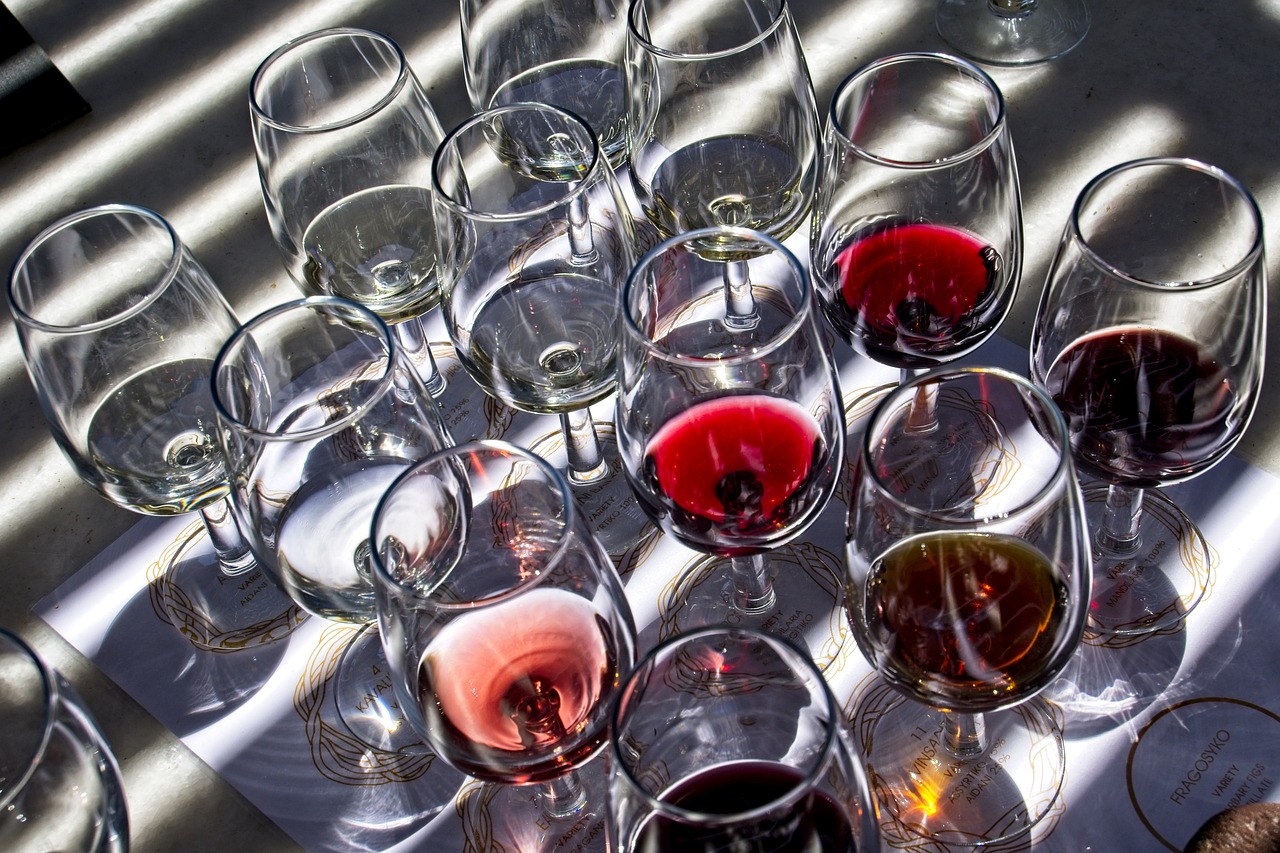
Also interesting is the breakdown by color: 6:2:2 for white, red, and rosé, yet the cultivation area was 50:50. The secret to this discrepancy is that black grapes are being used for white sparkling wine. I thought this might be a UK-only feature, but it seems there are actually examples in France, Germany, Italy, Spain, and the US as well. (In the Champagne region of France, three varieties are traditionally used: Chardonnay (white), Pinot Noir, and Pinot Meunier (black)!)
This is a characteristic of cold regions, based on the concept that "black and white grapes support each other." Black grapes provide support in terms of sugar content and flavor depth (body), while white grapes provide volume support in case of a poor harvest; conversely, black grapes provide an outlet if they fail to reach full maturity for red wine production.
With sparkling wine being so popular in the UK, why is its production so widespread?
The state of British sparkling wine

In the case of mead, sparkling versions are commonly produced in warm regions like Southeast Asia and India. It’s easy to imagine that in hot places, carbonation makes the drink more refreshing and easier to consume.
But since the UK is cold, why is sparkling wine so popular? The immediate reason that came to mind is that the grapes that grow there are suited for sparkling wine.
So what are the characteristics of grapes suited for sparkling wine? And is the gas in sparkling wine something that is added, or is it from secondary fermentation in the bottle?
There are still so many things to dig into, but I’ll stop here for today. Next week, I’ll dive deeper into the state of British sparkling wine and why the southern region, which accounts for 83% of the UK’s grape cultivation, is so successful at winemaking! Look forward to it. See you next week!
シェアする:
Dear Sommelier, Uruguayan white wine
Sake Brewing Science Vol. 5 - The Significance of Making Yeast Starter (Shubo)